
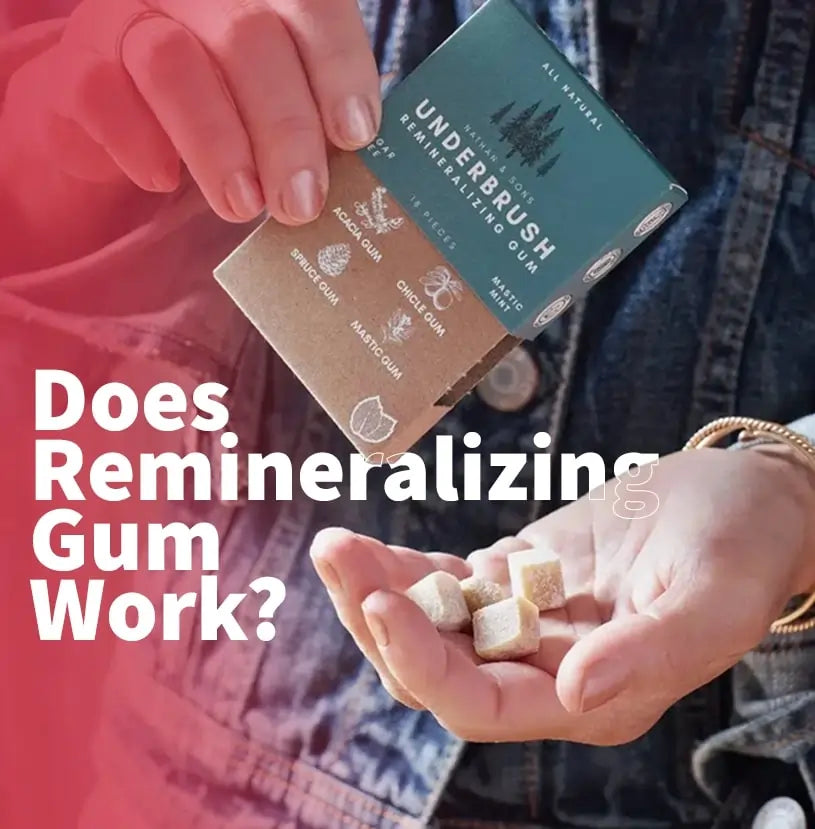
Does Remineralizing Gum Work? - Introduction
Teeth undergo constant cycles of demineralization and remineralization. These are natural processes: acids from foods, drinks, and bacteria lead to loss of mineral (demineralization), whereas saliva, fluoride, calcium, phosphate, and sometimes other sources help restore minerals (remineralization).
“Remineralizing gum” broadly refers to chewing gum, usually sugar-free and often containing agents such as xylitol, fluoride, or calcium/phosphate, intended to enhance remineralization or otherwise slow or reverse early enamel damage.
In this article we examine the scientific evidence: does remineralizing gum really work? What do studies show, what are its mechanisms, what are limitations, and what practical advice arises for dental health.
What is remineralization & why gum is proposed as a tool
- Enamel is composed mostly of hydroxyapatite crystals; under acid attack (when pH drops below a threshold ~5.5) mineral dissolves. Saliva contains calcium and phosphate; when pH is more neutral, these ions can redeposit in enamel (remineralization).
- Some gums are “functional” or “medicated” with added agents: xylitol or other polyols, fluoride, casein phosphopeptide-amorphous calcium phosphate (CPP-ACP), calcium phosphates, or substances that can provide extra calcium or phosphate, or help buffer pH.
Thus the hypothesis: chewing the right kind of gum, with sufficient frequency and ingredients, could help shift the balance in favor of remineralization, help support the natural remineralization process associated with early enamel changes, may contribute to improved oral health conditions associated with reduced caries risk.
Scientific Evidence: What Studies Show

Here I will summarize several key studies and reviews that address whether remineralizing gum works.
Does Remineralizing Gum Work? - Key Clinical Studies and Trials
1. Remineralization of enamel subsurface lesions by xylitol gum + funoran + calcium hydrogen phosphate
- A randomized, double-blind, cross-over trial with human subjects, using enamel slabs with demineralized lesions, comparing 4 types of gum (basic gum base, sugar gum, xylitol gum, and xylitol gum enriched with funoran + calcium hydrogen phosphate).
- Subjects chewed gum for 20 minutes, 4× per day for 7 days. The enriched xylitol gum had significantly higher remineralization than the others.
2. Effect of chewing gums with xylitol, sorbitol and paraffin on remineralization and hardness of demineralized enamel
- A study (in vitro) comparing gums with different polyols and paraffin. It found that xylitol and sorbitol gums had beneficial effects relative to controls in increasing hardness of demineralized enamel.
3. Recent clinical data on sugar-free gums in children: Xylitol vs maltitol
- A 2025 retrospective study of 100 children aged 7-14, comparing xylitol-containing gum vs maltitol gum. Outcomes: plaque index reduction, salivary pH increase. Both gums helped; xylitol gum showed more consistent outcome in plaque reduction.
4. The concise review: Chewing gum as anti-cariogenic agent (Yeung et al., 2023)
- Systematic review of chewing gum use for caries prevention. Key findings: chewing sugar-free gums (especially xylitol-containing) tends to reduce caries incidence compared to no gum use. It also affects enamel remineralization, bacterial counts, acid buffering. However, variability among studies in dose, duration, outcome measures.
5. ADA and related organizations’ summaries
- The American Dental Association states that clinical trials have found decreased caries incidence in subjects who chewed sugar-free gum for ~20 minutes after meals.
- Also, sugar-free gum sweetened with xylitol has been associated in some studies with reductions in Streptococcus mutans levels.
Mechanisms Supported by Research
From the studies and reviews, the following mechanisms are supported:
- Saliva stimulation: Chewing gum raises salivary flow, which increases buffering of acids, delivers calcium/phosphate ions, helps neutralize pH.
- Buffering and pH modulation: After chewing sugar-free gum, salivary pH rises; this shifts conditions away from demineralization.
- Supply of remineralization agents: Gums enriched with calcium phosphate, or delivering agents like xylitol, help provide minerals or help prevent bacterial acid activity.
- Changes in oral bacteria associated with cariogenic activity: Especially xylitol seems to reduce S. mutans in some studies.
- Additional benefits: Mechanical removal of food debris; when gum is used after meals or snacks, it aids oral clearance.
How Strong is the Evidence? Limitations & Gaps

While there is positive evidence, there are also limitations, so one must not overstate.
From the studies and reviews, the following mechanisms are supported:
- Many studies are short term, small sample size, or in vitro rather than in vivo. What works under laboratory conditions may not translate fully in daily life.
- Variation in gum formulations: type of sweetener, presence or absence of added calcium/phosphate or fluoride, concentration of xylitol, etc. Different gums show different magnitudes of benefit.
- Frequency & duration matter: Many studies showing benefit require chewing multiple times a day (often after meals), for a certain duration (e.g., 5-20 minutes).
- Stage of enamel lesion: Remineralizing gum seems most effective in early demineralization (white spots, subsurface lesions) rather than established cavities. Once structural loss is severe, fillings/restorations are required.
- Compliance: People have to chew gum regularly, choose the right kind, avoid sugared gums. Behavior matters.
- Side effects: Generally minimal, but chewing gum overuse can lead to jaw muscle fatigue, temporomandibular issues, gastrointestinal upset if high levels of polyols are consumed. Also risk of chewing sugar gums (defeating the purpose).
Answering the question: Does Remineralizing Gum Work?
Putting together the evidence, the answer is: yes, in certain contexts, remineralizing gum may support oral conditions associated with reduced risk of tooth decay, support early enamel health, and assist enamel remineralization—but it is not a magic cure. Its effectiveness depends on:
- The type of gum (sugar-free, ideally with xylitol or other beneficial agents; possibly with added calcium/phosphate or fluoride).
- Frequency and timing (e.g., after meals/snacks).
- Duration of chewing (long enough per session).
- Starting condition: early lesions versus advanced decay.
In many clinical trials, compared to no gum or sugar-containing gum, sugar-free or enriched gums have been associated with measurable improvements in study settings: less demineralization, more mineral gain, reduced decay incidence. But the gains are modest, and they are adjunctive—gum should complement, not replace, good oral hygiene, fluoride toothpaste, regular dental care, dietary control.
Practical Recommendations (Nathan & Sons Advice)

For customers wondering whether to use remineralizing gum, here are actionable suggestions:
- Choose a sugar-free gum. Avoid gums with sucrose or regular sugar; polyols like xylitol, maltitol, sorbitol are better.
- Prefer gums with added remineralizing agents if available: xylitol, calcium/phosphate, possibly fluoride or CPP-ACP. The more bioavailability of calcium and phosphate, the better for enamel repair.
- Chew after meals or snacks. That’s when acid attacks happen, so chew gum for ~5-20 minutes afterward to encourage saliva flow and buffer.
- Don’t overdo it—balance. Excessive chewing (e.g., very long sessions, many times daily) may cause jaw fatigue or other issues.
- Maintain good overall oral care: brush with fluoridated toothpaste twice a day, floss, regular dental checkups. Gum is supplementary.
- Be realistic: remineralization helps early defects; once cavities are formed (visible, full thickness enamel loss or into dentin), professional treatment is necessary.
Summary
- Remineralizing gum, especially sugar-free gum with xylitol or other beneficial agents, shows evidence of helping enamel remineralization, contributing to improved oral conditions associated with reduced caries risk, improving oral pH and plaque levels.
- The strongest effects are in early stages, and when gum is used properly (type, frequency, duration).
- It is not undoing big cavities but does perform a useful preventive / adjunctive role.
- For best results, combine gum with standard care (fluoride toothpaste, diet control, dental visits).
So, does remineralizing gum work? Research suggests it may provide benefits under the right conditions. For Nathan & Sons customers, using a good sugar-free gum (ideally with xylitol or calcium/phosphate), chewing after meals for several minutes, and keeping up regular dental hygiene may contribute to oral health benefits when used as part of a comprehensive oral hygiene routine. It's not a replacement for professional care, but it is a low-cost, low-risk, accessible tool in the prevention toolbox.
Invest in the Best Remineralizing Gum
When it comes to protecting your teeth, not all gums are created equal. Nathan and Sons offers a remineralizing chewing gum formulated with ingredients commonly studied in oral health research—crafted to support enamel health, support oral conditions associated with cavity prevention, support comfort in daily oral care, and freshen breath in one simple step. Don’t settle for ordinary chewing gum when you can actively support your smile with every chew.
Order Nathan and Sons Remineralizing Gum today and experience a thoughtfully formulated gum designed to complement daily oral care habits.
These statements have not been evaluated by the Food and Drug Administration. This product is not intended to diagnose, treat, cure, or prevent any disease.
The scientific studies referenced in this article evaluate individual ingredients and oral health behaviors and do not constitute evidence regarding the effects of any specific commercial product. Results observed in research settings may differ from individual experiences in everyday use.
References
Thaweboon S., Nakornchai S., Miyake Y., Yanagisawa T., Thaweboon B., Soo-Ampon S., Lexomboon D. Remineralization of enamel subsurface lesions by xylitol chewing gum containing funoran and calcium hydrogen phosphate. Southeast Asian Journal of Tropical Medicine and Public Health. 2009;40(2):345-353.
URL: https://pubmed.ncbi.nlm.nih.gov/19323021/
Yeung C.Y.Y., et al. A concise review of chewing gum as an anti-cariogenic agent. Frontiers in Oral Health. 2023.
URL: https://www.frontiersin.org/journals/oral-health/articles/10.3389/froh.2023.1213523/full
Ludovichetti F.S., Stellini E., Rodella C., Sambugaro M., Gaja P.F., Rizzato A., Mazzoleni S. Effect of Xylitol and Maltitol Chewing Gums on Plaque Reduction and Salivary pH Modulation: A Retrospective Study in Pediatric Patients. Dentistry Journal. 2025;13(6):233.
URL: https://www.mdpi.com/2304-6767/13/6/233
Nayak P.A. The effect of xylitol on dental caries and oral flora. Journal of Advanced Clinical & Research Insights. 2014.
URL: https://pmc.ncbi.nlm.nih.gov/articles/PMC4232036/
Tuncer D., et al. Effect of chewing gums with xylitol, sorbitol and paraffin on remineralization and hardness of demineralized enamel. Journal of Conservative Dentistry. 2014.
URL: https://pmc.ncbi.nlm.nih.gov/articles/PMC4241604/
American Dental Association (ADA). Chewing Gum – Oral Health Topics.
URL: https://www.ada.org/resources/ada-library/oral-health-topics/chewing-gum
These statements have not been evaluated by the Food and Drug Administration. This product is not intended to diagnose, treat, cure, or prevent any disease.