
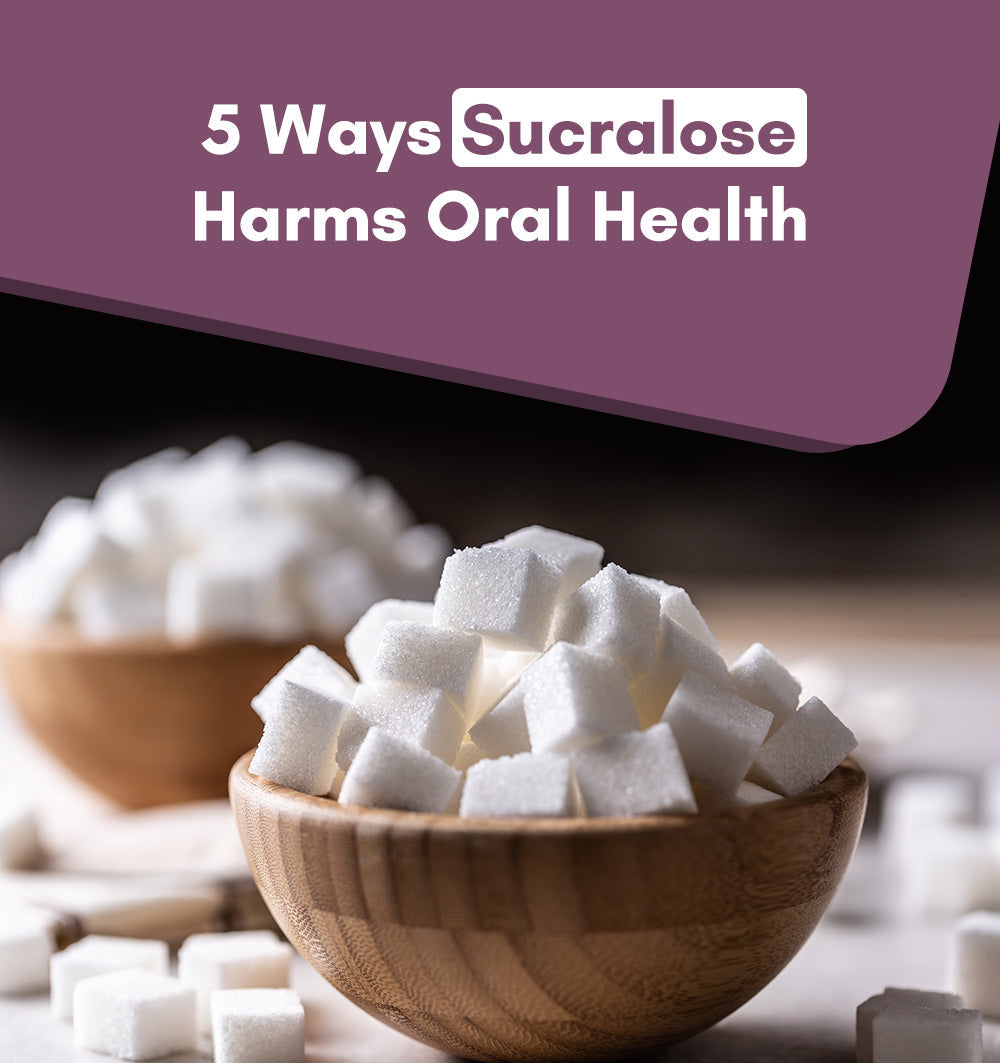
5 Ways Sucralose Harms Oral Health in 2026
What Is Sucralose?
Sucralose, widely marketed as a zero-calorie artificial sweetener, is a staple in many sugar-free products like gum, diet sodas, and desserts. While it may help people reduce caloric intake, recent studies have raised serious concerns about its potential adverse effects on health—particularly oral health.

A Brief History of Sucralose
Sucralose was discovered in 1976 by researchers at Queen Elizabeth College in London during experiments aimed at developing a new insecticide. The compound was later patented as a sweetener and introduced into the market in 1998 under the brand name Splenda. Today, sucralose is used in over 100 countries, with the United States, Canada, and Australia being among the largest consumers. However, some countries have applied additional regulatory scrutiny to artificial sweeteners including sucralose.
Sucralose vs. Natural Ingredients: A Health Comparison

Natural ingredients like organic honey, stevia, and xylitol provide sweetening options that are free from the chemical processing associated with sucralose. Unlike sucralose, which has been studied for potential effects on DNA and oral microbiome balance, these natural alternatives have been researched for their oral health properties. For example, xylitol has been shown to inhibit the growth of harmful bacteria and aid in enamel remineralization, while stevia maintains a neutral pH in the mouth, reducing the risk of acid erosion. Organic honey, though caloric, contains antimicrobial properties that can promote oral health when used in moderation. In contrast, sucralose’s chemically processed nature and its byproducts, like sucralose-6-acetate, have raised questions among some researchers about possible health effects. Choosing natural, organic ingredients supports a holistic approach to wellness, minimizing the risk of adverse effects.
Does Sucralose Cause Tooth Decay?
Some researchers have explored whether sucralose may influence oral health under certain conditions due to its chemical structure and the byproducts it produces. Firstly, it may influence oral acidity depending on the product formulation, leading to enamel erosion and increased vulnerability to cavities. Secondly, sucralose interferes with the oral microbiome by may affect the balance of oral bacteria while reducing beneficial bacteria. This imbalance can result in gum inflammation, bad breath, and a higher risk of periodontitis. Additionally, sucralose’s impact on salivary glands has been examined for possible effects on saliva flow in some studies, which is critical for neutralizing acids and protecting enamel. Over time, these factors contribute to a range of oral health issues, from dental decay to topics researchers continue to investigate regarding long-term safety due to the production of compounds currently being studied for safety considerations like sucralose-6-acetate.
(These statements have not been evaluated by the Food and Drug Administration. This product is not intended to diagnose, treat, cure, or prevent any disease.)**
5 Ways Sucralose Harms Oral Health
1. Disruption of Oral Microbiome
The balance of bacteria in your mouth is critical to maintaining healthy teeth and gums. Research has found that artificial sweeteners, including sucralose, can alter the oral microbiome. This imbalance may encourage the growth of harmful bacteria, leading to gum inflammation, cavities, and bad breath.
2. Increases Acidity in the Mouth
While sucralose is non-caloric, it interacts with other ingredients in processed foods to create acidic byproducts. Increased acidity in the mouth weakens tooth enamel, making teeth more susceptible to cavities and erosion.
3. Potential for DNA Damage
A groundbreaking study published in The Journal of Toxicology and Environmental Health linked sucralose consumption to the production of sucralose-6-acetate, a compound shown to cause DNA strand breaks. Research has explored how compounds currently being studied for potential genotoxic effects may affect oral tissues. These statements have not been evaluated by the Food and Drug Administration. This product is not intended to diagnose, treat, cure, or prevent any disease.(Medical News Today)
4. Delayed Saliva Production
Sucralose has been observed to affect the salivary glands, reducing saliva production. Saliva plays an essential role in neutralizing acids, washing away food particles, and providing minerals to repair enamel. A dry mouth condition can exacerbate dental problems like decay and gingivitis.
5. Worsens Pre-existing Oral Conditions
Some research suggests sucralose may be of concern for individuals with existing oral health sensitivities. Its chemical properties have been studied in relation to tissue irritation and inflammation, though research is ongoing.
(These statements have not been evaluated by the Food and Drug Administration. This product is not intended to diagnose, treat, cure, or prevent any disease.)**
The Bigger Picture: Systemic Effects of Sucralose

Research into DNA and Cellular Health
A study published on NCBI explored the toxicity of sucralose and its metabolites, focusing on the compound sucralose-6-acetate. This metabolite has been studied for its potential effects on genetic stability. Research in this area is ongoing and consumers are encouraged to review the available literature and consult their healthcare provider.
(These statements have not been evaluated by the Food and Drug Administration. This product is not intended to diagnose, treat, cure, or prevent any disease.)**
Impacts on Gut Health
While not directly tied to oral health, sucralose’s disruptive effects on the gut microbiome can indirectly influence oral conditions. A healthy gut supports a balanced immune response, which is crucial for combating oral infections and maintaining tissue health.
(These statements have not been evaluated by the Food and Drug Administration. This product is not intended to diagnose, treat, cure, or prevent any disease.)**
Prioritize Oral Health Naturally

The emerging evidence on sucralose’s adverse effects, from oral microbiome disruption to potential DNA damage, is a wake-up call to rethink its consumption. Protecting your oral health involves making informed choices about the foods and sweeteners you consume.
At Nathan and Sons, we are committed to using only organic, natural, and wildly foraged ingredients in our products. Choosing natural alternatives not only benefits your oral health but also aligns with a holistic approach to wellness. Make the switch to cleaner, safer chewing gum and oral care options today.
Sucralose & Tooth Decay FAQ's
Is sucralose bad for teeth?
Sucralose does not directly cause cavities like sugar, but research suggests it may contribute to enamel erosion, microbiome imbalance, and reduced saliva production.
Does sucralose affect saliva?
Some studies suggest artificial sweeteners may interfere with normal salivary flow, increasing dry mouth risk in certain individuals.
Is sucralose safe in chewing gum?
While approved for use, frequent exposure through gum may increase contact time with oral tissues, prompting concern for long-term oral health effects.
What sweeteners are best for oral health?
Xylitol and properly extracted stevia are among the most studied sweeteners with neutral or beneficial oral effects.
External Links:
--
These statements have not been evaluated by the Food and Drug Administration. This product is not intended to diagnose, treat, cure, or prevent any disease.