
What Is Sucralose? 5 Oral Health Questions Researchers Continue Exploring
Here is something worth knowing before you chew your next piece of sugar-free gum.
The sweetener making it taste sweet is almost certainly sucralose.
It is in thousands of products you use every day — gum, diet sodas, protein bars, flavored waters, yogurt, and most things labeled "sugar-free" or "zero calorie."
Most people have never once asked what sucralose actually is, how it is made, or what an expanding body of research is beginning to say about its effects on the body.
This article answers all of that — clearly, honestly, and with every claim backed by peer-reviewed research.
These statements have not been evaluated by the Food and Drug Administration.
This product is not intended to diagnose, treat, cure, or prevent any disease.
What Is Sucralose?
Sucralose is a synthetic, zero-calorie artificial sweetener approximately 600 times sweeter than table sugar.
It is sold under the brand name Splenda and is one of the most widely consumed artificial sweeteners in the world.
The FDA approved sucralose for use in 15 food categories in 1998 and as a general-purpose sweetener in 1999.
It is considered safe for consumption under current regulatory standards.
Sucralose is found in baked goods, beverages, chewing gum, gelatins, frozen dairy desserts, and thousands of other packaged food and beverage products worldwide.
How Is Sucralose Made?
Sucralose starts as regular table sugar — sucrose.
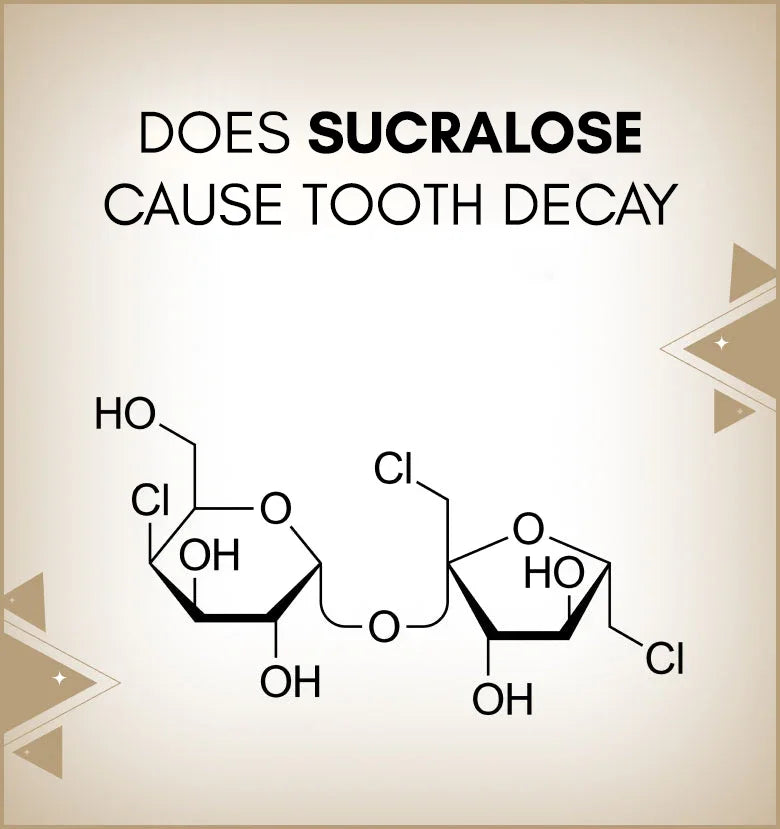
It is then put through a multi-step chemical process in which three of sucrose's hydroxyl groups are replaced with three chlorine atoms.
This molecular alteration does two things: it makes sucralose approximately 600 times sweeter than sugar, and it prevents the human body from metabolizing it for energy — which is why it contributes essentially no calories.
Because the body cannot break it down, sucralose passes through the digestive system largely unchanged — though emerging research is examining what happens along the way.
A Brief History of Sucralose
The discovery of sucralose in 1976 is one of chemistry's more memorable accidents.
Researchers at Queen Elizabeth College in London — working with scientists from Tate and Lyle — were studying chlorinated sugar compounds when a young chemist named Shashikant Phadnis reportedly misheard an instruction to "test" a compound as an instruction to "taste" it.
He did.
It was extraordinarily sweet.
That accidental tasting led to years of development and eventual FDA approval in 1998 — and sucralose quickly became the dominant artificial sweetener in the global food supply.
What Is Sucralose Used For?
Sucralose serves as a sweetening agent across a remarkably wide range of products.
In food and beverage products, it is found in diet sodas, flavored waters, protein bars, cereals, dairy products, sauces, and condiments.
In oral care and chewing gum products, sucralose is used as a sweetener to make products palatable without contributing to the sugar load.
In pharmaceuticals, it appears in liquid medications, syrups, and chewable tablets.
In baked goods, sucralose is preferred over some other artificial sweeteners because it is heat-stable — it retains its sweetness at high temperatures, making it suitable for cooking and baking.
Its combination of zero calories, high heat stability, no aftertaste, and clean sweet flavor has made it the sweetener of choice for manufacturers across almost every food and beverage category.
What Major Health Organizations Currently Say
This is where the picture becomes more nuanced than most product labels acknowledge.
Sucralose is FDA-approved and considered safe under current regulatory standards — that is the accurate regulatory baseline.
But in 2023, the World Health Organization issued guidance conditionally recommending against the use of non-sugar sweeteners — including sucralose — for weight management in the general population, citing potential unintended effects with long-term use.
The WHO recommendation was not a safety ban.
It was a signal that the research picture on artificial sweeteners including sucralose is still evolving — and that the assumption of total safety deserves continued scientific scrutiny.
A 2024 comprehensive review published in Life examining the global health implications of sucralose found evidence of associations between sucralose consumption and microbiome-related changes, inflammatory markers, and metabolic effects across multiple studies, while noting that more research is needed to establish clinical conclusions.
Evidence continues to evolve.
Current evidence does not establish definitive harm at normal dietary consumption levels.
These statements have not been evaluated by the FDA and should not be interpreted as disease-treatment claims.
5 Oral Health Questions Researchers Continue Exploring About Sucralose

Sucralose Is Non-Cariogenic — But Is That the Whole Story?
The first thing most dentists will tell you about sucralose is that it does not directly cause cavities.
And they are correct.
A review published in the British Dental Journal confirmed that sucralose has no effect on tooth decay and is validated as non-cariogenic by the European Food Safety Authority.
Oral bacteria cannot ferment sucralose.
Without fermentation, lactic acid is not produced.
Without lactic acid, the direct cavity mechanism associated with sugar consumption does not occur.
That is genuinely good news.
But "does not directly cause cavities" is not the same as "has no oral health questions worth asking" — and this is where the fuller research picture matters.
These statements have not been evaluated by the FDA.
What About the Acids in Products That Contain Sucralose?
Here is a scenario most people never consider.
You switch from regular soda to diet soda.
You tell yourself your teeth are safer.
The sucralose is not fermenting.
The direct cavity mechanism is not occurring.
But the phosphoric acid and citric acid in that diet soda?
Still there.
Still in contact with your enamel every time you take a sip.
A review of acidic beverages and dental erosion found that enamel erosion becomes more pronounced at beverage pH levels below 4.0 — a threshold that diet sodas and flavored drinks containing sucralose commonly meet.
Sucralose itself is not acidic.
But it travels in acidic company in almost every product that contains it.
The label says sugar-free.
It does not say acid-free.
For more on supporting enamel health between meals, our article on natural solutions for tooth sensitivity is worth reading alongside this one.
These statements have not been evaluated by the FDA.
What Does Emerging Research Say About Sucralose and the Microbiome?
Your mouth is an ecosystem.
It contains hundreds of bacterial species in a carefully maintained balance — and researchers continue studying whether shifts in microbiome balance may influence oral health conditions such as plaque accumulation and gum irritation.
Emerging research is examining whether sucralose consumption affects that balance.
A 2022 study published in Frontiers in Nutrition found that low-dose sucralose consumption was associated with alterations in gut microbiome composition in animal models.
A 2023 review published in Nutrients examining non-nutritive sweeteners and the gut microbiota found that sucralose was among the artificial sweeteners associated with microbiome-related changes observed in certain studies.
A 2025 study published in Frontiers in Microbiology examining synthetic versus non-synthetic sweeteners found differential effects on gut microbiome diversity and function across sweetener types.
Most of this research examines the gut microbiome rather than the oral microbiome specifically.
But the oral cavity is the entry point to the digestive system — and researchers continue studying whether microbiome-related changes observed downstream have implications upstream.
A review published in the Journal of Global Oral Health noted that the data on artificial sweeteners and oral health specifically remains an area where more targeted research would be valuable.
These statements have not been evaluated by the FDA and should not be interpreted as disease-treatment claims.
What Is the Current State of the Sucralose-6-Acetate Research?
A study published in the Journal of Toxicology and Environmental Health in 2023 by researchers at North Carolina State University and UNC Chapel Hill found that sucralose-6-acetate — a metabolite and impurity associated with sucralose — demonstrated genotoxic properties in in vitro laboratory experiments.
The researchers also reported finding trace amounts of sucralose-6-acetate in commercially available sucralose products.
This study is part of an evolving area of research that health-conscious consumers and researchers are paying attention to.
It is important to be precise about what it established — and what it did not.
The study was conducted in vitro — in laboratory cell cultures, not in living human subjects.
Current evidence does not establish definitive harm to humans at normal dietary consumption levels.
The Splenda manufacturer disputed several of the study's findings, stating that sucralose-6-acetate is not present in their products and that no published study has demonstrated that sucralose converts to sucralose-6-acetate in the human body during normal consumption.
The American Council on Science and Health published a detailed analysis noting important limitations including the in vitro design and test concentrations used.
Long-term implications are still being explored.
We are presenting this research because it is real, peer-reviewed, and part of an ongoing scientific discussion — not to make definitive claims about what sucralose does in the human body at normal consumption levels.
These statements have not been evaluated by the FDA and are not intended to diagnose, treat, cure, or prevent any disease.
Does Sucralose Influence Hunger and Dietary Behavior Differently Than Sugar?
This is one of the more recent and surprising areas of sucralose research.
A study published in Cell Metabolism by Gu et al. examined how sucralose impacts hunger signals in the brain.
Researchers found that sucralose significantly increased coupling between the hypothalamus and the anterior cingulate cortex — a brain region involved in reward processing and food cravings — compared to table sugar.
Participants who consumed sucralose reported higher hunger levels after consumption than those who consumed regular sugar.
The research suggests that sucralose may not satisfy the brain's reward response to sweetness in the same way sugar does — potentially influencing subsequent food consumption behavior.
This is not a direct oral health finding.
But it is relevant to the broader picture of what sucralose does — and does not do — compared to the sweetness it replaces.
These statements have not been evaluated by the FDA.
Sucralose vs. Xylitol: A Different Research Profile
Not every sweetener in a sugar-free product has the same oral health research profile.
Sucralose does not cause cavities — but it has not been studied as extensively for oral-health-supportive properties as xylitol.
Xylitol, by contrast, has been associated in research with actively supporting oral health.
A 2022 study published in Frontiers in Nutrition found that xylitol gum was associated with a 20 percent reduction in dental plaque accumulation and a meaningful decrease in cariogenic bacteria compared to controls.
A 2024 systematic review published in European Archives of Paediatric Dentistry found that xylitol's effect on oral health is linked to increased saliva production — especially when used in chewing gum form.
A 2022 systematic review published in Clinical Oral Investigations found that xylitol gum was associated with decreased plaque accumulation in the majority of studies examined.
These ingredients have different research profiles and are studied in different oral health contexts.
This is exactly why Nathan and Sons uses xylitol — not sucralose — in our remineralizing gum and across our oral care product line.
For a deeper look at xylitol's oral health research profile, our guide to everything you need to know about xylitol as a natural sweetener covers the full evidence base.
If you want to understand how sucralose compares in the context of a specific oral health question, our full article on whether sucralose causes tooth decay covers the research in detail.
Is Sucralose Safe?
The accurate answer to this question is: sucralose is FDA-approved and considered safe for general consumption under current regulatory standards — and that regulatory status has not changed.
What has changed is the depth of scientific scrutiny being applied to long-term artificial sweetener use.
The WHO's 2023 guidance, the sucralose-6-acetate research, the microbiome studies, and the hunger signal research collectively represent a growing body of questions — not a proven verdict.
What they do suggest is that the assumption of total safety deserves continued examination.
For consumers who prefer to make choices based on the most current research picture rather than the most convenient label claim, that distinction is worth knowing.
To learn more about who we are and why ingredient transparency matters to us, visit our about page.
These statements have not been evaluated by the FDA.
Key Takeaways: What Is Sucralose?
Sucralose is a synthetic, zero-calorie artificial sweetener approximately 600 times sweeter than table sugar, made by replacing three hydroxyl groups in sucrose with three chlorine atoms.
It is FDA-approved and considered safe under current regulatory standards.
The WHO issued guidance in 2023 conditionally recommending against non-sugar sweeteners including sucralose for weight management, citing evolving research.
Sucralose is non-cariogenic — it does not directly cause cavities because oral bacteria cannot ferment it.
However, many products containing sucralose also contain acidic ingredients associated with enamel erosion.
Research has found microbiome-related changes associated with sucralose in certain studies — human evidence continues to evolve.
A 2023 peer-reviewed study found sucralose-6-acetate demonstrated genotoxic properties in in vitro laboratory conditions — long-term implications are still being explored and current evidence does not establish definitive harm at normal dietary levels.
A peer-reviewed study published in Cell Metabolism found sucralose may increase hunger signaling and brain reward coupling compared to sugar.
Xylitol has not been studied as extensively for oral-health-supportive properties as xylitol — it has been associated in research with reduced cariogenic bacteria and increased saliva production.
Nathan and Sons uses xylitol rather than sucralose based on the ingredient profile and oral care research discussed above.
These statements have not been evaluated by the FDA.
Not intended to diagnose, treat, cure, or prevent any disease.
Frequently Asked Questions: What Is Sucralose?
What is sucralose?
Sucralose is a synthetic, zero-calorie artificial sweetener made from sucrose through a chemical process that replaces three hydroxyl groups with three chlorine atoms.
It is approximately 600 times sweeter than table sugar, does not contribute calories, and is sold under the brand name Splenda.
It is FDA-approved and found in thousands of food and beverage products worldwide.
What is sucralose made from?
Sucralose is made from regular table sugar — sucrose — through a multi-step chemical process that replaces three hydroxyl groups with three chlorine atoms.
This molecular change makes it significantly sweeter than sugar and prevents the body from metabolizing it for energy.
Is sucralose safe?
Sucralose is FDA-approved as a food additive and is considered safe under current regulatory standards.
In 2023, the WHO issued guidance conditionally recommending against non-sugar sweeteners including sucralose for weight management, citing evolving research on potential long-term effects.
Current evidence does not establish definitive harm at normal dietary consumption levels.
Consult a healthcare provider if you have specific health concerns.
These statements have not been evaluated by the FDA.
Does sucralose cause tooth decay?
Research confirms that sucralose is non-cariogenic — it does not feed the bacterial fermentation processes that directly cause cavities.
However, many products containing sucralose also contain acidic ingredients that may contribute to enamel erosion independent of bacterial activity.
For more on this topic, our full article on whether sucralose causes tooth decay covers the research in detail.
These statements have not been evaluated by the FDA.
What is sucralose-6-acetate?
Sucralose-6-acetate is a metabolite and impurity associated with sucralose examined in a 2023 peer-reviewed study published in the Journal of Toxicology and Environmental Health.
The study found it demonstrated genotoxic properties in in vitro laboratory conditions.
The manufacturer of Splenda disputed several of the study's claims.
Current evidence does not establish definitive harm to humans at normal dietary consumption levels.
Long-term implications are still being explored.
These statements have not been evaluated by the FDA.
Is sucralose the same as Splenda?
Splenda is the most widely recognized brand name for sucralose.
However, sucralose itself is the active ingredient — Splenda also contains bulking agents including maltodextrin and dextrose to bring it to a volume comparable to sugar.
Pure sucralose is also used as an ingredient in thousands of other food and beverage products under its generic name.
Is xylitol better than sucralose for oral health?
Xylitol and sucralose have different research profiles and have been studied in different oral health research contexts.
Xylitol has been associated in research with reduced cariogenic bacteria, decreased plaque accumulation, and increased saliva production.
Sucralose has not been studied as extensively for oral-health-supportive properties as xylitol.
For oral care products specifically, xylitol has a more extensively studied oral health research profile.
These statements have not been evaluated by the FDA.
Why does Nathan and Sons use xylitol instead of sucralose?
Nathan and Sons uses xylitol in our oral care products based on the ingredient profile and oral care research discussed in this article.
We prefer ingredients with more extensively studied oral-health-focused research profiles and formulations some consumers feel more comfortable using daily.
We do not use sucralose, aspartame, sorbitol, or acesulfame potassium.
The full ingredient list for every product is on our product pages.
What products commonly contain sucralose?
Sucralose is found in diet sodas, flavored waters, sugar-free chewing gum, protein bars, cereals, yogurt, baked goods, condiments, liquid medications, and thousands of other packaged food and beverage products.
Reading ingredient labels is the most reliable way to identify sucralose in your daily routine.
Legal & Compliance Disclaimer
These statements have not been evaluated by the Food and Drug Administration. This product is not intended to diagnose, treat, cure, or prevent any disease. The information in this article is for educational purposes only and is not a substitute for professional dental or medical advice. Consult a qualified dental or healthcare provider before making changes to your oral care routine. Content current as of 2026. Subject to revision.
References
U.S. Food and Drug Administration. Aspartame and Other Sweeteners in Food. fda.gov/food/food-additives-petitions/aspartame-and-other-sweeteners-food.
World Health Organization. (2023). WHO advises not to use non-sugar sweeteners for weight control. who.int/news/item/15-05-2023-who-advises-not-to-use-non-sugar-sweeteners-for-weight-control-in-newly-released-guideline.
Aguayo-Guerrero JA, et al. (2024). Sucralose: From Sweet Success to Metabolic Controversies. Life, 14(3), 323. PMC10971371.
Schiffman SS, Scholl EH, Furey TS, Nagle HT. (2023). Toxicological and pharmacokinetic properties of sucralose-6-acetate and its parent sucralose: in vitro screening assays. Journal of Toxicology and Environmental Health, Part B. DOI: 10.1080/10937404.2023.2213903.
American Council on Science and Health. (2023). Breaking down the sucralose study. acsh.org/news/2023/06/14/breaking-down-sucralose-study-17134.
Zheng Z, Xiao Y, Ma L, et al. (2022). Low dose of sucralose alters gut microbiome in mice. Frontiers in Nutrition. PMC8916702.
Méndez-García LA, et al. (2023). Review of non-nutritive sweeteners and gut microbiota. Nutrients.
Frontiers in Microbiology. (2025). Synthetic vs. non-synthetic sweeteners: differential effects on gut microbiome diversity and function. DOI: 10.3389/fmicb.2025.1531131.
Gu X, et al. (2022). Sucralose promotes food intake through NPY and a neuronal fasting response. Cell Metabolism. DOI: 10.1016/j.cmet.2022.10.009.
British Dental Journal. (2018). Alternative sugars: Sucralose. nature.com/articles/sj.bdj.2018.15.
Review of acidic beverages and dental erosion. (2008). Journal of Nutrition. sciencedirect.com/article/abs/pii/S0271531708000444.
Journal of Global Oral Health. (2024). Non-sugar substitutes: effects on oral health.
Wu YF, Salamanca E, et al. (2022). Xylitol-containing chewing gum reduces cariogenic and periodontopathic bacteria in dental plaque. Frontiers in Nutrition, 9, 882636. PMC9131035.
Söderling E, Pienihäkkinen K. (2022). Effects of xylitol chewing gum and candies on the accumulation of dental plaque: a systematic review. Clinical Oral Investigations, 26, 119–129.
Latifi-Xhemajli B, et al. (2024). The effect of xylitol chewing gums and candies on caries occurrence in children. European Archives of Paediatric Dentistry. PMC11058973.