
Most people have encountered menthone without knowing it.
It is one of the compounds frequently examined in antimicrobial and anti-inflammatory research involving peppermint oil — and one of the terpene compounds researchers have studied in oral care contexts.
This article covers what menthone is, where it comes from, and what peer-reviewed research says about its behavior in oral health contexts.
These statements have not been evaluated by the Food and Drug Administration.
This product is not intended to diagnose, treat, cure, or prevent any disease.
What Is Menthone?
Menthone is a monoterpene — a naturally occurring organic compound belonging to the terpene family of plant-derived chemicals.
It is found primarily in the essential oils of peppermint (Mentha piperita) and spearmint (Mentha spicata) — where it typically constitutes between 14 and 30 percent of the total essential oil composition depending on the plant source and growing conditions.
A PMC study examining the chemical composition and biological activity of Mentha piperita essential oil confirmed that menthone is one of the dominant constituents of peppermint essential oil — identified alongside menthol and menthyl acetate as primary components — and that the oil exhibited potent anti-inflammatory activities and inhibited nitric oxide and prostaglandin E2 production in laboratory macrophage models.
Menthone was formally identified as a distinct chemical compound in the 19th century as scientists isolated the individual components of mint essential oils.
It is classified as a monoterpene ketone — a structural designation that influences both its chemical behavior and its biological activity in research settings.
A ScienceDirect overview of menthone confirmed that menthone is a pharmacologically active constituent found in mint oil belonging to the genus Mentha of the Lamiaceae family — and that it has been studied for antioxidant, anti-inflammatory, and anti-infection activities.
These statements have not been evaluated by the FDA.
5 Key Benefits of Menthone for Oral Health

Research has examined menthone in several oral health contexts — from its antimicrobial activity against specific bacterial species to its anti-inflammatory properties and its role in breath-related research.
Here is what the peer-reviewed literature has found across five key areas.
1. Antimicrobial Activity Against Oral Bacteria
Menthone has been examined for its activity against oral bacteria — specifically the species most associated with dental biofilm and acid production.
A 2024 peer-reviewed PubMed study examining Mentha piperita essential oil — with menthone identified as one of the two primary active components at approximately 26 percent of total composition — found that the oil significantly reduced Streptococcus mutans biofilm formation in laboratory conditions without inducing cell toxicity.
Streptococcus mutans is classified as a primary etiological contributor to dental caries because of its acid production from fermentable carbohydrates and its role in biofilm formation on tooth surfaces.
These are laboratory findings and should not be interpreted as clinical claims about dental caries prevention.
These statements have not been evaluated by the FDA.
2. Anti-Inflammatory Properties in Research Models
Menthone and the peppermint essential oil in which it is a primary component have been examined in research for their effects on inflammatory signaling.
A PMC study on the anti-inflammatory activity of Mentha piperita essential oil — with menthone identified as a dominant constituent — found that the oil effectively inhibited nitric oxide and prostaglandin E2 production in lipopolysaccharide-activated macrophage models in laboratory conditions.
The ScienceDirect overview of menthone confirmed that menthone has been studied for inhibition of inflammatory gene expression in research models.
These are laboratory findings and should not be interpreted as claims that menthone treats or prevents gum disease or periodontal conditions.
These statements have not been evaluated by the FDA.
3. Relevance to Bad Breath Research
The bacteria most associated with oral malodor — anaerobic species that produce volatile sulfur compounds including hydrogen sulfide and methyl mercaptan — are an area where menthone's antimicrobial research profile is relevant.
A review published in the European Journal of Oral Sciences examining essential oils for halitosis treatment found that terpene compounds from peppermint oil — including the menthone fraction — showed documented antimicrobial activity against volatile sulfur compound-producing oral bacteria and demonstrated salivation-stimulating effects.
These are research observations and should not be interpreted as claims that menthone prevents or treats halitosis.
Consult a qualified dental professional for persistent breath concerns.
These statements have not been evaluated by the FDA.
4. Antioxidant Properties in Research Contexts
Menthone has been examined in research for antioxidant properties alongside its antimicrobial and anti-inflammatory characteristics.
A PMC study on Mentha piperita essential oil found that the oil — with menthone as a primary component — had moderate antioxidant activity in the experimental conditions studied.
The ScienceDirect overview of menthone confirmed that menthone has been studied for antioxidant activity alongside its anti-inflammatory and anti-infection properties.
Oxidative stress in the oral environment — which can intensify through daily habits and bacterial activity — is an area researchers have examined in relation to oral tissue health.
These are research observations and should not be interpreted as treatment claims for any oral health condition.
These statements have not been evaluated by the FDA.
5. Naturally Sourced Botanical Ingredient Studied in Oral Care Research
Menthone is a naturally occurring terpene compound derived directly from plant essential oils.
Synthetic flavoring agents have not been studied in the same oral-health research contexts as plant-derived terpene compounds.
Peer-reviewed research on menthone examines its antimicrobial and anti-inflammatory properties in oral biology contexts — research areas that have primarily focused on plant-derived terpene compounds.
A peer-reviewed study examining phenolic essential oil compounds against oral microorganisms published in PMC found that menthol and related terpene compounds including menthone demonstrated measurable minimum inhibitory concentrations against oral pathogens.
These statements have not been evaluated by the FDA.
What the Research Says About Menthone and Oral Bacteria
The most relevant area of menthone research for oral care contexts is its antimicrobial activity — specifically its examined effects on oral bacteria associated with tooth decay and bad breath.
A 2024 peer-reviewed study published in PubMed examining the chemical composition and antibiofilm activity of Mentha piperita essential oil against Streptococcus mutans identified menthone as one of the two primary active components — constituting approximately 26 percent of the essential oil — and found that the oil significantly reduced bacterial biofilm, exhibited activity against S. mutans, and did not induce cell toxicity in the experimental conditions studied.
A PMC review of the chemical composition and anti-inflammatory activity of Mentha piperita essential oil found that the oil — dominated by menthol and menthone — exhibited potent anti-inflammatory activities in laboratory models and effectively inhibited nitric oxide and prostaglandin E2 production.
A peer-reviewed review published in the European Journal of Oral Sciences examining essential oils for halitosis treatment found that terpene compounds from peppermint oil — including menthone — showed documented antimicrobial activity against volatile sulfur compound-producing oral bacteria — the anaerobic species most associated with bad breath — and that peppermint oil also demonstrated salivation-stimulating effects.
These are laboratory and review findings — not established clinical outcomes for specific oral health conditions.
These statements have not been evaluated by the FDA and should not be interpreted as disease-treatment claims.
What the Research Says About Menthone and Inflammation

Oral tissues — including gum tissue, oral mucosa, and epithelial surfaces — are sensitive to inflammatory processes driven by bacterial activity, mechanical irritation, and oxidative stress.
The anti-inflammatory research profile of menthone and its parent essential oil is one of the areas researchers have examined in relationship to oral tissue health.
A PMC study on the chemical composition and anti-inflammatory activity of Mentha piperita essential oil — with menthone identified as a primary component — found that the oil effectively inhibited nitric oxide and prostaglandin E2 production in lipopolysaccharide-activated macrophage models in laboratory conditions.
The ScienceDirect overview of menthone confirmed that menthone has been studied for its anti-inflammatory properties — including inhibition of inflammatory gene expression — in research models.
A comprehensive PMC systematic review examining herbal medicines with anti-inflammatory and antimicrobial properties in oral health confirmed that plant-derived compounds with anti-inflammatory and antimicrobial properties — including terpene-rich essential oils — are an active area of oral health research.
These are research observations from laboratory and review settings — not established clinical outcomes for gum disease, gingivitis, or periodontal conditions.
Consult a qualified dental professional for guidance on any oral health condition.
These statements have not been evaluated by the FDA.
What the Research Says About Menthone and Bad Breath
Bad breath — clinically known as halitosis — affects approximately 25 to 50 percent of adults and is primarily caused by volatile sulfur compounds produced by anaerobic oral bacteria as they break down proteins in the oral environment.
A PMC review on the role of oral microbiota in halitosis confirmed that the primary volatile sulfur compounds responsible for halitosis are hydrogen sulfide, methyl mercaptan, and dimethyl sulfide — produced predominantly by gram-negative anaerobic bacteria colonizing the tongue dorsum and periodontal pockets.
The relevance of menthone to halitosis research comes from its examined antimicrobial activity against the bacteria that produce these volatile sulfur compounds.
A review published in the European Journal of Oral Sciences found that terpene compounds from peppermint oil — including the menthone fraction — showed documented antimicrobial activity against volatile sulfur compound-producing oral bacteria and demonstrated salivation-stimulating properties — both mechanisms relevant to the oral conditions associated with bad breath.
For a broader look at the research on oral ingredients examined for fresh breath support, our article on best gum for fresh breath covers the evidence in detail.
These are research observations and should not be interpreted as claims that menthone prevents or treats halitosis.
These statements have not been evaluated by the FDA.
Menthone in Oral Care Formulations
Menthone is one of the terpene compounds researchers have examined in oral care research contexts.
Because it is derived from plant essential oils rather than synthesized chemically, it appears in natural oral care formulations as a botanical flavoring ingredient alongside other plant-derived compounds.
When menthone is included in an oral care product, it contributes its individual research profile to the formulation — antimicrobial activity examined in laboratory settings and anti-inflammatory properties studied in research models.
The research discussed in this article evaluates menthone as an ingredient in laboratory and clinical research contexts.
Any finished product containing menthone has not been evaluated by the FDA for the prevention, treatment, or mitigation of any condition.
For more on the research behind natural oral care formulations, our article on what is remineralizing gum covers the ingredient research landscape in detail.
For more on the broader fresh breath research context, our article on natural chewing gum covers the plant-based ingredient landscape.
Browse our full oral care collection to see everything we make — with full ingredient transparency on every product page.
To learn more about who we are and why ingredient transparency matters to us, visit our about page.
What This Article Does Not Claim
Menthone research is primarily conducted in laboratory settings — in vitro, using cultured bacteria or macrophage models rather than in large-scale human clinical trials.
The findings described above represent a meaningful and developing research base — not established clinical outcomes for specific oral health conditions.
Menthone-containing products are not dental treatments.
They do not treat, prevent, or cure gum disease, dental caries, halitosis, or any other oral health condition.
They do not replace brushing, flossing, tongue cleaning, or professional dental care.
Consult a qualified dental or healthcare provider before making changes to your oral care routine.
These statements have not been evaluated by the FDA and are not intended to diagnose, treat, cure, or prevent any disease.
Key Takeaways: Benefits of Menthone

Menthone is a monoterpene found naturally in peppermint and spearmint essential oils — typically constituting 14 to 30 percent of peppermint essential oil composition.
It is one of the compounds frequently examined in antimicrobial and anti-inflammatory research involving peppermint oil.
A 2024 PubMed study identified menthone as one of the two primary active components of Mentha piperita essential oil and found the oil significantly reduced bacterial biofilm in laboratory conditions without inducing cell toxicity.
Menthone has been examined for anti-inflammatory properties — specifically inhibition of nitric oxide and prostaglandin E2 production in macrophage laboratory models.
Terpene compounds from peppermint oil including menthone have been studied for antimicrobial activity against volatile sulfur compound-producing oral bacteria associated with bad breath.
Most menthone research has been conducted in laboratory settings rather than large-scale human clinical trials.
Menthone appears in natural oral care formulations as a botanical ingredient studied in oral care research contexts — contributing its individual research profile to formulations that use plant-derived rather than synthetic flavoring compounds.
These statements have not been evaluated by the FDA. Not intended to diagnose, treat, cure, or prevent any disease.
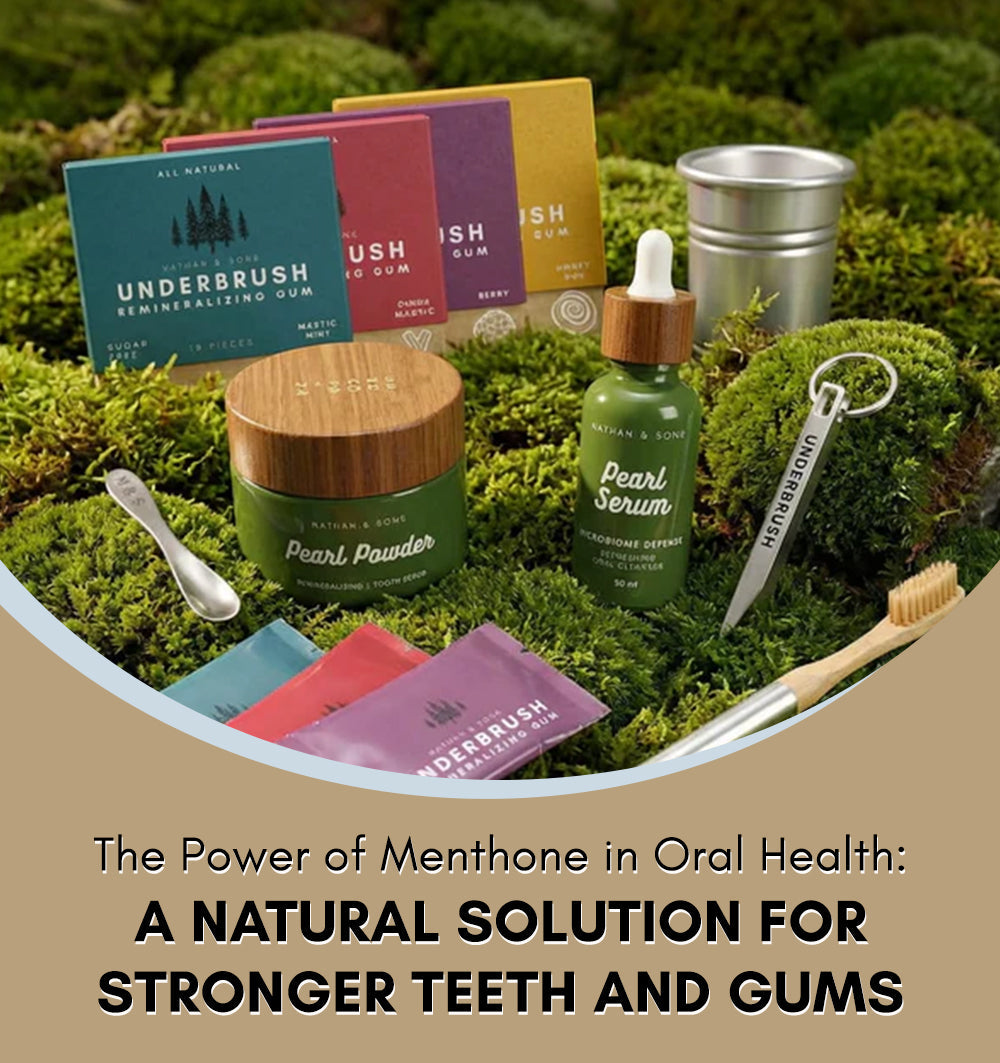
Explore our Underbrush Remineralizing Gum today!
Frequently Asked Questions: Benefits of Menthone
What is menthone?
Menthone is a naturally occurring monoterpene found primarily in peppermint and spearmint essential oils — where it typically constitutes between 14 and 30 percent of the essential oil composition.
It is classified as a monoterpene ketone and has been studied in research contexts for antimicrobial, anti-inflammatory, and antioxidant properties.
These statements have not been evaluated by the FDA and are not intended to diagnose, treat, cure, or prevent any disease.
What has research found about menthone and oral bacteria?
A 2024 peer-reviewed PubMed study identified menthone as one of the two primary active components of Mentha piperita essential oil and found the oil significantly reduced Streptococcus mutans biofilm formation in laboratory conditions — without inducing cell toxicity in the experimental settings studied.
These are laboratory findings and should not be interpreted as clinical claims about dental caries prevention.
These statements have not been evaluated by the FDA and are not intended to diagnose, treat, cure, or prevent any disease.
Does menthone help with bad breath?
Terpene compounds from peppermint oil including menthone have been examined in research for antimicrobial activity against the volatile sulfur compound-producing oral bacteria most associated with bad breath.
A review published in the European Journal of Oral Sciences found that peppermint terpene compounds showed documented antimicrobial activity against VSC-producing oral bacteria and demonstrated salivation-stimulating effects.
These are research observations and should not be interpreted as claims that menthone treats or prevents halitosis.
Consult a qualified dental professional for persistent breath concerns.
These statements have not been evaluated by the FDA and are not intended to diagnose, treat, cure, or prevent any disease.
How does menthone differ from artificial mint flavoring?
Menthone is a naturally occurring terpene compound derived from plant essential oils — not a synthetic flavoring agent.
Synthetic flavoring agents have not been studied in the same oral-health research contexts as plant-derived terpene compounds.
Peer-reviewed research on menthone examines its antimicrobial and anti-inflammatory properties in oral biology contexts — research areas that have primarily focused on plant-derived terpene compounds.
These statements have not been evaluated by the FDA and are not intended to diagnose, treat, cure, or prevent any disease.
Is menthone used in oral care products?
Menthone appears in natural oral care formulations as a botanical flavoring ingredient — typically as part of a broader terpene or essential oil blend.
Because it is derived from plant essential oils rather than synthesized chemically, it is used in formulations that prioritize plant-based rather than synthetic flavoring compounds.
The research discussed in this article evaluates menthone in laboratory and clinical research contexts — any finished product containing menthone has not been evaluated by the FDA for the prevention, treatment, or mitigation of any condition.
These statements have not been evaluated by the FDA and are not intended to diagnose, treat, cure, or prevent any disease.
Legal & Compliance Disclaimer
These statements have not been evaluated by the Food and Drug Administration. This product is not intended to diagnose, treat, cure, or prevent any disease. The information in this article is for educational purposes only and is not a substitute for professional dental or medical advice. Consult a qualified dental or healthcare provider before making changes to your oral care routine. Content current as of 2026. Subject to revision.
References
PMC. (2014). Chemical composition and anti-inflammatory, cytotoxic and antioxidant activities of essential oil from leaves of Mentha piperita grown in China. PMC4262447.
PubMed. (2024). Chemical composition, cytotoxicity, antimicrobial, antibiofilm, and anti-quorum sensing potential of Mentha piperita essential oil against the oral pathogen Streptococcus mutans. PMID: 38984907.
ScienceDirect Topics. Menthone — overview. sciencedirect.com/topics/medicine-and-dentistry/menthone.
Dobler D, et al. (2020). Effect of essential oils on oral halitosis treatment: a review. European Journal of Oral Sciences, 128(6). onlinelibrary.wiley.com/doi/10.1111/eos.12745.
PMC. (2020). The role of oral microbiota in intra-oral halitosis. PMC7465478.
PMC. (2025). Effectiveness of herbal medicines with anti-inflammatory, antimicrobial, and antioxidant properties in improving oral health and treating gingivitis and periodontitis: a systematic review. PMC11901544.
Dallmeier K, et al. (2016). Evaluation of the antibacterial potential of phenolic essential oil compounds against oral microorganisms. PMC5040402.