
Most people think about oral health in terms of brushing, flossing, and diet.
Fewer people think about hormones.
But the research is clear: hormonal fluctuations affect the oral environment in measurable ways — influencing saliva flow, oral pH, gum tissue sensitivity, and enamel vulnerability.
Understanding that connection is the first step toward supporting oral health more completely.
These statements have not been evaluated by the Food and Drug Administration.
This product is not intended to diagnose, treat, cure, or prevent any disease.
How Hormones Affect the Oral Environment
Hormonal changes are not an isolated event — they ripple through multiple biological systems including the mouth.
A 2025 cross-sectional study published in BMC Oral Health confirmed that hormonal fluctuations across life stages can influence systemic and oral health — with elevated estrogen and progesterone levels associated with increased gingival blood flow and inflammation in susceptible individuals, and declining estrogen associated with xerostomia and heightened risk of periodontal disease.
A scoping review published in PMC examining oral manifestations in menopause analyzed 30 studies and found that xerostomia and altered taste are the most common oral manifestations of hormonal change — followed by indirect effects on periodontitis.
A 2014 peer-reviewed study published in PMC examining salivary changes across hormonal phases confirmed that hormonal fluctuations during menstruation, pregnancy, and menopause measurably affect salivary flow rate and oral pH — with postmenopausal women showing the most pronounced changes.
Research published in the Journal of Mid-Life Health found that postmenopausal women with declining estradiol levels showed measurable changes in salivary parameters and oral health indicators — describing saliva as an emerging biofluid for assessing estradiol and calcium levels simultaneously.
A PMC review on salivary changes in female reproductive transitions confirmed that declining estrogen levels are associated with decreased saliva flow, changes in salivary pH, and reduced buffering capacity — the natural defense mechanism that protects enamel from acid attack.
These are research observations from peer-reviewed literature.
They should not be interpreted as claims about treating, preventing, or curing any condition.
Consult a qualified dental or healthcare provider for guidance specific to your situation.
These statements have not been evaluated by the FDA.

Three Oral Health Areas Researchers Study During Hormonal Shifts
Saliva production and composition
Saliva is the mouth's primary defense system — neutralizing acids, washing away bacteria, and delivering the calcium and phosphate ions that support enamel.
The American Dental Association notes that stimulated saliva carries calcium and phosphate ions that contribute to enamel remineralization and buffers the effects of acids.
When hormonal changes affect salivary gland function — as documented in the research above — saliva volume and composition can shift in ways that reduce this protective capacity.
Oral pH and enamel vulnerability
A more acidic oral environment creates conditions less favorable for enamel mineral stability.
When saliva flow decreases or its buffering capacity is reduced — changes researchers have documented during hormonal transitions — the oral pH can shift toward more acidic conditions.
A systematic review published in PMC on dental caries in postmenopausal women confirmed that salivary glands are estrogen-dependent — and that after menopause, changes in salivary flow and consistency produce dry mouth, which can increase susceptibility to dental caries.
Gum tissue sensitivity
Hormones influence blood flow to gum tissue and the tissue's inflammatory response to bacterial plaque.
As Tufts University researchers explained, hormonal changes can alter blood flow to the gums and affect immune response — making the body more susceptible to gum inflammation during hormonal flux.
These statements have not been evaluated by the FDA.
Supporting Oral Health During Hormonal Shifts: What the Research Suggests
The research on hormonal influences on oral health points toward several practical oral care considerations.
Stimulating saliva
Chewing sugar-free gum after meals stimulates saliva production — which the ADA specifically recommends for its acid-buffering and remineralization-supporting effects.
For more on how saliva stimulation supports enamel health, our article on what is remineralizing gum covers the research in detail.
Mineral support for enamel
Nano and micro hydroxyapatite — chemically identical to the mineral that makes up tooth enamel — have been examined in peer-reviewed research for their potential to interact with enamel mineral surfaces during periods of increased vulnerability.
A systematic review published in Clinical Oral Investigations found significant remineralization potential for nano-hydroxyapatite when surface hardness testing was used as the measurement standard.
For more on nano-hydroxyapatite specifically, our article on nano-hydroxyapatite oral care benefits covers the full research base.
pH buffering
Sodium bicarbonate is a well-established oral pH buffering ingredient — helping neutralize acids that can weaken enamel when the oral environment becomes more acidic.
DIM and oral biology research
DIM — diindolylmethane — is a compound formed from cruciferous vegetables that has been examined in laboratory research for its interactions with oral biofilm and inflammatory signaling in oral tissue contexts.
For more on the oral science research behind DIM, our article on what is DIM covers the peer-reviewed evidence.
For more on how DIM has been studied alongside minerals and oral care ingredients, our article on minerals that support DIM effectiveness covers that research context.
For more on DIM's broader research profile including estrogen metabolism pathways, our article on how DIM supports estrogen metabolism is worth reading alongside this one.
The research discussed above evaluates individual ingredients in laboratory and clinical research contexts.
The finished product has not been evaluated by the FDA for the prevention, treatment, or mitigation of any condition.
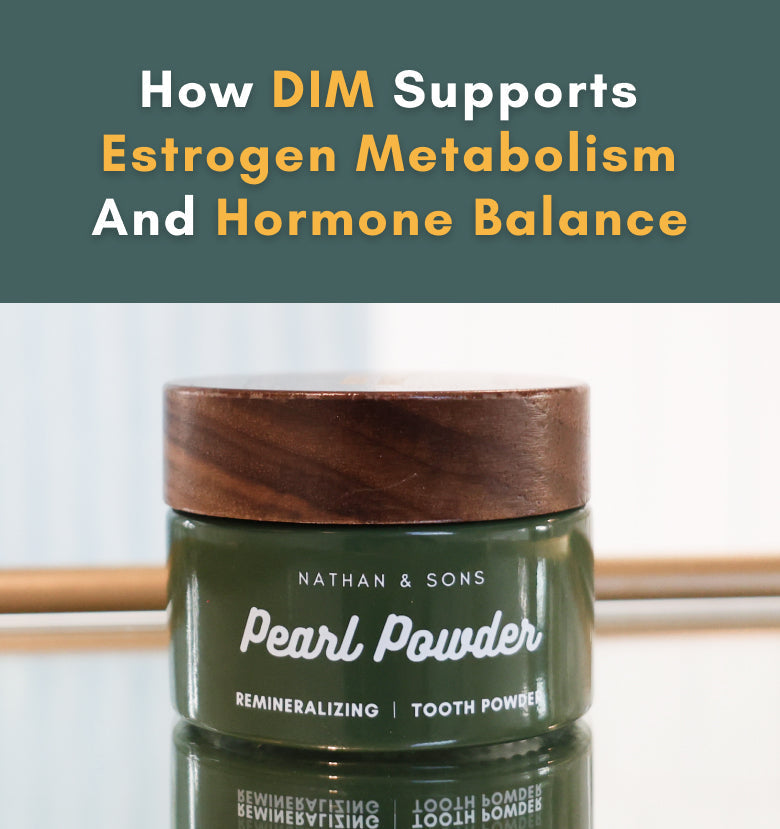
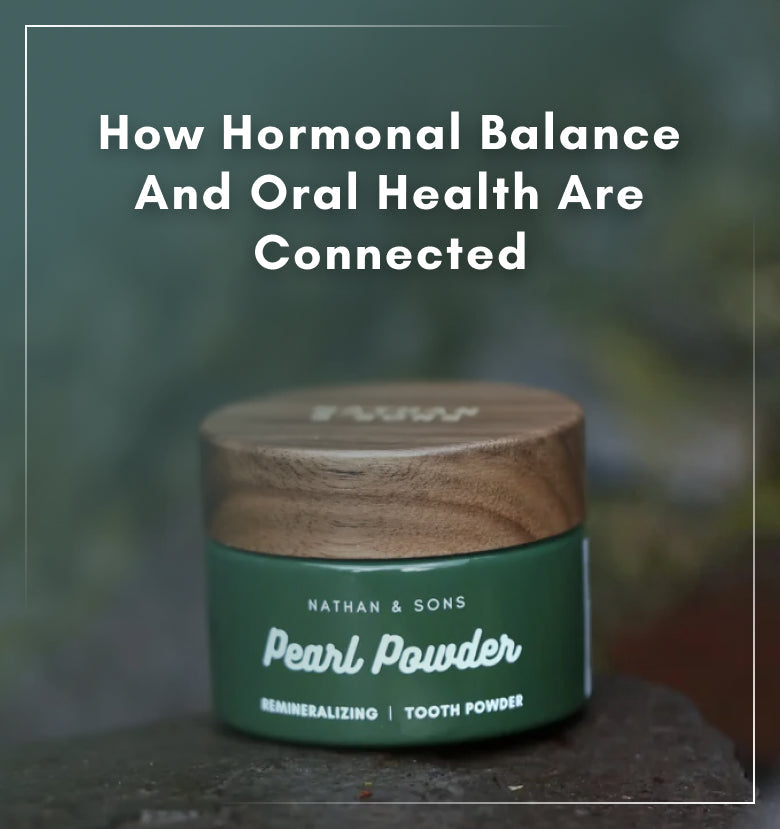
Nathan and Sons' pearl powder tooth scrub combines DIM with mineral-rich ingredients examined in oral care research contexts — formulated for daily use as part of a complete oral care routine.
Browse our full oral care collection to see everything we make.
To learn more about who we are and why ingredient choices matter to us, visit our about page.
What to Keep in Mind
Supporting oral health during periods of hormonal change does not replace professional dental care.
Regular dental examinations allow early identification of changes in gum tissue, saliva quality, and enamel before they progress.
If you are experiencing changes in oral comfort, sensitivity, or saliva during periods of hormonal shift, consult a qualified dental or healthcare provider.
These statements have not been evaluated by the FDA and are not intended to diagnose, treat, cure, or prevent any disease.
Key Takeaways
Hormonal fluctuations have been documented in peer-reviewed research to influence saliva production, oral pH, gum tissue sensitivity, and enamel vulnerability.
Declining estrogen levels are specifically associated in research with reduced salivary flow and changes in salivary composition that affect the oral environment.
Saliva stimulation, mineral support for enamel, and oral pH buffering are practical oral care considerations during hormonal transitions — supported by individual ingredient research.
DIM has been examined in laboratory research for its interactions with oral biofilm and inflammatory signaling in oral tissue contexts.
Supporting oral health is one component of overall wellness — it does not replace hormone balance support or professional dental care.
These statements have not been evaluated by the FDA.
Not intended to diagnose, treat, cure, or prevent any disease.
Frequently Asked Questions
Can hormonal changes affect oral health?
Research has documented that hormonal fluctuations — including during menstruation, pregnancy, and menopause — can influence salivary flow rate, oral pH, gum tissue sensitivity, and susceptibility to oral health changes.
A 2025 peer-reviewed study in BMC Oral Health confirmed that elevated estrogen and progesterone are associated with increased gingival blood flow, while declining estrogen is associated with xerostomia and heightened periodontal risk.
These are research observations and should not be interpreted as diagnostic or treatment claims.
Consult a qualified dental or healthcare provider for guidance specific to your situation.
These statements have not been evaluated by the FDA and are not intended to diagnose, treat, cure, or prevent any disease.
How does saliva change during hormonal shifts?
Research has found that salivary flow rate, pH, and buffering capacity can change during hormonal transitions — with postmenopausal women showing particularly measurable changes associated with declining estrogen levels.
Salivary glands are estrogen-dependent according to peer-reviewed research — and changes in salivary output affect the mouth's natural acid-buffering and remineralization capacity.
These are research observations and should not be interpreted as claims about treating or preventing any condition.
These statements have not been evaluated by the FDA and are not intended to diagnose, treat, cure, or prevent any disease.
How does hydroxyapatite support enamel?
Nano-hydroxyapatite is chemically identical to the mineral compound that makes up tooth enamel.
It has been examined in multiple peer-reviewed studies for its potential to interact with enamel mineral surfaces.
A systematic review published in Clinical Oral Investigations found significant remineralization potential for nano-hydroxyapatite when surface hardness testing was used as the measurement standard — while noting that the overall body of evidence continues to develop.
These are research observations and should not be interpreted as treatment claims for any dental condition.
These statements have not been evaluated by the FDA and are not intended to diagnose, treat, cure, or prevent any disease.
Why does oral pH matter during hormonal changes?
Saliva naturally buffers oral pH — neutralizing acids that can weaken enamel.
When hormonal changes reduce salivary flow or alter its composition, the mouth's natural pH buffering capacity can be reduced — creating conditions that research has associated with increased susceptibility to enamel demineralization and oral health changes.
Maintaining awareness of oral pH through diet, hydration, and oral care product choices is one practical consideration during hormonal transitions.
Consult a qualified dental or healthcare provider for guidance specific to your situation.
These statements have not been evaluated by the FDA and are not intended to diagnose, treat, cure, or prevent any disease.
How does DIM relate to oral health during hormonal shifts?
DIM — diindolylmethane — is a compound formed from cruciferous vegetables that has been examined in laboratory research for its interactions with oral biofilm and inflammatory signaling in oral tissue contexts.
Its connection to hormonal health comes from its broader research profile examining estrogen metabolism pathways.
Most DIM research in oral science has been conducted in preclinical laboratory settings rather than human clinical trials.
For more on the oral science research, our article on what is DIM covers the evidence in detail.
These statements have not been evaluated by the FDA and are not intended to diagnose, treat, cure, or prevent any disease.
Legal & Compliance Disclaimer
These statements have not been evaluated by the Food and Drug Administration. This product is not intended to diagnose, treat, cure, or prevent any disease. The information in this article is for educational purposes only and is not a substitute for professional dental or medical advice. Consult a qualified dental or healthcare provider before making changes to your oral care routine. Content current as of 2026. Subject to revision.
References
Colaco AS, et al. (2025). Impact of hormonal phases on salivary characteristics and oral hygiene in women: a cross-sectional comparative study. BMC Oral Health. PMC12790710.
PMC. (2024). Oral manifestations in menopause — a scoping review. PMC12113011.
PMC. (2014). Comparative evaluation of the effect of menstruation, pregnancy and menopause on salivary flow rate, pH and gustatory function. PMC4253273.
Soundarya B, et al. (2022). Salivary menopausal markers and oral health status — a hidden hook up. Journal of Mid-Life Health. PMC9583370.
Agrawal N, et al. (2022). Appraisal of saliva and its sensory perception in reproductive transitions of women: a review. PMC9759273.
PMC. (2025). Dental caries status in postmenopausal women: systematic review and meta-analysis. PMC11943198.
Tufts University. (2024). The unseen force affecting your oral health. now.tufts.edu.
American Dental Association. Chewing Gum. ADA Oral Health Topics. ada.org/resources/ada-library/oral-health-topics/chewing-gum.
Wierichs RJ, et al. (2022). Efficacy of nano-hydroxyapatite on caries prevention: a systematic review and meta-analysis. Clinical Oral Investigations. PMC8979882.
Baruch Y, et al. (2023). 3,3′-Diindolylmethane (DIM): a potential therapeutic agent against cariogenic Streptococcus mutans biofilm. Antibiotics, 12(6), 1017. PMC10295630.