
What Is Remineralizing Gum? How It Works and What's in It
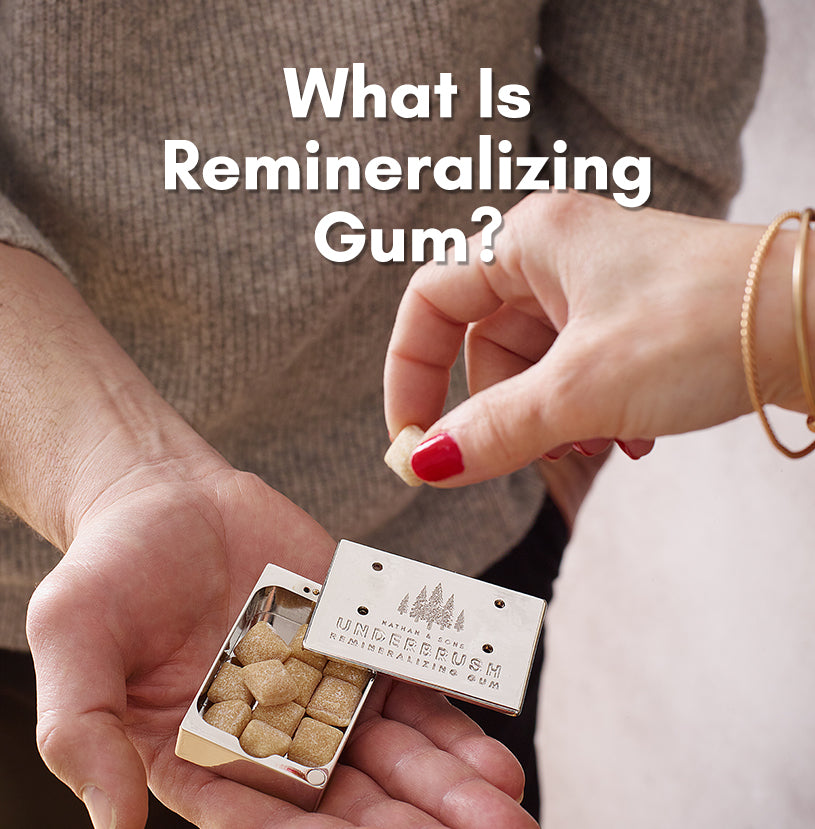
Remineralizing gum is a sugar-free chewing gum formulated with ingredients that have been examined in enamel remineralization research — most notably nano-hydroxyapatite and xylitol — designed to support oral health between brushing sessions rather than simply freshen breath.
That's the short answer.
But here's the fuller picture.
Every time you eat or drink something acidic — coffee, soda, fruit, even certain protein shakes — the pH in your mouth drops temporarily.
During that drop, minerals are stripped from the surface of your enamel in a process called demineralization.
Your saliva naturally buffers that process and helps redeposit minerals back onto enamel over time.
Remineralizing gum is designed to work with that natural system — delivering specific ingredients through a format that keeps them in contact with your teeth longer than a rinse-and-spit product would.
This article breaks down exactly what remineralizing gum is, what it contains, what the research says, and what to look for when you're choosing one.
These statements have not been evaluated by the Food and Drug Administration.
This product is not intended to diagnose, treat, cure, or prevent any disease.
Why Remineralization Matters
Your tooth enamel is the hardest substance in the human body.
It is also the only tissue your body cannot regenerate on its own.
Once enamel is lost — through acid erosion, wear, or poor oral hygiene — the body has no natural mechanism to replace it from scratch.
But enamel can be supported at the surface level.
The process of remineralization — where mineral ions from saliva redeposit into weakened enamel — is your body's natural defense against the daily cycle of acid exposure.
The American Dental Association notes that stimulated saliva carries calcium and phosphate ions that contribute to enamel remineralization and buffers the effects of acids — and that sugar-free gum chewing stimulates that salivary response.
Remineralizing gum builds on this by adding ingredients that have been specifically examined in remineralization research contexts.
What Is Remineralizing Gum Made Of?

The ingredients in remineralizing gum are what separate it from conventional sugar-free gum.
Here is what to look for and why each ingredient matters.
Nano-hydroxyapatite
Nano-hydroxyapatite — often written as n-HAp — is a synthetically produced form of the same mineral compound that makes up approximately 90 to 97 percent of tooth enamel by weight.
Because it is chemically identical to enamel's mineral composition, it is described in the research literature as biomimetic — meaning it mimics the natural material it is designed to work alongside.
A 2025 narrative review published in Biomimetics examining hydroxyapatite across multiple clinical studies found that hydroxyapatite-containing products — including chewing gum — are among the eligible formats being studied for enamel and dentin remineralization support.
A systematic review and meta-analysis published in Clinical Oral Investigations found significant remineralization potential for nano-hydroxyapatite when surface hardness testing was used as the measurement standard.
A randomized clinical trial published in BDJ Open found statistically significant changes in sensitivity measurements in the nano-hydroxyapatite group compared to placebo over eight weeks.
Xylitol
Xylitol is a naturally occurring sugar alcohol that is non-fermentable by oral bacteria — meaning bacteria cannot use it to produce lactic acid the way they use sugar.
It is one of the most extensively studied sweeteners in oral health research.
A 2022 study published in Frontiers in Nutrition found that xylitol gum was associated with a 20 percent reduction in dental plaque accumulation and a meaningful decrease in cariogenic bacteria compared to controls.
A 2024 systematic review published in European Archives of Paediatric Dentistry found that xylitol's effect on oral health is linked to increased saliva production — especially when used in chewing gum form.
A 2022 systematic review published in Clinical Oral Investigations found that xylitol gum was associated with decreased plaque accumulation in the majority of studies examined.
Plant-based gum base
Nathan and Sons' remineralizing gum uses a plant-derived chicle gum base rather than a synthetic polymer base.
Most conventional gum uses petroleum-derived polymer bases.
The distinction matters for consumers who prefer to know exactly what they're chewing — and for those who care about the environmental footprint of their choices, since chicle is biodegradable under soil and composting conditions.
For more on chicle specifically, our article on chicle chewing gum benefits covers the full story.
No artificial sweeteners
Nathan and Sons' remineralizing gum contains no sucralose, aspartame, sorbitol, or acesulfame potassium.
For more on why those sweeteners raise questions in oral health contexts, our articles on what is sucralose and what is sorbitol cover the research in detail.
How Remineralizing Gum Works

The mechanism behind remineralizing gum is straightforward once you understand two things: what chewing does and what the active ingredients do.
What chewing does
Chewing stimulates saliva production.
This is well-documented in the dental research literature and applies to all chewing gum regardless of formulation.
The American Dental Association recommends sugar-free gum chewing for approximately 20 minutes after meals specifically because of its saliva-stimulating effect.
More saliva means more natural buffering of mouth acids and more mineral ions available to support enamel.
What the active ingredients do
Nano-hydroxyapatite interacts with enamel surfaces in ways researchers continue studying.
Because it is chemically identical to enamel's mineral composition, it has been examined for its potential to interact directly with weakened enamel surface areas.
Xylitol creates an environment that is less hospitable to cariogenic bacteria — the bacteria most associated with acid production and enamel demineralization.
Together, these two ingredients work alongside the saliva stimulated by chewing rather than working independently of it.
Why gum is an interesting delivery format
Most oral care products — toothpastes, mouthwashes, gels — are in contact with teeth for seconds before being rinsed away.
Chewing gum allows active ingredients to remain in contact with the oral environment during the entire chewing session — typically five to twenty minutes.
This extended contact time is one of the reasons researchers have examined chewing gum as a delivery format for oral care ingredients alongside conventional products.
These statements have not been evaluated by the FDA.
What Remineralizing Gum Is Not
This is important — and most brands skip it.
Remineralizing gum is not a dental treatment.
It does not address existing cavities, advanced enamel erosion, or any diagnosed dental condition.
It does not replace brushing, flossing, or professional dental care.
It is not a substitute for fluoride toothpaste if your dentist has specifically recommended fluoride for your situation.
What remineralizing gum is — based on the available research — is a well-formulated complementary oral care tool for the gaps in your day when brushing isn't possible.
After a meal at work.
After coffee on a commute.
After a long flight when brushing isn't an option.
These are the moments remineralizing gum is designed for.
Consult your dentist before making changes to your oral care routine.
These statements have not been evaluated by the FDA and are not intended to diagnose, treat, cure, or prevent any disease.
Why Not All Remineralizing Gums Are Equal

The term "remineralizing gum" is not regulated.
Any brand can put those words on a package.
What separates a legitimately formulated product from a marketing claim is the ingredient list.
Look for nano-hydroxyapatite listed clearly as an active ingredient — not buried in a proprietary blend or listed as a trace additive.
Look for xylitol as the primary sweetener rather than sucralose, sorbitol, or aspartame.
Look for a plant-based gum base rather than a synthetic polymer base.
Look for a brand that links its claims to published research rather than vague wellness language.
Nathan and Sons' remineralizing gum is formulated with nano-hydroxyapatite as the active ingredient, xylitol as the primary sweetener, natural flavorings, and a plant-based chicle gum base — with no artificial sweeteners, synthetic polymers, or artificial colors.
For a side-by-side look at how it compares to other options on the market, our Underbrush hydroxyapatite gum vs competitors guide breaks it down in detail.
How to Use Remineralizing Gum
The research points to a few clear best practices.
Chew after meals — this is when acid buffering and mineral support are most relevant to your oral environment.
Chew for approximately five to twenty minutes — enough time to stimulate meaningful saliva flow.
Use it as an addition to your existing oral care routine — not a replacement for brushing and flossing.
The ADA recommends sugar-free gum chewing for approximately twenty minutes after meals — and remineralizing gum fits naturally into that timing.
For a deeper look at whether the research supports remineralizing gum's efficacy, our article on does remineralizing gum work examines the evidence in detail.
You might also find our article on is remineralizing gum legit useful if you're still evaluating whether it belongs in your routine.
What the Research Does Not Yet Confirm
It would not be honest to discuss remineralizing gum without being clear about the current limits of the evidence.
Most nano-hydroxyapatite studies have been conducted on toothpastes and gels rather than chewing gum specifically.
The extrapolation from toothpaste research to gum research is theoretically sound — the ingredient is the same — but has not been fully validated in large-scale human clinical trials for the chewing gum format specifically.
A 2022 systematic review published in Clinical Oral Investigations noted that the level of evidence across nano-hydroxyapatite studies remains relatively low due to small study sizes, short follow-up periods, and methodological heterogeneity.
More research is needed before definitive conclusions can be drawn.
Anyone considering remineralizing gum should discuss it with a qualified dental professional — particularly if they have existing dental conditions.
These statements have not been evaluated by the FDA and are not intended to diagnose, treat, cure, or prevent any disease.
Key Takeaways: What Is Remineralizing Gum?

Remineralizing gum is a sugar-free chewing gum formulated with ingredients that have been examined in enamel remineralization research contexts — primarily nano-hydroxyapatite and xylitol.
Nano-hydroxyapatite is chemically identical to the mineral compound that makes up tooth enamel and has been examined in multiple peer-reviewed studies for its potential to interact with enamel surface mineral composition.
Xylitol is non-fermentable by oral bacteria and has been associated in research with reduced cariogenic bacteria, decreased plaque accumulation, and increased saliva production.
Chewing gum stimulates saliva production — which the ADA recognizes as contributing to enamel remineralization and acid buffering.
The evidence is strongest for the individual ingredients — product-specific clinical trials on remineralizing chewing gum specifically are still developing.
Remineralizing gum is not a dental treatment and is not a substitute for brushing, flossing, or professional dental care.
Not all remineralizing gums are formulated equally — the ingredient list is the most important thing to evaluate. These statements have not been evaluated by the FDA. Not intended to diagnose, treat, cure, or prevent any disease.
Frequently Asked Questions: What Is Remineralizing Gum?
What is remineralizing gum?
Remineralizing gum is a sugar-free chewing gum formulated with ingredients that have been examined in enamel remineralization research — most notably nano-hydroxyapatite and xylitol.
It is designed to work alongside your body's natural saliva-based remineralization process rather than replace it.
It is not a dental treatment and is not a substitute for brushing, flossing, or professional dental care.
These statements have not been evaluated by the FDA.
What is remineralizing gum made of?
The key active ingredients in well-formulated remineralizing gum are nano-hydroxyapatite and xylitol.
Nano-hydroxyapatite is chemically identical to the mineral compound that makes up tooth enamel.
Xylitol is a naturally occurring sugar alcohol that is non-fermentable by oral bacteria and has been associated in research with oral health support.
Nathan and Sons' remineralizing gum also uses a plant-based chicle gum base and contains no artificial sweeteners.
How does remineralizing gum work?
Chewing gum stimulates saliva production — which naturally buffers mouth acids and carries mineral ions that support enamel.
Remineralizing gum adds nano-hydroxyapatite and xylitol to that chewing action — delivering both ingredients in a format that keeps them in contact with the oral environment during use.
These statements have not been evaluated by the FDA.
Is remineralizing gum a substitute for brushing?
No.
Remineralizing gum is designed to complement a regular oral care routine — not replace it.
Brushing, flossing, and regular professional dental care remain the foundation of oral health maintenance.
How long does remineralizing gum take to work?
Individual timelines vary significantly based on oral health status, diet, frequency of use, and other factors.
Research on the individual ingredients has examined outcomes over periods ranging from several weeks to several months.
Results are not guaranteed and individual responses vary.
Consult your dental provider for guidance specific to your situation.
These statements have not been evaluated by the FDA.
Is remineralizing gum safe for daily use?
The individual ingredients — nano-hydroxyapatite and xylitol — have been studied in oral health research contexts with generally favorable safety profiles reported.
Consult a qualified healthcare provider before beginning use, particularly if you are pregnant, breastfeeding, or managing a medical condition.
These statements have not been evaluated by the FDA.
Can children use remineralizing gum?
Chewing gum is generally not recommended for young children due to choking risk.
For older children who are appropriate candidates for gum, consult a qualified dental professional before introducing any new oral care product.
These statements have not been evaluated by the FDA.
What should I look for in a remineralizing gum?
Look for nano-hydroxyapatite listed clearly as an active ingredient.
Look for xylitol as the primary sweetener rather than sucralose, aspartame, or sorbitol.
Look for a plant-based gum base rather than a synthetic polymer base.
Look for brands that link their ingredient choices to published research.
Nathan and Sons' remineralizing gum meets all of these criteria — with the full ingredient list on the product page.
These statements have not been evaluated by the FDA and are not intended to diagnose, treat, cure, or prevent any disease.
Legal & Compliance Disclaimer
These statements have not been evaluated by the Food and Drug Administration. This product is not intended to diagnose, treat, cure, or prevent any disease. The information in this article is for educational purposes only and is not a substitute for professional dental or medical advice. Consult a qualified dental or healthcare provider before making changes to your oral care routine. Content current as of 2026. Subject to revision.
References
American Dental Association. Chewing Gum. ADA Oral Health Topics. ada.org/resources/ada-library/oral-health-topics/chewing-gum.
Naim J, et al. (2025). The remineralizing and desensitizing potential of hydroxyapatite in dentistry: a narrative review of recent clinical evidence. Biomimetics. PMC12470856.
Wierichs RJ, Wolf TG, Campus G, Carvalho TS. (2022). Efficacy of nano-hydroxyapatite on caries prevention: a systematic review and meta-analysis. Clinical Oral Investigations, 26, 2593–2612. PMC8979882.
Amaechi BT, Lemke KC, Saha S, Luong MN, Gelfond J. (2021). Clinical efficacy of nanohydroxyapatite-containing toothpaste at relieving dentin hypersensitivity: an 8 weeks randomized control trial. BDJ Open, 7(1), 23. PMC8233401.
O'Hagan-Wong K, et al. (2021). The use of hydroxyapatite toothpaste to prevent dental caries. BDJ Open. PMC8930857.
Paszynska E, et al. (2023). Caries-preventing effect of a hydroxyapatite toothpaste in children. Frontiers in Public Health. frontiersin.org/journals/public-health/articles/10.3389/fpubh.2023.1199728/full.
Wu YF, Salamanca E, et al. (2022). Xylitol-containing chewing gum reduces cariogenic and periodontopathic bacteria in dental plaque. Frontiers in Nutrition, 9, 882636. PMC9131035.
Söderling E, Pienihäkkinen K. (2022). Effects of xylitol chewing gum and candies on the accumulation of dental plaque: a systematic review. Clinical Oral Investigations, 26, 119–129.
Latifi-Xhemajli B, et al. (2024). The effect of xylitol chewing gums and candies on caries occurrence in children: a systematic review. European Archives of Paediatric Dentistry, 25, 145–160. PMC11058973.
Yeung CY, Chu CH, Yu OY. (2023). A concise review of chewing gum as an anti-cariogenic agent. Frontiers in Oral Health, 4, 1213523. PMC10299855.