

Chewable mastic gum is a natural plant resin from the Pistacia lentiscus tree — harvested on the Greek island of Chios — that softens in the mouth to create a biodegradable, plant-based alternative to conventional synthetic chewing gum.
Picture this.
You are standing in the checkout line at a pharmacy, scanning the gum rack.
Forty-seven options.
Every single one lists "gum base" as the first or second ingredient — and not one of them tells you what that gum base actually is.
Now imagine someone hands you a small crystalline droplet — slightly amber, faintly pine-scented, hard enough that you raise an eyebrow — and tells you people have been chewing this specific resin for over 2,500 years.
That is chewable mastic gum.
And it is genuinely unlike anything else on that pharmacy rack.
This article covers what chewable mastic gum actually is, how it differs from conventional gum in ways that go beyond marketing language, how to chew it for the first time, and what to look for if you are considering making the switch.
These statements have not been evaluated by the Food and Drug Administration.
This product is not intended to diagnose, treat, cure, or prevent any disease.
What Is Chewable Mastic Gum Exactly?
Chewable mastic gum starts life as a resin — a natural sap that crystallizes when it meets air.
It comes from the Pistacia lentiscus var. Chia tree grown almost exclusively on the Greek island of Chios, where farmers called mastichadores have been harvesting it using the same method for over two thousand years.
Small incisions are made in the tree bark.
Sap weeps out and hardens into translucent crystalline teardrops.
Those teardrops are collected, cleaned, and — in their purest form — are the chewing gum.
There is no polyvinyl acetate.
No styrene-butadiene rubber.
No petroleum-derived polymer of any kind.
Just a resin that a tree produced and a person collected.
When you first put a mastic crystal in your mouth, it is hard — noticeably harder than conventional gum.
Give it thirty seconds.
It softens with the warmth of your mouth into something pleasantly chewy — slightly piney, faintly sweet, with a clean aftertaste that does not disappear in two minutes the way conventional mint flavors do.
The texture is unlike anything in the conventional gum category.
Which is partly why people either love it immediately or need a few pieces to warm up to it.
UNESCO has recognized the traditional cultivation and harvesting of mastic on Chios as Intangible Cultural Heritage — acknowledging both its cultural significance and the sustainable multi-generational harvesting practices that have kept these trees productive for centuries.
These statements have not been evaluated by the FDA.
How Chewable Mastic Gum Differs From Conventional Gum

The most important difference is the gum base — and it is a difference most people have never been given reason to think about.
Conventional commercial chewing gum uses a synthetic polymer gum base.
The FDA permits all gum base ingredients to be listed collectively as "gum base" on ingredient labels — without disclosing the individual compounds — which means consumers have no way of knowing from the label that they are chewing materials derived from petroleum.
As researchers at the University of Portsmouth have documented, modern conventional chewing gum contains styrene-butadiene — the same family of compounds used in car tires — polyethylene — the plastic used in carrier bags — and polyvinyl acetate alongside sweeteners and flavoring.
Mastic gum's base is the resin itself.
It is plant-derived, biodegradable, and capable of breaking down over time under certain environmental conditions — unlike synthetic polymer bases which fragment into persistent microplastic particles.
Here is how the two categories compare on the factors that matter most to consumers evaluating natural alternatives:
Gum base — Mastic: natural crystallized plant resin. Conventional: synthetic petroleum-derived polymers listed generically as "gum base."
Biodegradability — Mastic: capable of biodegrading over time under certain environmental conditions. Conventional: fragments into persistent microplastic particles.
Flavor source — Mastic: natural aromatic compounds from the resin released gradually during chewing. Conventional: artificial flavoring agents that dissipate within minutes.
Sweetener — Mastic in pure crystal form: no added sweeteners. Conventional: sorbitol, aspartame, sucralose, or acesulfame K depending on formulation.
Texture — Mastic: harder initially, softens with chewing. Conventional: soft immediately, degrades in texture over time.
Research profile — Mastic: bioactive compounds including masticadienonic acid and triterpenic acids studied in oral health research contexts. Conventional synthetic base: no biological activity relevant to oral health research.
For a deeper look at how natural gum bases compare to synthetic alternatives — including the 2025 microplastics research — our article on natural chewing gum covers the full landscape.
These statements have not been evaluated by the FDA.
How to Chew Mastic Gum for the First Time

If you have never chewed mastic gum before, this section is for you — because the first piece will almost certainly surprise you.
Here is what to expect and how to get the most out of it.
Start with a small piece.
Mastic gum in crystal form comes in teardrops of varying sizes.
For your first time, choose a smaller piece — roughly the size of a pea.
Larger pieces are not better for beginners — they are just harder to manage while you are calibrating to the texture.
Expect hardness.
Put the piece in your mouth and resist the urge to bite down immediately.
Let it sit on your tongue for fifteen to thirty seconds.
Mastic resin softens with the warmth and moisture of your mouth — rushing it makes it crumble rather than soften.
Use your front teeth first.
Once it begins to soften, work it gently between your front teeth and your tongue until it forms a cohesive mass.
This is different from conventional gum where you just start chewing anywhere — mastic needs this initial forming step before it behaves like a proper chewing gum.
Then chew normally.
Once you have a cohesive mass, you can move it to your back teeth and chew normally.
The texture becomes noticeably more elastic and familiar at this stage.
The flavor evolves.
The initial flavor is resinous and slightly piney — subtler than conventional mint gum.
As you chew, the aromatic compounds release gradually.
Most first-timers describe the experience as "cleaner" rather than "more flavorful" compared to conventional gum.
Give it three pieces before deciding.
Almost everyone who ends up loving mastic gum needed two or three pieces to recalibrate their expectations.
The first piece is often surprising.
The third piece is usually when it clicks.
Formulated mastic gum is easier for beginners.
If pure mastic crystals feel too unfamiliar, formulated mastic gum products — which combine mastic resin with other plant-based resins and a natural sweetener like xylitol — provide a more conventional texture while still delivering mastic's plant-based resin base.
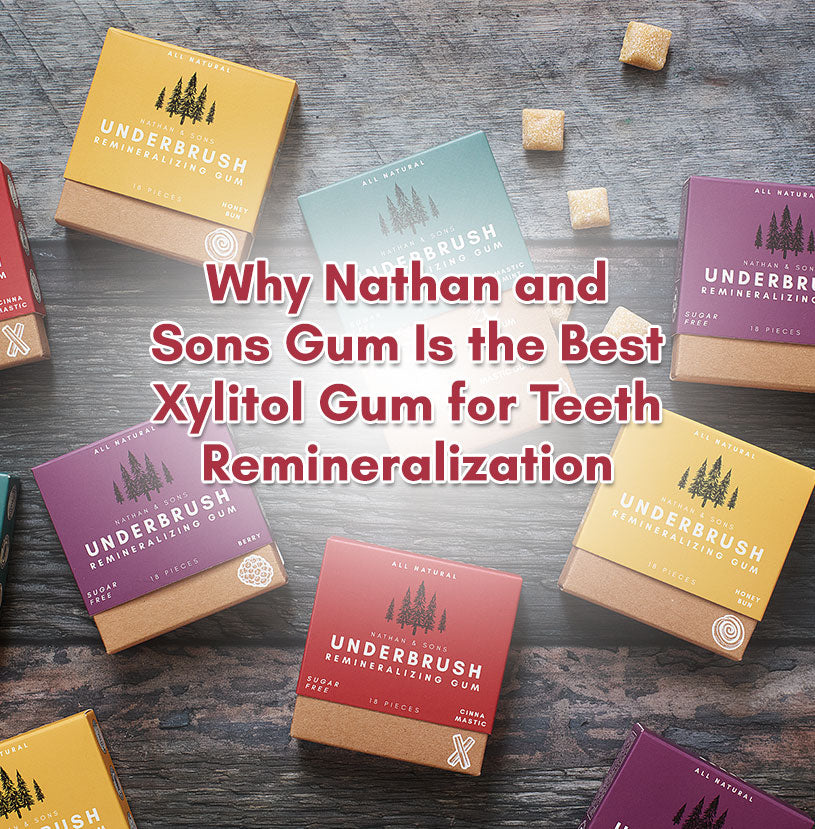
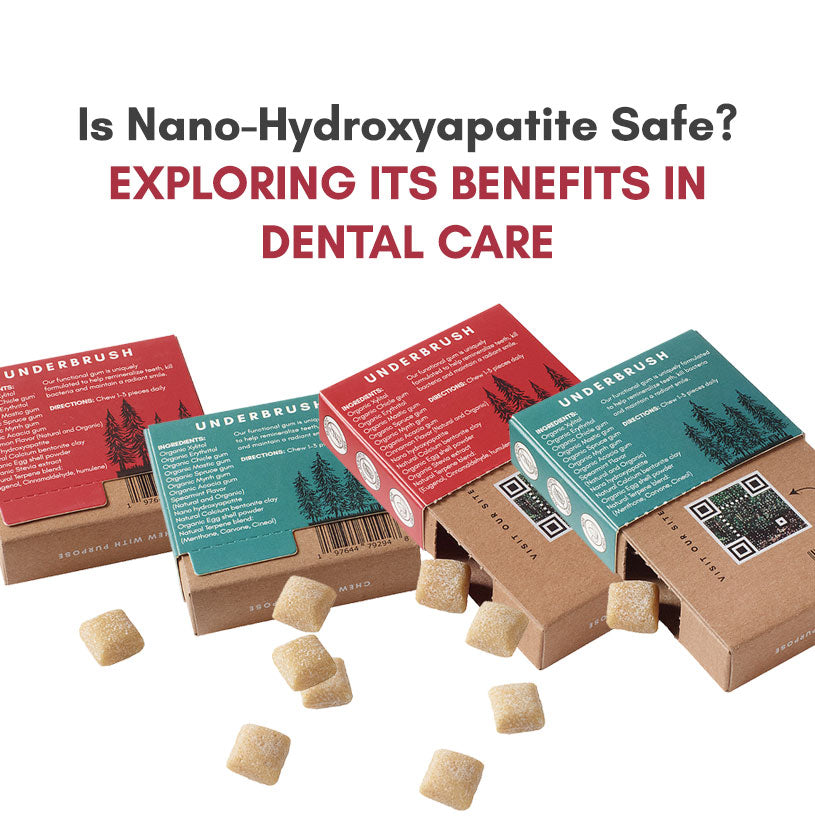
This is one of the reasons Nathan and Sons' remineralizing gum blends mastic with chicle, spruce gum, acacia gum, and myrrh gum — creating a more approachable chewing experience while maintaining a fully plant-based resin base.
What the Research Says About Chewable Mastic Gum
Mastic gum has been studied in peer-reviewed research across three distinct areas — oral health, digestive health, and jaw muscle activity — here is what the evidence shows.
Rather than repeating the full research picture here — which our companion article on mastic gum benefits covers in detail — here is the honest summary of what has been studied and what the evidence currently supports.
Oral health research
Mastic gum has been examined in peer-reviewed research for its effects on oral bacteria, plaque accumulation, and breath odor — here is what the evidence shows.
A 2023 state-of-the-art review published in the Journal of Natural Medicines examined 14 peer-reviewed studies and found that mastic gum displayed antibacterial and antimicrobial properties and inhibited plaque accumulation across the reviewed literature.
A 2025 randomized clinical trial published in the Journal of Breath Research found that Chios mastic reduced objective hydrogen sulfide levels in oral breath — a measurable indicator of halitosis — in orthodontic patients over two weeks.
Digestive health research
Mastic gum has been studied for its potential role in digestive health — particularly its antimicrobial activity against H. pylori and its examined effects on digestive comfort.
Human clinical trial results have been mixed — with preclinical antimicrobial activity not consistently translating to H. pylori eradication outcomes in human trials.
A PMC systematic review on natural products and H. pylori noted nonsignificant effects on H. pylori eradication in a randomized pilot study — while acknowledging consistent preclinical findings.
Jaw muscle activity research
Mastic gum's harder texture makes it a higher-resistance chewing substrate than conventional gum — and research has examined what that resistance means for jaw muscle activity.
A 2024 randomized controlled trial published in the Journal of Oral Rehabilitation found that gum chewing training can improve masticatory muscle function and bite force — but did not significantly alter facial shape or appearance in the study population.
The honest picture across all three areas: the research is meaningful and continues to develop — but most findings come from laboratory settings or small clinical studies rather than large-scale human trials.
These statements have not been evaluated by the FDA and should not be interpreted as disease-treatment claims.
What to Look for When Choosing Chewable Mastic Gum

Not all mastic gum products are equal — and this is one category where reading the ingredient list matters more than most.
Pure mastic resin as the primary ingredient. Some products labeled as mastic gum contain very little actual mastic — padded out with synthetic gum base, artificial flavoring, or other fillers. The first ingredient should be mastic resin or Pistacia lentiscus resin.
Sourcing transparency. The most researched and recognized mastic comes from Chios, Greece — where the UNESCO-recognized harvesting practices have been refined over millennia. Products that specify Chios origin or Pistacia lentiscus var. Chia are using the most studied form of the resin.
Sweetener profile. Some consumers prefer pure mastic with no added sweeteners — others prefer a formulation that includes xylitol or another plant-derived sugar alcohol for a more familiar flavor experience. Know which you are looking for before buying.
Single-resin versus multi-resin formulations. Pure mastic crystals deliver the traditional single-resin experience.
Formulated mastic gum products often combine mastic with other plant-based resins — chicle, spruce, acacia, myrrh — and a natural sweetener like xylitol.
Each ingredient brings its own individual research profile to the formulation.
Chicle provides a familiar chewing texture from a sustainably harvested tropical resin.
Xylitol — which oral bacteria cannot ferment — has been associated in research with reductions in cariogenic bacterial counts and plaque accumulation.
This combination approach creates a more accessible chewing experience while maintaining a fully plant-based ingredient list — which is one of the reasons formulated mastic gum products have grown in popularity alongside pure mastic crystals.
For more on xylitol's oral health research profile, our guide to everything you need to know about xylitol covers the full evidence base.
Full ingredient disclosure. Any brand worth choosing discloses every ingredient individually — no proprietary blend designations, no generic "gum base" hiding synthetic polymers.
For more on how the remineralizing gum formulation works, our article on what is remineralizing gum explains the ingredient rationale in detail.
For more on the fresh breath research context, our article on best gum for fresh breath covers mastic alongside the other ingredients studied in that area.
The research discussed above evaluates mastic gum and individual ingredients in laboratory and clinical research contexts.
The finished product has not been evaluated by the FDA for the prevention, treatment, or mitigation of any condition.
Nathan and Sons' remineralizing gum includes mastic gum as one of its plant-based resin ingredients alongside chicle, spruce gum, acacia gum, and myrrh gum — with full ingredient transparency on the product page.
Browse our full oral care collection to see everything we make.
To learn more about who we are, visit our about page.
What Chewable Mastic Gum Is Not
Worth being direct about this.
Chewable mastic gum is not a dental treatment.
It does not treat, prevent, or cure tooth decay, gum disease, bad breath, H. pylori infection, or any other medical condition.
It does not replace brushing, flossing, tongue cleaning, or professional dental care.
The research on mastic gum is genuinely interesting — but most of it comes from laboratory settings or small clinical studies rather than large-scale human clinical trials.
Consult a qualified dental or healthcare provider before making changes to your oral care routine.
These statements have not been evaluated by the FDA and are not intended to diagnose, treat, cure, or prevent any disease.
Key Takeaways: Chewable Mastic Gum
Chewable mastic gum is a natural plant resin from the Pistacia lentiscus tree — harvested on the Greek island of Chios using traditional methods unchanged for over 2,500 years.
Its gum base is plant-derived and biodegradable — unlike conventional gum's synthetic petroleum-derived polymer base which the FDA permits to be listed generically as "gum base" without individual ingredient disclosure.
Mastic gum has a harder texture than conventional gum — softening gradually with chewing — and a subtler, more sustained flavor profile that comes from the resin's natural aromatic compounds rather than dissolving sweeteners.
For first-time users: start with a small piece, let it soften for 15 to 30 seconds before chewing, work it with the front teeth first, then chew normally — and give it three pieces before deciding.
A 2023 review of 14 peer-reviewed studies confirmed antibacterial and antimicrobial properties and plaque accumulation inhibition in oral health research contexts.
Digestive health research on mastic gum — particularly regarding H. pylori — has produced mixed results in human clinical trials despite consistent preclinical findings.
Jaw muscle research has found that higher-resistance chewing substrates increase masseter activity and bite force — though facial aesthetic outcomes are not reliably supported by current evidence.
When choosing chewable mastic gum, look for pure Pistacia lentiscus resin as the primary ingredient, Chios sourcing transparency, and full individual ingredient disclosure.
These statements have not been evaluated by the FDA.
Not intended to diagnose, treat, cure, or prevent any disease.
Frequently Asked Questions: Chewable Mastic Gum
What is chewable mastic gum?
Chewable mastic gum is a natural resin from the Pistacia lentiscus tree — harvested on the Greek island of Chios — that hardens into crystalline droplets and becomes soft and malleable when chewed.
Unlike conventional chewing gum which uses synthetic petroleum-derived polymer bases, mastic gum's base is the plant resin itself — biodegradable and derived entirely from a natural source.
It has been chewed for oral hygiene and digestive purposes for over 2,500 years across Mediterranean cultures.
These statements have not been evaluated by the FDA and are not intended to diagnose, treat, cure, or prevent any disease.
How is chewable mastic gum different from regular gum?
The primary difference is the gum base.
Conventional gum uses synthetic polymers — including polyvinyl acetate and styrene-butadiene — that the FDA permits to be listed collectively as "gum base" without individual disclosure.
Mastic gum's base is plant resin — biodegradable, plant-derived, and free from petroleum-derived synthetic polymers.
Beyond the base, mastic gum has a harder initial texture, a more sustained and subtle flavor profile, and a research history that conventional synthetic gum bases do not share.
These statements have not been evaluated by the FDA and are not intended to diagnose, treat, cure, or prevent any disease.
Is mastic gum hard to chew?
Yes — initially.
Mastic gum crystals are noticeably harder than conventional chewing gum when you first put them in your mouth.
The key is patience — let the crystal sit in your mouth for 15 to 30 seconds before attempting to chew, allowing the warmth and moisture to begin softening the resin.
Work it gently with your front teeth and tongue until it forms a cohesive mass — then move it to your back teeth and chew normally.
Most people find the texture becomes familiar and comfortable within the first few pieces.
These statements have not been evaluated by the FDA and are not intended to diagnose, treat, cure, or prevent any disease.
What does chewable mastic gum taste like?
Mastic gum has a distinctive flavor that is subtler and more resinous than conventional mint gum — faintly piney with a clean, lasting aftertaste.
It does not have the intense initial sweetness of conventional gum because the flavor comes from the resin's natural aromatic compounds rather than dissolving sweeteners.
Most people find the flavor grows on them — particularly the clean, non-artificial aftertaste that persists longer than conventional gum flavoring.
These statements have not been evaluated by the FDA and are not intended to diagnose, treat, cure, or prevent any disease.
Is chewable mastic gum good for your teeth?
A 2023 review of 14 peer-reviewed studies found that mastic gum displayed antibacterial and antimicrobial properties and inhibited plaque accumulation in oral health research contexts.
Research has also examined mastic gum for its activity against Streptococcus mutans — a primary contributor to dental biofilm and acid production.
These are research observations and should not be interpreted as clinical claims about dental disease prevention or treatment.
Mastic gum does not replace brushing, flossing, or professional dental care.
Consult a qualified dental professional for oral health guidance specific to your situation.
These statements have not been evaluated by the FDA and are not intended to diagnose, treat, cure, or prevent any disease.
Can you chew mastic gum every day?
Mastic gum has a long history of daily use in traditional wellness practices across Mediterranean cultures.
Clinical studies have generally reported good tolerability among participants studied.
Allergic reactions are rare but may occur in individuals sensitive to tree resins.
Consult a qualified healthcare provider before daily use — particularly if you have known tree resin allergies or existing health conditions.
These statements have not been evaluated by the FDA and are not intended to diagnose, treat, cure, or prevent any disease.
Where does the best chewable mastic gum come from?
The most extensively researched and traditionally recognized mastic comes from the Greek island of Chios — where Pistacia lentiscus var. Chia trees have been cultivated and harvested using traditional methods for over 2,500 years.
UNESCO has recognized this harvesting practice as Intangible Cultural Heritage.
When evaluating mastic gum products, look for Chios origin or Pistacia lentiscus var. Chia sourcing and full individual ingredient disclosure rather than generic "gum base" labeling.
These statements have not been evaluated by the FDA and are not intended to diagnose, treat, cure, or prevent any disease.
Legal & Compliance Disclaimer
These statements have not been evaluated by the Food and Drug Administration. This product is not intended to diagnose, treat, cure, or prevent any disease. The information in this article is for educational purposes only and is not a substitute for professional dental or medical advice. Consult a qualified dental or healthcare provider before making changes to your oral care routine. Content current as of 2026. Subject to revision.
References
Alwadi MAM, et al. (2023). Mastic (Pistacia lentiscus) gum and oral health: a state-of-the-art review of the literature. Journal of Natural Medicines, 77, 430–445. DOI: 10.1007/s11418-023-01704-y.
Alexiou A, et al. (2025). The effect of Chios mastic toothpaste on halitosis and oral hygiene in orthodontic patients. Journal of Breath Research, 19, 046001.
PMC. (2021). Vegetable extracts and nutrients useful in the recovery from Helicobacter pylori infection: a systematic review on clinical trials. PMC8070974.
Jung S, et al. (2024). Effects of gum chewing training on occlusal force, masseter muscle thickness and mandibular shape: a randomised controlled clinical trial. Journal of Oral Rehabilitation. DOI: 10.1111/joor.13830.
University of Portsmouth. (2025). Chewing gum is plastic pollution, not a litter problem. port.ac.uk.
UNESCO. (2014). Know-how of cultivating mastic on the island of Chios. ich.unesco.org/en/RL/know-how-of-cultivating-mastic-on-the-island-of-chios-00993.
Wu YF, Salamanca E, et al. (2022). Xylitol-containing chewing gum reduces cariogenic and periodontopathic bacteria in dental plaque. Frontiers in Nutrition, 9, 882636. PMC9131035.