
Pearl powder, derived from finely ground pearls, has been a revered beauty and health staple for centuries.
From ancient Chinese empresses to modern wellness enthusiasts, this natural ingredient is celebrated for its potential to support skin, bone, and oral health from the inside out.
A 2021 peer-reviewed biomedical review published in PMC confirmed that pearl powder has a growing body of modern research interest — with examined applications in wound healing, bone repair, skin conditions, and oral biology contexts.
Let us look at what the research actually says — including what is well-supported and where the evidence is still developing.
These statements have not been evaluated by the Food and Drug Administration.
This product is not intended to diagnose, treat, cure, or prevent any disease.
The Fascinating History of Pearl Powder
The use of pearl powder dates back over 2,000 years, with its roots deeply entrenched in ancient Chinese and Ayurvedic medicine.
In China, empresses and royalty prized pearl powder as a symbol of purity and luxury, incorporating it into their beauty routines to maintain youthful skin.
The famous Chinese empress Wu Zetian was historically noted for using pearl powder as part of her beauty regimen.
In Ayurvedic traditions, pearl powder was celebrated for its calming properties and its studied ability to balance the body's energies.
The Institute for Traditional Medicine documents that pearl powder has been used in Chinese medicine for over 2,000 years for skin care, wound healing, and calming applications — with clinical applications documented in treating relapsed aphthous ulcers and gastric conditions.
This timeless ingredient continues to be researched in modern biomedical contexts — proving that its history of use is as enduring as its research interest.
These statements have not been evaluated by the FDA.
What Is Pearl Powder?

Pearl powder is made from freshwater or saltwater pearls that are cleaned, boiled, and finely milled into a soft, bioavailable powder.
This remarkable powder is rich in amino acids, calcium, nacre, and trace minerals — components researchers have examined for their roles in skin, bone, and oral health.
A 2021 PMC review of matrix proteins from pearl powder and nacre confirmed that pearl powder delivers calcium within its natural aragonite-protein matrix — the same layered structure formed by the mollusk — which includes organic components including proteins and amino acids naturally integrated with the mineral content.
Unlike isolated calcium carbonate supplements, pearl powder retains the complete natural matrix of the pearl itself.
By harnessing the researched properties of pearls, this ingredient has attracted growing interest in skin care, oral health, and overall wellness research contexts.
These statements have not been evaluated by the FDA.
7 Benefits of Pearl Powder That Researchers Have Examined

1. Supports Skin Radiance Research
Pearl powder has attracted research interest for its potential effects on skin brightness and pigmentation.
Its natural calcium and amino acid content have been examined in research for their roles in skin cell function and turnover — processes connected to pigmentation, dark spots, and skin tone.
The proposed mechanism relates to pearl powder's influence on melanin regulation pathways — the same pathways involved in pigmentation and uneven skin tone.
A 2021 PMC review confirmed that pearl powder has been examined for anti-aging and skin regeneration activity — with calcium playing a role in promoting skin cell renewal in research models.
This research is still developing and has not been established in large-scale human clinical trials.
Pearl powder is not a treatment for any skin condition or pigmentation disorder.
These statements have not been evaluated by the FDA.
2. Fibroblast Activity and Collagen Research
Collagen research is one of the more active areas of modern cosmetic science — and pearl powder has attracted specific research interest because of its nacre content.
Nacre — the iridescent organic-mineral composite that gives pearls their characteristic appearance — has been examined in peer-reviewed research for its potential influence on fibroblast activity.
Fibroblasts are the cells responsible for producing collagen in skin and connective tissue.
A peer-reviewed study published in the Journal of Pharmacy and Pharmacology found that the water-soluble matrix of pearl powder significantly promoted oral fibroblast proliferation and collagen accumulation in laboratory conditions — and that the major active fraction inhibited matrix metalloproteinase-2 activity while promoting TIMP-1 production in the experimental conditions studied.
These are laboratory findings from in vitro models — not established clinical outcomes for any skin or oral condition.
These statements have not been evaluated by the FDA.
3. Wound Healing and Oral Tissue Research
Pearl powder has been examined in peer-reviewed research for its potential role in wound healing and oral tissue repair contexts.
The Journal of Pharmacy and Pharmacology study found that pearl powder's wound healing activity is partly due to its ability to stimulate fibroblast mitosis and collagen deposition — with the major active fraction significantly promoting TIMP-1 production in the experimental conditions studied.
The 2021 PMC biomedical review confirmed that pearl powder has documented clinical applications in traditional medicine for treating relapsed aphthous ulcers — oral ulcers that affect the lining of the mouth — and that modern research has examined its fibroblast-stimulating properties in that oral tissue context.
A review published in MDedge Dermatology summarizing the research found that water-soluble nacre application promoted collagen filling of granulation areas and restored normal skin appearance to wounded dermis and epidermis in porcine skin wound models.
These are laboratory and animal model findings.
Pearl powder is not a treatment for wounds, oral ulcers, acne, rosacea, or any skin or oral condition.
These statements have not been evaluated by the FDA.
4. Antioxidant Properties in Research Contexts
Pearl powder has been examined in research for antioxidant properties — specifically its potential to support superoxide dismutase and glutathione activity.
A 2021 PMC review confirmed that pearl powder has documented antioxidant activity in research — alongside anti-aging and anti-radiative activities examined in traditional and modern research contexts.
A 2022 Frontiers in Pharmacology review confirmed that nacre extract has been studied for its protective effects against oxidative stress — with researchers examining its potential to mitigate oxidative damage in skin tissue contexts.
These are research observations from laboratory settings and should not be interpreted as claims that pearl powder treats or prevents any condition.
These statements have not been evaluated by the FDA.
5. Bone and Calcium Research
With a high level of bioavailable calcium in its natural matrix form, pearl powder has been examined in bone repair and mineralization research contexts.
The 2021 PMC biomedical review confirmed that pearl powder has been specifically examined in bone repair research — with nacre extract studied for its potential to interact with osteoblast differentiation and bone mineralization processes.
The same review noted that pearl powder is a beneficial source of calcium that delivers it within its natural aragonite-protein matrix — which includes organic components naturally integrated with the mineral content rather than as isolated calcium carbonate.
These are research observations and should not be interpreted as claims that pearl powder prevents or treats osteoporosis or any bone condition.
Consult a qualified healthcare provider for guidance on bone health.
These statements have not been evaluated by the FDA.
6. Traditional Use for Calming Properties
In traditional Chinese medicine, pearl powder has been used for centuries for its calming properties and its potential to support mental clarity and emotional balance.
Its magnesium content has been examined in modern research in this context — since magnesium is a well-documented mineral cofactor for neurological function.
A 2023 Marine Biotechnology study examined nacre extract's protective effects against aging-induced cognitive decline in animal models — finding that nacre extract mitigated oxidative stress and inflammation that contribute to aging processes, with potential implications for cognitive function preservation.
These are animal model findings and should not be interpreted as claims that pearl powder improves mood, reduces anxiety, or enhances mental clarity in humans.
For anyone experiencing anxiety or mood-related concerns, consult a qualified healthcare provider.
These statements have not been evaluated by the FDA.
7. Oral Health Research: What Pearl Powder Has Been Studied For
Pearl powder is particularly relevant in oral health research contexts — and this is the area where Nathan and Sons' specific formulation interest is most directly grounded.
Nacre and enamel remineralization
A 2024 peer-reviewed in vitro study published in PMC assessed the efficacy of nacre against casein phosphopeptide-amorphous calcium phosphate — a gold-standard remineralization agent — on the remineralization of enamel white spot lesions using surface microhardness analysis, scanning electron microscopy, and energy dispersive X-ray spectroscopy.
The study found that nacre demonstrated remineralization potential comparable to CPP-ACP in the in vitro conditions studied.
A registered clinical trial — NCT03976583 — is currently examining the remineralization potential of pearl powder compared to CPP-ACP on enamel white spot lesions in human subjects — representing the next stage of clinical investigation.
Oral fibroblast activity
The fibroblast research described in benefit 2 was specifically conducted using primary oral fibroblasts — making it directly relevant to oral tissue biology contexts.
The Journal of Pharmacy and Pharmacology study found that pearl powder's water-soluble matrix significantly promoted oral fibroblast proliferation and collagen accumulation in laboratory conditions.
Pearl powder as a mild abrasive
Pearl powder's calcium carbonate base and fine particle structure make it a low-abrasivity cleaning agent — gentle on enamel surfaces while still providing mechanical surface cleaning action.
Researchers have noted that its fine crystalline aragonite structure produces a particle profile suitable for gentle polishing applications in oral care formulations.
For optimal oral care use, Nathan and Sons recommends using the pearl powder tooth scrub as directed on the product page.
All of the above are research observations.
Pearl powder is not a treatment for any oral health condition.
These statements have not been evaluated by the FDA.
Oral Health Wellness: What Pearl Powder Research Shows
Pearl powder is a naturally sourced ingredient with a growing oral health research profile.
Its bioavailable calcium in natural matrix form — rather than isolated calcium carbonate — has been examined in enamel remineralization research.
Its studied fibroblast-stimulating properties were specifically investigated using oral fibroblasts — making this research directly relevant to oral tissue health contexts.
Its fine aragonite particle structure makes it a gentle abrasive candidate for oral care formulations.
These are research observations — not claims that pearl powder replaces conventional oral care, treats any oral disease, or outperforms regulated dental treatments.
For more on the full oral care formulation, our article on 9 benefits of DIM when combined with minerals and oral care ingredients covers the complete ingredient rationale.
For more on the nano-hydroxyapatite research in this formulation, our article on is nano-hydroxyapatite safe covers the full safety and research evidence.
For more on the hormonal balance and oral health research context, our article on hormonal balance and oral health covers the peer-reviewed evidence.
The research discussed above evaluates pearl powder as an ingredient in laboratory and clinical research contexts.
The finished product has not been evaluated by the FDA for the prevention, treatment, or mitigation of any condition.
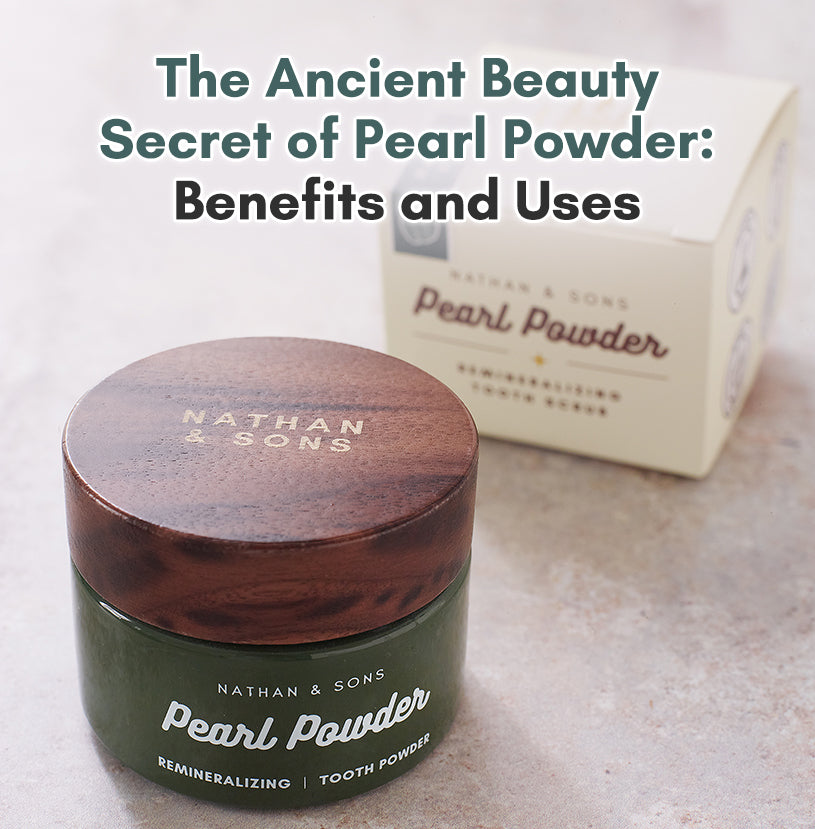
Nathan and Sons' pearl powder tooth scrub combines micro pearl powder with DIM, nano and micro hydroxyapatite, calcium carbonate, and a natural terpene blend — with full ingredient transparency on the product page.
Browse our full oral care collection to see everything we make.
To learn more about who we are and why ingredient transparency matters to us, visit our about page.
3 Reasons to Choose Sustainably Sourced Pearl Powder
Eco-conscious harvesting practices

Sustainably sourced pearl powder ensures that harvesting and production have minimal environmental impact.
Pearl cultivation using responsible aquaculture practices supports the marine ecosystems in which pearl molluscs live — and responsible sourcing is a meaningful purchasing consideration for consumers who value ecological integrity alongside product quality.
Natural matrix integrity
When pearls are sourced and processed thoughtfully — with minimal heat and chemical processing — the natural nacre structure and aragonite-protein matrix are better preserved.
This matters because the research on pearl powder's biological activity is specifically attributed to these natural matrix components — not to isolated calcium carbonate alone.
Transparency over marketing language
A pearl powder product worth choosing discloses its source — freshwater or marine, region, and processing method — rather than relying on vague marketing language like "wild-sourced" or "hand-harvested" without substantiation.
Full sourcing transparency allows consumers to evaluate the product against the research base described in this article.
Scientific Backing: What the Research Says
Studies have shown that pearl powder contains nacre — which has been examined for its potential to stimulate fibroblasts in skin and oral tissue.
A peer-reviewed study on pearl powder extract and fibroblast function found that pearl powder's water-soluble matrix significantly promoted fibroblast proliferation and collagen accumulation — concluding that wound healing activity is partly due to its ability to stimulate fibroblast mitosis and collagen deposition.
A 2024 in vitro PMC study found that nacre demonstrated remineralization potential comparable to the gold-standard CPP-ACP agent on enamel white spot lesions in laboratory conditions.
A 2021 PMC biomedical review confirmed that pearl powder's high calcium content supports cellular repair and has been examined in bone and skin research contexts.
Most pearl powder research has been conducted in laboratory and animal model settings rather than large-scale human clinical trials.
These statements have not been evaluated by the FDA.
Pearl Powder vs. Other Ingredients: What Makes It Stand Out

Versatility in research contexts
Pearl powder has been examined in research for both topical and internal use — with studies across skin biology, oral tissue, bone repair, and antioxidant contexts.
Few single natural ingredients have attracted this breadth of research interest.
Natural matrix delivery
Unlike isolated calcium carbonate supplements, pearl powder delivers calcium within its natural aragonite-protein matrix — alongside nacre proteins and amino acids that researchers have specifically associated with its biological activity profile.
Documented research history
Pearl powder's use dates back over 2,000 years — with modern peer-reviewed research beginning to investigate the biological mechanisms behind its traditional applications.
This combination of historical use and growing modern research interest is genuinely unusual.
What the Research Does Not Confirm
Most pearl powder research has been conducted in laboratory settings, animal models, and traditional medicine contexts — not in large-scale randomized controlled trials in humans.
The 2021 PMC biomedical review specifically noted that while pearl powder has been used for over a thousand years, there has yet to be an in-depth understanding in many research areas — and that the emerging biomedical research base requires further rigorous clinical investigation.
Pearl powder is not a treatment for any skin condition, oral health condition, bone condition, or mood disorder.
It does not replace conventional oral care, sunscreen, medication, or professional dental or medical care.
Consult a qualified dental or healthcare provider before making changes to your oral care or wellness routine.
These statements have not been evaluated by the FDA and are not intended to diagnose, treat, cure, or prevent any disease.
Frequently Asked Questions About Pearl Powder
Is Pearl Powder Safe?
Pearl powder has been used in food and traditional medicine contexts for over two thousand years.
The 2021 PMC biomedical review notes a growing body of modern research interest without documenting significant safety concerns at typical use levels.
As with any ingredient, individual sensitivities vary.
Pearl powder should not be used by individuals with known shellfish or mollusc allergies without consulting a healthcare provider first.
Consult a qualified healthcare provider before using pearl powder supplements — particularly if you are pregnant, breastfeeding, or managing a health condition.
These statements have not been evaluated by the FDA and are not intended to diagnose, treat, cure, or prevent any disease.
How Often Should I Use Pearl Powder?
For oral care use, follow the directions on the product label.
For dietary supplement use, follow the dosage recommendations on the product label.
Consult a qualified dental or healthcare provider for guidance specific to your situation.
Can Pearl Powder Replace My Skincare Products?
While pearl powder has a growing research profile in skin biology contexts, the current evidence is primarily from laboratory and animal model settings.
It is best considered as a complement to a well-rounded skincare and oral care routine — not a replacement for proven skin care products or professional dental care.
Consult a qualified dermatologist or dental professional for guidance specific to your skin or oral health situation.
These statements have not been evaluated by the FDA and are not intended to diagnose, treat, cure, or prevent any disease.
Is Pearl Powder the Same as Calcium Carbonate?
No — though calcium carbonate is the primary mineral component of pearl powder, they are not equivalent.
Pearl powder delivers calcium within its natural aragonite-protein matrix — including nacre proteins and amino acids naturally integrated with the mineral content.
Isolated calcium carbonate supplements do not contain these organic components.
Researchers have specifically noted this distinction as relevant to pearl powder's biological activity profile.
These statements have not been evaluated by the FDA and are not intended to diagnose, treat, cure, or prevent any disease.
Legal & Compliance Disclaimer
These statements have not been evaluated by the Food and Drug Administration. This product is not intended to diagnose, treat, cure, or prevent any disease. The information in this article is for educational purposes only and is not a substitute for professional dental or medical advice. Consult a qualified dental or healthcare provider before making changes to your oral care routine. Content current as of 2026. Subject to revision.
References
Loh XJ, et al. (2021). Pearl powder — an emerging material for biomedical applications: a review. Materials, 14(11), 2797. PMC8197316.
Pei J, et al. (2021). Extraction, purification, bioactivities and application of matrix proteins from pearl powder and nacre powder: a review. Frontiers in Bioengineering and Biotechnology. PMC8095667.
Dai JP, et al. (2010). Effects of pearl powder extract and its fractions on fibroblast function relevant to wound repair. Journal of Pharmacy and Pharmacology. PubMed PMID: 20645827. tandfonline.com/doi/full/10.3109/13880200903046211.
Song Y, et al. (2022). Review on the biological activity of nacre. Frontiers in Pharmacology. frontiersin.org/journals/pharmacology/articles/10.3389/fphar.2022.893229/full.
Yamamoto H, et al. (2023). Nacre extract protective effects against D-galactose-induced aging in brain and skin tissues. Marine Biotechnology, 25(4), 503–518. doi.org/10.1007/s10126-022-10192-2.
PMC. (2024). A comparative evaluation of human enamel remineralization ability of biomimetic nacre against casein phosphopeptide-amorphous calcium phosphate: an in vitro study. Journal of Conservative Dentistry and Endodontics. PMC11498237.
ClinicalTrials.gov. (2019). Remineralization potential of pearl powder compared to CPP-ACP on enamel white spot lesions. NCT03976583.
Institute for Traditional Medicine. Pearl monograph. itmonline.org.