
Editorial & Commercial Disclosure: Nathan & Sons produces and sells functional chewing gum, including Uprising focus gum, which is discussed in this article. This article is a summary of publicly available peer-reviewed scientific research and is intended solely as educational content. It does not constitute medical advice and should not be interpreted as a claim or endorsement of any specific health outcome. All ingredient research cited below was conducted on individual ingredients in isolation at specific doses — not on Uprising as a finished product. Results from ingredient-level research may not reflect the performance of any finished product. Individual results will vary. The comparison table in this article was compiled by our team here Nathan & Sons based on publicly available product label information as of May 2026; always verify current formulations directly on each brand's website. For any health decisions, consult a qualified healthcare professional.
These statements have not been evaluated by the Food and Drug Administration. This product is not intended to diagnose, treat, cure, or prevent any disease.
Quick Facts About Focus Gum
- Focus gum is chewing gum formulated with functional ingredients — caffeine, L-theanine, nootropics — designed to be absorbed through the mouth's mucous membranes, not the stomach
- The science behind this is called buccal absorption — a 2002 randomized clinical trial at the Walter Reed Army Institute of Research found the average time to peak caffeine concentration was significantly shorter with caffeinated gum than with capsules (Kamimori et al., Int J Pharmaceutics, 2002)
- The category was born in a military lab in the 1990s — the U.S. Army needed soldiers to stay alert for 72+ hour operations without stopping for coffee
- The functional chewing gum market was valued at $2.17 billion in 2024, projected to reach $3.76 billion by 2030 at a ~9.7% CAGR (Grand View Research)
- The most clinically studied ingredient pairing is caffeine + L-theanine; advanced formulas add Alpha-GPC, adaptogens, theobromine, and methylated B vitamins on top
Picture this. It's 2 p.m. You have a big presentation in forty minutes.
Your coffee from this morning has long since worn off, your lunch is sitting heavy, and the last thing you want to do is crack open a 200mg energy drink and ride the jitter-crash rollercoaster for the next four hours.
You reach into your pocket, pull out a piece of gum, and chew.
That's the pitch for focus gum — and it's a surprisingly good one once you understand what's actually happening in your mouth when you chew it.
This guide walks through all of it: the science, the history, every ingredient worth knowing about, and how to tell a genuinely great focus gum from one that's just caffeinated candy in a clever package.
By the end, you'll know more about this category than 99% of people who've tried it.
And we promise it'll be more interesting than a supplement label.
The History of Focus Gum: It Started With the U.S. Army
Here's a fun fact: the focus gum sitting in wellness shops today traces its DNA directly to a U.S. military research program from the 1990s.
Not a Silicon Valley garage. Not a university nootropics lab. The Walter Reed Army Institute of Research.
The problem the Army was trying to solve was brutally practical. Soldiers on extended operations needed to stay sharp — sometimes for 72 hours straight — in conditions where stopping to brew coffee wasn't an option.
You can't exactly pull out a French press in a combat zone. Capsules took too long to kick in. Energy drinks didn't exist yet in any meaningful way.
So researchers asked: what if you put caffeine in gum?
The result was called Stay Alert Gum — 100mg of caffeine per piece, issued to soldiers the way field rations were.
And it worked, for one key reason we'll spend the next section explaining: gum doesn't need your stomach to deliver its payload.
That technology sat in military circles for years before finding its way into the civilian world. By the mid-2010s, consumer brands started catching on.
Athletes, students, and professionals discovered that the same delivery mechanism that kept soldiers alert in the field could work pretty well in a 9 a.m. meeting too.
The category grew quietly, then accelerated sharply as the broader clean-wellness movement pushed consumers away from synthetic energy drinks and toward formats they could actually understand.
Today it's a multi-billion dollar market — and it's still growing. But to understand why the format works at all, you need a quick anatomy lesson.
Why Gum Works Differently: The "Mouth Door" vs. the "Stomach Door"
Think of your body as a building with two entrances for incoming supplements.
The Stomach Door is the standard entrance.
You swallow a capsule, it travels down your esophagus, gets processed by your stomach acid, moves into your small intestine, and eventually — 30 to 90 minutes later — the active ingredients make it into your bloodstream.
It's thorough, but it's slow.
There's a whole digestive bureaucracy to get through.
The Mouth Door skips all of that. The inside of your cheeks and the tissue under your tongue are lined with mucous membranes — thin, highly vascular tissue sitting directly on top of a dense network of blood vessels.
When you chew gum and ingredients are released into your saliva, those ingredients can absorb directly through that tissue into the bloodstream without ever going near your stomach.
This is called buccal absorption, and it has been studied specifically in the context of caffeine delivery.
A 2002 double-blind, randomized clinical trial — conducted by researchers at the Walter Reed Army Institute of Research and published in the International Journal of Pharmaceutics — compared caffeine delivered by gum versus capsules in 84 healthy adult males.
The study found that the average time to peak caffeine concentration (Tmax) was significantly shorter with gum (44–80 minutes) than with capsules (84–120 minutes), and concluded that their findings "suggest that there may be an earlier onset of pharmacological effects of caffeine delivered as the gum formulation, which is advantageous in situations where the rapid reversal of alertness and performance deficits resulting from sleep loss is desirable." (Kamimori GH et al., Int J Pharmaceutics, 2002)
Note: these findings relate to caffeine specifically as an isolated ingredient; they do not represent findings on Uprising or any other finished product. Individual results will vary.
One small historical footnote worth appreciating: the ancient Maya were chewing chicle — the original natural gum base — thousands of years before anyone understood buccal absorption.
They couldn't have explained the pharmacokinetics.
They just knew chewing a tree resin kept them going.
Turns out they were accidentally ahead of the U.S. Army by about two thousand years.
Curious whether chewing gum actually gives you energy? We go deep on that question in a separate piece — including what the research says about the act of chewing itself.
The Ingredients That Make Focus Gum Work
Not all focus gums are the same — and the gap between a basic caffeinated gum and a fully formulated nootropic stack is significant. Here's a plain-English breakdown of every ingredient worth knowing, grounded in what the peer-reviewed research actually found.
Important: all studies cited below were conducted on individual ingredients in isolation at specific doses. None were conducted on Uprising as a finished product.
These statements have not been evaluated by the Food and Drug Administration.
This product is not intended to diagnose, treat, cure, or prevent any disease. Individual results will vary.
Caffeine — The Starter Motor
Caffeine is the oldest cognitive enhancer humans have ever used.
We've been drinking it in various forms for centuries, and the mechanism hasn't changed: caffeine blocks adenosine receptors in the brain.
Here's a unique way to think about adenosine: imagine your brain has a "tiredness gauge" that slowly fills up throughout the day.
Adenosine is the molecule that fills it.
The more adenosine that accumulates, the sleepier you feel.
Caffeine is essentially a fake key that fits the adenosine lock but doesn't turn it — it just sits there, blocking the real key from getting in.
Your tiredness gauge can't read how full it is, so your brain keeps its alertness signals active longer than they otherwise would.
Research on caffeine as an isolated ingredient is extensive.
For buccal delivery specifically, the 2002 Kamimori et al. randomized trial found that caffeine delivered via chewing gum reached peak plasma concentration significantly faster than capsules — the study authors described this as potentially enabling "an earlier onset of pharmacological effects." (Kamimori GH et al., Int J Pharmaceutics, 2002)
In focus gum, the commonly studied dose is around 40–50mg per piece — roughly a small cup of coffee.
Enough to be effective for most adults, with less ceiling risk than higher-dose formats.
L-Theanine — The Smooth Operator
If caffeine is the starter motor, L-theanine is the transmission.
It's an amino acid found naturally in green tea leaves — and it's the reason a cup of matcha feels so different from a shot of espresso.
Calmer. More connected. Without the jangly edge.
Alpha waves are what your brain produces when you're relaxed but alert — the mental state of a jazz musician mid-solo, or a surgeon three hours into a complex procedure. Focused without being frantic.
In a randomized, triple-blind, placebo-controlled crossover study published in Neurology and Therapy, a single 200mg dose of L-theanine produced a significantly greater increase in frontal region alpha brain wave power compared to placebo (p ≤ 0.050) in moderately stressed healthy adults.
The same study found that salivary cortisol — a key marker of the stress response — decreased significantly more in the L-theanine group than placebo one hour after dosing (p < 0.001).
The study authors described these changes as "indicative of relaxation in the brain" and concluded they "suggest a calming response." (Evans Metal., Neurology and Therapy, 2021)
A 28-day follow-up randomized, double-blind, placebo-controlled trial by the same research group, also published in Neurology and Therapy, found that sustained L-theanine supplementation was associated with continued improvements in stress markers and was well tolerated over the full study period.(Moulin Metal., Neurology and Therapy, 2024)
The caffeine + L-theanine combination is among the most studied pairings in cognitive supplementation. A 2024 meta-analysis published in Nutrition Reviews, reviewing multiple clinical trials, concluded that the combination was associated with small-to-moderate improvements in attentional task performance compared to placebo, with effects observed primarily within the first two hours after intake.
(Senanayake N et al., Nutrition Reviews, 2024) The ratio showing up most consistently in the published research: 2:1 L-theanine to caffeine.
L-theanine has been granted Generally Recognized as Safe (GRAS) status by the U.S. Food and Drug Administration. (FDA GRAS Notice No. 209)
For a deeper look at how this ingredient works in gum format, see our full guide to L-theanine gum.
Alpha-GPC — The Depth Layer
Here's where things get more interesting — and where most basic focus gums stop showing up.
Quick detour before the science: have you ever heard of the Stroop test?
The basic version goes like this — the word "RED" is printed in blue ink.
Your job is to say the color of the ink, not the word. Sounds easy.
It isn't.
Your brain has to actively suppress the automatic "read the word" response and choose the correct one instead.
It's one of the most widely used assessments of attention, cognitive flexibility, and processing speed in neuroscience — and it's exactly what the Alpha-GPC researchers used to measure cognitive performance.
Keep that in mind as you read the results below.
Alpha-GPC (L-alpha-glycerylphosphorylcholine) is a choline-containing compound that the brain uses to support the production of acetylcholine — a neurotransmitter involved in memory, attention, and learning.
Think of acetylcholine as the brain's "focus currency." When levels are adequate, cognition feels sharp and connected. When levels fall, focus fragments.
Alpha-GPC is among the most bioavailable forms of choline available and is noted for its ability to cross the blood-brain barrier efficiently. (WebMD, Alpha-GPC)
In a 2024 randomized, double-blind, placebo-controlled crossover trial published in Nutrients, 20 resistance-trained healthy adult males consumed either placebo, 315mg, or 630mg of Alpha-GPC on separate visits.
The study found that both doses produced statistically significant improvements in Stroop total scores compared to placebo — a validated assessment of selective attention, cognitive flexibility, and processing speed.
The high-dose group (630mg) also completed the Stroop test significantly faster than the placebo group (p = 0.021, effect size d = 0.56).
The study authors concluded: "HD and LD A-GPC supplementation significantly increased cognitive performance in a group of young, healthy males," and noted that these results "can be potentially meaningful for a wide variety of populations such as athletes, race car drivers, military operators, and other non-athletic populations who desire and have a need to improve their mental performance." (Kerksick CM, Nutrients, 2024)
In other words: people who need to think clearly for a living.
Rhodiola Rosea — The Long Game
Rhodiola Rosea grows in the cold, high-altitude regions of Europe and Asia — Siberia, Scandinavia, the Arctic.
For centuries, populations in those regions used it to cope with the physical and mental demands of harsh conditions.
Modern research has been investigating why.
Rhodiola is classified as an adaptogen — a botanical studied for its potential to support the body's normal response to physical and mental stress.
The key word is support. Rhodiola doesn't spike energy the way caffeine does.
Based on the available research, it may help the body maintain normal baseline function during periods of occasional stress and fatigue.
A randomized, double-blind, placebo-controlled study published in Phytomedicine examined Rhodiola Rosea extract in physicians during night-duty shifts — a model of sustained mental fatigue under real-world pressure.
The study found that the Rhodiola group showed significantly less mental fatigue and improved cognitive performance compared to the placebo group over the two-week trial period. (Darbinyan V et al., Phytomedicine, 2000)
A comprehensive review published in the Alternative Medicine Review examined multiple human studies on Rhodiola Rosea and concluded it "exerts an anti-fatigue effect that increases mental performance, particularly the ability to concentrate." (Panossian A & Wikman G, Alt Medicine Review, 2010)
Think of it this way: caffeine gets you to hour one sharp. Rhodiola's research suggests it may help you maintain normal mental performance in hour three.
For long creative sessions, exam prep, demanding workdays, or competitive training, that sustained support matters alongside the initial alertness.
Theobromine — The Slow Burn
Ever notice how a piece of dark chocolate gives you a lift that's gentler and longer-lasting than coffee? That's theobromine at work.
It's a methylxanthine that occurs naturally in cacao, and like caffeine, it interacts with adenosine receptors — but with a slower onset and more gradual effect profile.
A review published in Psychopharmacology examined the effects of theobromine versus caffeine on mood and cognitive performance and found that theobromine produced a more sustained and less intense alertness effect compared to caffeine. (Smit HJ et al., Psychopharmacology, 2004)
In a multi-ingredient formula, theobromine may extend the window of alertness that caffeine opens — a longer tail rather than a sharp spike followed by a drop.
NAD (Nicotinamide Riboside) — The Engine Room
This one requires a quick step back into cell biology — but stay with us, it's worth it.
Every cell in your body runs on a molecule called ATP — adenosine triphosphate, basically cellular fuel.
The process of making ATP inside your mitochondria depends heavily on a coenzyme called NAD+.
Without adequate NAD+, mitochondria can't run efficiently, and the energy production that everything else — mental and physical — depends on suffers at its most fundamental level.
NAD+ levels naturally decline with age and under chronic stress.
Nicotinamide Riboside is a well-characterized precursor that the body can use to support NAD+ levels.
Think of NAD+ as the oil in your engine.
Caffeine is the accelerator. L-theanine is the gearbox.
But none of it matters if the oil is low — you can press the gas all you want, a dry engine doesn't go anywhere.
A randomized, double-blind, placebo-controlled crossover trial published in Nature Communications found that oral Nicotinamide Riboside supplementation in healthy adults produced significant increases in blood NAD+ levels compared to placebo. (Trammell SA et al., Nature Communications, 2016)
Including it in a focus formula is not about an acute buzz — it's about supporting the cellular energy infrastructure that every other ingredient in the formula depends on.
Saffron Extract — The Mood Signal
Saffron is the world's most expensive spice by weight — harvested by hand from the stamens of crocus flowers, each of which produces just three.
It takes roughly 75,000 flowers to produce a single pound. Most people associate it with paella and risotto.
Its appearance in a nootropic formula surprises people, but the peer-reviewed research is genuinely interesting.
A systematic review and meta-analysis published in the Journal of Integrative Medicine examined multiple randomized controlled trials on saffron extract and mood outcomes.
The authors concluded that saffron supplementation was associated with significantly greater improvements in mood-related outcomes compared to placebo across the reviewed trials.
The review noted proposed mechanisms include potential effects on serotonin, dopamine, and glutamate signaling pathways, while acknowledging that exact mechanisms in humans remain under investigation. (Lopresti AL & Drummond PD, J Integrative Medicine, 2014)
Mood stability and sustained attentional capacity are closely linked in demanding cognitive tasks — a distracted or dysregulated mind rarely produces sharp focus regardless of what else is in the formula.
Methylated B Vitamins (B9 and B12) — The Overlooked Foundation
B vitamins are not glamorous.
They don't have the mystique of adaptogens or the neurotransmitter drama of Alpha-GPC.
But their absence creates a quiet drag on cognitive and physical energy that many people attribute to other causes — stress, poor sleep, aging — when the issue may in fact be a subclinical deficiency.
Suboptimal B12 status is estimated to affect a meaningful portion of adults, particularly those over 50 and those following plant-based diets.
The word methylated is the detail that matters here. Standard B12 (cyanocobalamin) and standard B9 (folic acid) require metabolic conversion before the body can use them.
A significant portion of people — particularly those carrying a common variant in the MTHFR gene — cannot perform that conversion efficiently.
Methylated forms (methylcobalamin for B12, L-methylfolate for B9) are already in their bioactive state.
Here's a scenario a lot of people recognize: you eat reasonably well, you sleep okay, you exercise — and you still feel like you're running at 70%.
Not sick. Not burned out.
Just not quite there.
For a meaningful portion of the population, the MTHFR variant is a quiet reason for that.
They're taking the standard forms of B vitamins in everything they consume and absorbing a fraction of it.
Switching to methylated forms is one of those small changes that can produce a disproportionate response.
A review in Nutrients documented that methylated B vitamin forms demonstrate superior bioavailability compared to their non-methylated equivalents, particularly in individuals with MTHFR variants. (Obeid R et al., Nutrients, 2016)
When you see methylated forms on a label, it means the formulator was paying attention to the person who actually needs to absorb what they're chewing.
The Part Nobody Talks About: What Is the Gum Actually Made Of?
Here's something most people have never thought about: the gum base — the chewy part you're actually masticating for ten minutes — is almost universally made from synthetic polymers.
Polyisobutylene (a material related to synthetic rubber), polyvinyl acetate (used in adhesives), petroleum-derived waxes.
You're not swallowing it, but you're chewing it for extended periods, and it is not biodegradable.
To put it plainly: the next time you chew a regular stick of gum, you're chewing something closer in composition to a tire sealant than to anything you'd find in a kitchen.
Polyisobutylene is literally used in inner tubes.
That's not a scare tactic — it's just an accurate description of what's in the vast majority of gum on the market, including many that position themselves as functional or wellness-oriented.
This has been true since the mid-20th century, when manufacturers switched from natural tree resins to synthetic alternatives for cost and consistency.
Most focus gum brands — including otherwise clean-looking ones — use synthetic bases, because the active ingredient story is easier to tell than the base story.
Natural gum bases exist and have a long history. Chicle, harvested from the sapodilla tree in Central America, was the original chewing gum base used by the Maya and commercialized in the 19th century.
Mastic gum, from a tree on the Greek island of Chios, has been chewed since antiquity — see our guide to mastic gum for the full history.
Myrrh gum, a resin used since ancient Egypt, has been explored for oral health applications — read more about the benefits of myrrh gum.
Acacia gum, a soluble fiber with prebiotic properties, is covered fully in our piece on acacia gum powder benefits.
The gum base is the part of a focus gum you spend the most time in contact with. It's worth knowing what it is.
A Word on Sweeteners
Sweeteners are the other often-overlooked variable.
Conventional gum uses aspartame, sucralose, or acesulfame-K.
If you're reading ingredient labels on everything else you consume, there's no reason to stop at gum.
Xylitol is the gold standard for gum sweeteners.
The American Dental Association recognizes xylitol's role in oral health based on its documented effects on harmful oral bacteria. (American Dental Association)
We've covered everything you need to know about xylitol, why xylitol in gum matters, and our roundup of the best sugar-free gum with xylitol.
Curious about sucralose?
We examined the evidence in our article on whether sucralose causes tooth decay — the answer is more nuanced than the marketing suggests.
How to Choose a Focus Gum: A Practical Buyer's Guide
The market has grown enough that there are now meaningfully different products at different tiers. Here's a clear framework for evaluating any option before buying.
Ingredient tier
Entry level — Caffeine only. Effective for a quick jolt; no buffering ingredients means jitteriness is more likely for sensitive individuals.
Standard — Caffeine + L-theanine. The most clinically researched pairing.
The 2024 Nutrition Reviews meta-analysis found small-to-moderate improvements in attentional performance versus placebo. (Senanayake N et al., 2024)
This is where most reputable consumer options currently sit.
Advanced — Full nootropic and adaptogenic stack.
Caffeine + L-theanine + Alpha-GPC, adaptogens, theobromine, and supporting cofactors.
More comprehensive ingredient coverage across alertness, cognitive support, stress resilience, and cellular energy metabolism.
Gum base
Synthetic polymer base = the industry default.
Plant-based base (chicle, mastic, myrrh, acacia) = biodegradable, food-derived alternative.
Still rare in the category overall.
Sweeteners
Best options: xylitol, allulose, stevia, monk fruit.
Acceptable: erythritol. Worth avoiding if clean-label is a priority: aspartame, sucralose, acesulfame-K.
Caffeine dose
40–50mg per piece is the commonly studied range for most adults.
100mg per piece is effective but leaves less margin if you consume other caffeine sources alongside it.
Dose transparency
Any credible formula lists the exact milligrams of each active ingredient.
A "proprietary blend" with no individual amounts is the supplement equivalent of a restaurant that won't tell you what's in the dish — maybe there's a good reason, but more often the amounts are too small to matter and the brand knows it.
If a label won't tell you how much of anything is in it, that's your answer.
Focus Gum Compared: How the Main Options Stack Up
The following comparison was compiled by us here at Nathan & Sons based on publicly available product label information as of May 2026.
We have a commercial interest in this comparison. Formulations change — always verify current labels directly on each brand's official website before purchasing.
The pattern in the table reflects a consistent category split: most established brands offer caffeine + L-theanine (or caffeine alone) in synthetic polymer bases.
The differentiation at the premium tier involves a more comprehensive ingredient stack and a plant-derived gum base.
To our knowledge, combining a full nootropic and adaptogenic stack with a plant-based gum base is uncommon in the consumer focus gum category as of this publication date — though the category is evolving rapidly.
For a broader comparison of our full gum line, see the Underbrush vs. competitors 2026 guide.
Who Focus Gum Is Actually For
The research on individual ingredients maps fairly clearly to specific use cases.
The following reflects findings from ingredient-level studies — not from Uprising as a finished product.
Students and knowledge workers.
A 2021 systematic review published in Cureus examined multiple randomized controlled trials on the caffeine + L-theanine combination and found it was associated with improvements in attention, reaction time, and inhibitory control compared to placebo across the reviewed trials. (Sohail A et al., Cureus, 2021)
These are the exact cognitive demands of exam prep, long writing sessions, coding, and analytical work.
Athletes and physically active individuals.
A 2025 study published in Physical Education of Students examined caffeine + L-theanine in competitive wrestlers and found performance-supporting outcomes in the treatment group compared to placebo. (Shaaban AF et al., 2025)
The 2024 Kerksick Alpha-GPC trial, also conducted in resistance-trained individuals, noted the ingredient's potential relevance to "athletes and other populations who need to maintain mental performance" during physical exertion. (Kerksick CM, Nutrients, 2024)
Professionals in high-pressure environments.
The 28-day L-theanine trial in Neurology and Therapy found measurable improvements in perceived stress markers over the full study period in moderately stressed healthy adults. (Moulin M et al., Neurology and Therapy, 2024)
Long days, back-to-back commitments, and sustained cognitive demands are exactly the conditions these ingredients have been studied under.
Anyone transitioning away from energy drinks.
Focus gum is portable, requires nothing to prepare, and the ingredients in well-formulated options have more published research behind them than most energy drink formulas.
The caffeine dose per piece (typically 40–50mg) is significantly lower than the 150–200mg common in energy drinks, which reduces the ceiling risk for most users.
Charles, a verified Uprising customer, put it plainly in his May 2026 review: "If you need a supplement that keeps you sharp throughout the day, this one works great."
He also noted that the taste took a few days to settle into — honest feedback worth knowing before your first piece.
Results described reflect his individual experience and are not necessarily typical. Individual results will vary.
Focus gum is not recommended for children, pregnant or breastfeeding individuals, or anyone with caffeine sensitivity without first consulting a qualified healthcare professional.
Maximum use for Uprising is 6 pieces per day.
The Bigger Picture: Why This Format Makes Sense
There's something almost absurdly elegant about focus gum as a concept.
The supplement industry has spent decades trying to answer one simple question: how do you get functional ingredients into people quickly, conveniently, with zero friction?
Pills require water and a flat surface. Powders require a shaker and a willingness to clean it afterward. Drinks are heavy, perishable, and require a bag.
None of them are truly frictionless.
Gum has been in people's pockets for over a century.
You don't need anything else. You don't need to prepare it.
The act of chewing is already embedded in daily life — at desks, on commutes, before workouts, in the five minutes before something important starts.
The 2002 Kamimori research confirmed that the buccal delivery pathway may produce an earlier onset of caffeine's effects compared to capsules — a property that existed long before the consumer wellness market discovered it. (Kamimori GH et al., 2002)
The U.S. military got there first. The sports nutrition world caught on in the 2010s.
The broader consumer market is catching up now — the functional gum category is projected to grow at roughly 9.7% CAGR through 2030, according to Grand View Research.
Note: market size estimates vary significantly by scope — the $2.17B Grand View figure covers the functional chewing gum segment specifically, while broader analyses that include nicotine, oral health, and weight management gum formats produce larger estimates.
Both figures point in the same directional trajectory.
A piece of gum. In your pocket.
Ready in five seconds, working in twenty minutes, no blender required, no crash at 3 p.m.
Sometimes the most elegant solution is the oldest delivery format with the most advanced formula inside it.
The functional supplement industry is subject to evolving FDA and FTC regulatory guidance. Formulations, claims, and market conditions described in this article reflect information available at the time of publication and may change.
Uprising by Nathan & Sons: Our Focus Gum
These statements have not been evaluated by the Food and Drug Administration. This product is not intended to diagnose, treat, cure, or prevent any disease. All ingredient research cited in this article was conducted on individual ingredients in isolation — not on Uprising as a finished product. Individual results will vary.
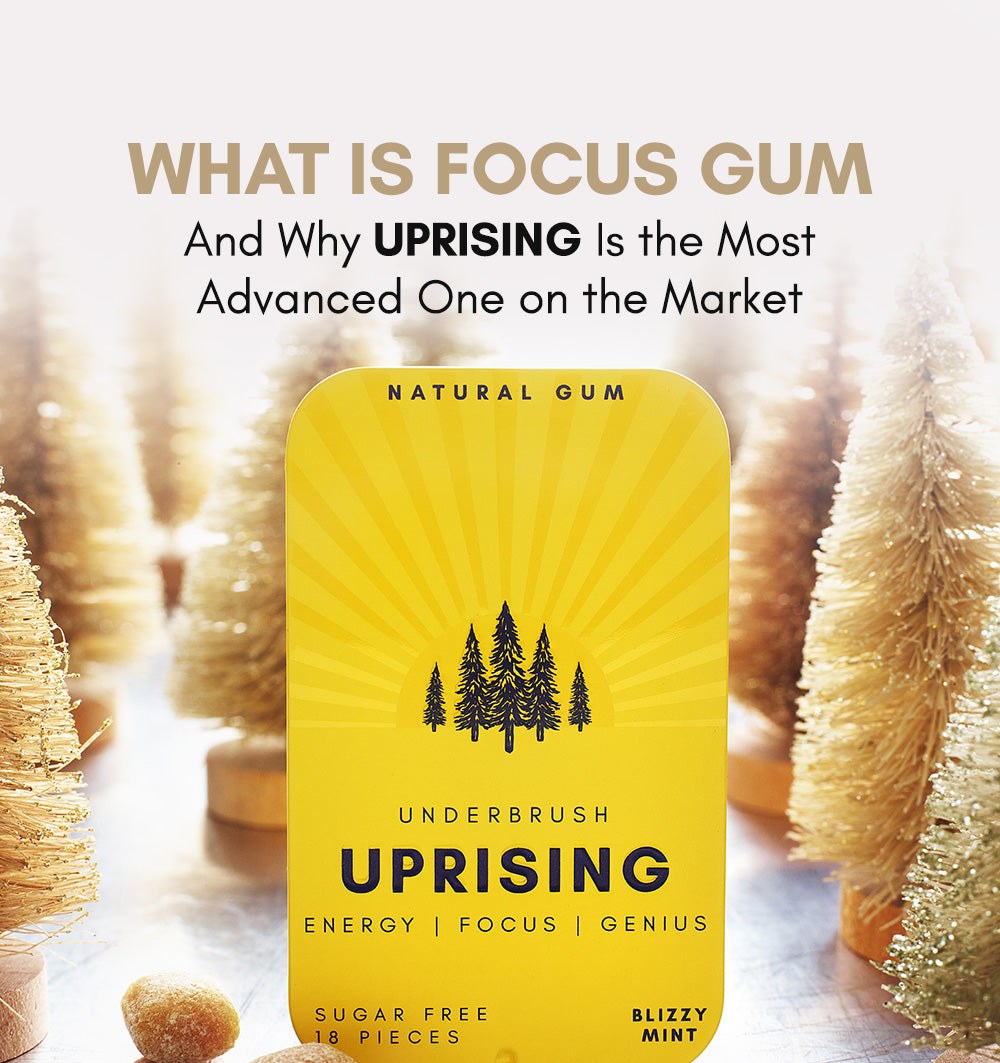
Uprising is our energy and focus gum. Eight active functional ingredients. Plant-based gum base. Made in small batches in California.

The full stack: caffeine (50mg), L-theanine (100mg), Alpha-GPC, Rhodiola Rosea extract, theobromine, NAD (Nicotinamide Riboside), saffron extract, methylated B9 (L-Methylfolate) and B12 (Methylcobalamin).
The gum base: chicle, mastic gum, myrrh gum, acacia gum, and candelilla wax — all plant-derived, all biodegradable, no synthetic polymers.
The sweeteners: xylitol, allulose, stevia, and monk fruit. No aspartame. No sucralose.
What to expect:
- Taste: Bright mint with a subtle citrus lift. Clean and refreshing — the flavor was designed to feel as intentional as the formula.
- Format: A smooth rise in alertness. The 2:1 L-theanine to caffeine ratio reflects the pairing most commonly used in published research.
- Duration: Caffeine and theobromine have different onset and duration profiles — caffeine faster and sharper, theobromine slower and more sustained.
- Daily use: Designed for it. Clean ingredients, no artificial sweeteners, no synthetic gum base.
Each piece contains 50mg of caffeine.
Start with one piece.
Maximum 6 pieces per day. Not recommended for children, pregnant individuals, or those with caffeine sensitivity without consulting a healthcare professional.
"The new formula definitely doesn't have the bitterness of the first batch. Very well balanced and the flavor lasts longer than the non-energy versions by far with a softer chew. Just a little pick-me-up with no jitters or crash. My new go-to."
— Jeff, verified customer, April 2026
Jeff is a verified Uprising customer. No compensation was provided for this review. Results described reflect his individual experience and are not necessarily typical. Individual results will vary.
These statements have not been evaluated by the Food and Drug Administration. This product is not intended to diagnose, treat, cure, or prevent any disease.

Focus Gum - Frequently Asked Questions
What is focus gum?
Focus gum is chewing gum formulated with functional ingredients — caffeine, L-theanine, and nootropics — designed to be absorbed through the mucous membranes of the mouth rather than the digestive system.
This pathway, called buccal absorption, has been studied in the context of caffeine and may allow for faster onset compared to capsules, based on findings from a 2002 randomized clinical trial. (Kamimori GH et al., 2002)
Individual results will vary. These statements have not been evaluated by the FDA. This product is not intended to diagnose, treat, cure, or prevent any disease.
How is focus gum different from an energy drink?
Energy drinks deliver active ingredients through the digestive system, adding time to onset, and typically contain 150–200mg+ of caffeine per can alongside added sugars, synthetic dyes, and preservatives.
Focus gum is portable, requires no preparation, delivers a lower caffeine dose per piece, and can be formulated with a cleaner ingredient profile.
It's a fundamentally different format — not a repackaged energy drink.
When is the best time to use focus gum?
Based on the ingredient-level research, focus gum has been studied most in the context of cognitively demanding tasks, physical exertion, and periods of mental fatigue.
Because of the caffeine content, evening use is not recommended for those who are caffeine sensitive. Start with one piece, wait 20–30 minutes, and assess before taking a second. Individual results will vary.
Is focus gum sugar-free?
Quality focus gums are sugar-free.
The meaningful distinction is which sweeteners are used — xylitol, stevia, and monk fruit are cleaner options than aspartame or sucralose.
Always check the current label.
What ingredients should I look for in a focus gum?
The most clinically studied foundation is caffeine + L-theanine at a 1:2 ratio.
From there, Alpha-GPC supports choline availability for normal neurotransmitter function, Rhodiola Rosea has been studied for its adaptogenic effects on normal stress response, and methylated B vitamins support bioavailable B vitamin status.
Look for formulas that list exact milligram amounts for each active ingredient. Individual results will vary. These statements have not been evaluated by the FDA.
How much caffeine is in focus gum?
Most consumer focus gums contain 40–100mg per piece.
Around 50mg reflects the commonly studied range for most healthy adults — roughly equivalent to a small cup of coffee.
Always account for total daily caffeine intake across all sources.
Not recommended for children, pregnant individuals, or those sensitive to caffeine without consulting a healthcare professional.
Keep Reading
If this article sparked more questions than it answered, here are the most relevant places to go next:
- L-Theanine Gum: A Deep Dive on the Research — the full story on the most important single ingredient in this category
- Does Chewing Gum Give You Energy? — what the research says about the act of chewing itself and alertness
- The Best Mastic Gum: What It Is and Why It Matters — the history and research behind one of our gum base ingredients
- The Benefits of Myrrh Gum — from ancient Egypt to modern gum bases
- Acacia Gum: Benefits and Uses — why a prebiotic fiber ended up in a gum base
- Everything You Need to Know About Xylitol — the complete guide to our primary sweetener
- Best Sugar-Free Gum with Xylitol — how different options compare on the sweetener question
- Does Sucralose Cause Tooth Decay? — why we chose not to use it
- Underbrush vs. Competitors: 2026 Guide— our full gum line compared across the market
About the Author
The Nathan & Sons Team — Nathan & Sons was founded by Nathan, a former executive chef and entrepreneur who became personally interested in functional ingredients while exploring clean solutions for focus and daily energy management. That journey led to the creation of the Underbrush line and, most recently, Uprising. The team emphasizes ingredient transparency, careful sourcing, and clean-label products informed by publicly available peer-reviewed scientific research. Articles are prepared using peer-reviewed literature, reviewed internally for scientific accuracy before publication, and updated on a rolling 12-month basis to ensure alignment with current scientific literature and regulatory guidance.
Disclosure: Nathan & Sons produces and sells functional chewing gum products including Uprising. This article reflects a summary of publicly available peer-reviewed research and should not be interpreted as a product endorsement of any specific health outcome. These statements have not been evaluated by the Food and Drug Administration. This product is not intended to diagnose, treat, cure, or prevent any disease.
References
- Kamimori GH, Karyekar CS, Otterstetter R, et al. "The rate of absorption and relative bioavailability of caffeine administered in chewing gum versus capsules to normal healthy volunteers." International Journal of Pharmaceutics. 2002;234(1-2):159-167. pubmed.ncbi.nlm.nih.gov/11839447
- Evans M, McDonald AC, Xiong L, Crowley DC, Guthrie N. "A Randomized, Triple-Blind, Placebo-Controlled, Crossover Study to Investigate the Efficacy of a Single Dose of AlphaWave® L-Theanine on Stress in a Healthy Adult Population." Neurology and Therapy. 2021;10(2):1061-1078. link.springer.com/article/10.1007/s40120-021-00284-x
- Moulin M, et al. "Safety and Efficacy of AlphaWave® L-Theanine Supplementation for 28 Days in Healthy Adults with Moderate Stress." Neurology and Therapy. 2024. link.springer.com/article/10.1007/s40120-024-00624-7
- Senanayake N, et al. "Effects of Tea or its Bioactive Compounds on Cognition, Sleep, and Mood: A Systematic Review of Randomized Controlled Trials." Nutrition Reviews. 2024;83(10):1873. academic.oup.com
- Kerksick CM. "Acute Alpha-Glycerylphosphorylcholine Supplementation Enhances Cognitive Performance in Healthy Men." Nutrients. 2024;16(23):4240. pmc.ncbi.nlm.nih.gov/articles/PMC11644786
- Sohail AA, Ortiz F, Varghese T, et al. "The Cognitive-Enhancing Outcomes of Caffeine and L-theanine: A Systematic Review." Cureus. 2021;13(12):e20828. pmc.ncbi.nlm.nih.gov/articles/PMC8794723
- Shaaban AF, et al. "Performance-enhancing effects of caffeine and L-Theanine among Iranian elite wrestlers." Physical Education of Students. 2025. pmc.ncbi.nlm.nih.gov/articles/PMC12456047
- Darbinyan V, Kteyan A, Panossian A, et al. "Rhodiola rosea in stress induced fatigue — a double blind cross-over study of a standardized extract SHR-5 with a repeated low-dose regimen on the mental performance of healthy physicians during night duty." Phytomedicine. 2000;7(5):365-371. pubmed.ncbi.nlm.nih.gov/11081987
- Panossian A, Wikman G. "Effects of Adaptogens on the Central Nervous System and the Molecular Mechanisms Associated with Their Stress-Protective Activity." Pharmaceuticals. 2010;3(1):188-224. pmc.ncbi.nlm.nih.gov/articles/PMC3991026
- Smit HJ, Gaffan EA, Rogers PJ. "Methylxanthines are the psycho-pharmacologically active constituents of chocolate." Psychopharmacology. 2004;176(3-4):412-419. pubmed.ncbi.nlm.nih.gov/15549276
- Trammell SA, Schmidt MS, Weidemann BJ, et al. "Nicotinamide riboside is uniquely and orally bioavailable in healthy humans." Nature Communications. 2016;7:12948. ncbi.nlm.nih.gov/pmc/articles/PMC5668137
- Lopresti AL, Drummond PD. "Saffron (Crocus sativus) for depression: a systematic review of clinical studies and examination of underlying antidepressant mechanisms of action." Human Psychopharmacology. 2014;29(6):517-527. pubmed.ncbi.nlm.nih.gov/24830020
- Obeid R, Holzgreve W, Pietrzik K. "Is 5-methyltetrahydrofolate an alternative to folic acid for the prevention of neural tube defects?" Journal of Perinatal Medicine. 2013;41(5):469-483. pmc.ncbi.nlm.nih.gov/articles/PMC4772032
- Zając-Lamparska L, et al. "The Effect of L-Theanine on Cognitive Performance — Systematic Review and Meta-Analysis." Journal of Clinical Medicine. 2025;14(21):7710. mdpi.com/2077-0383/14/21/7710
- FDA GRAS Notice No. 209 — L-theanine. fda.gov GRAS Notice 209
- American Dental Association. "Chewing Gum." ada.org
- WebMD. "Alpha-GPC." webmd.com
- Grand View Research. "Functional Chewing Gums Market Size & Share Report, 2030." grandviewresearch.com
- Future Market Insights. "Functional Chewing Gum Market Size & Trends." futuremarketinsights.com
- SkyQuest. "Chewing Gum Market Forecast, Size, and Strategic Insights." skyquestt.com
- Wikipedia. "Neuro (gum)." en.wikipedia.org/wiki/Neuro_(gum)