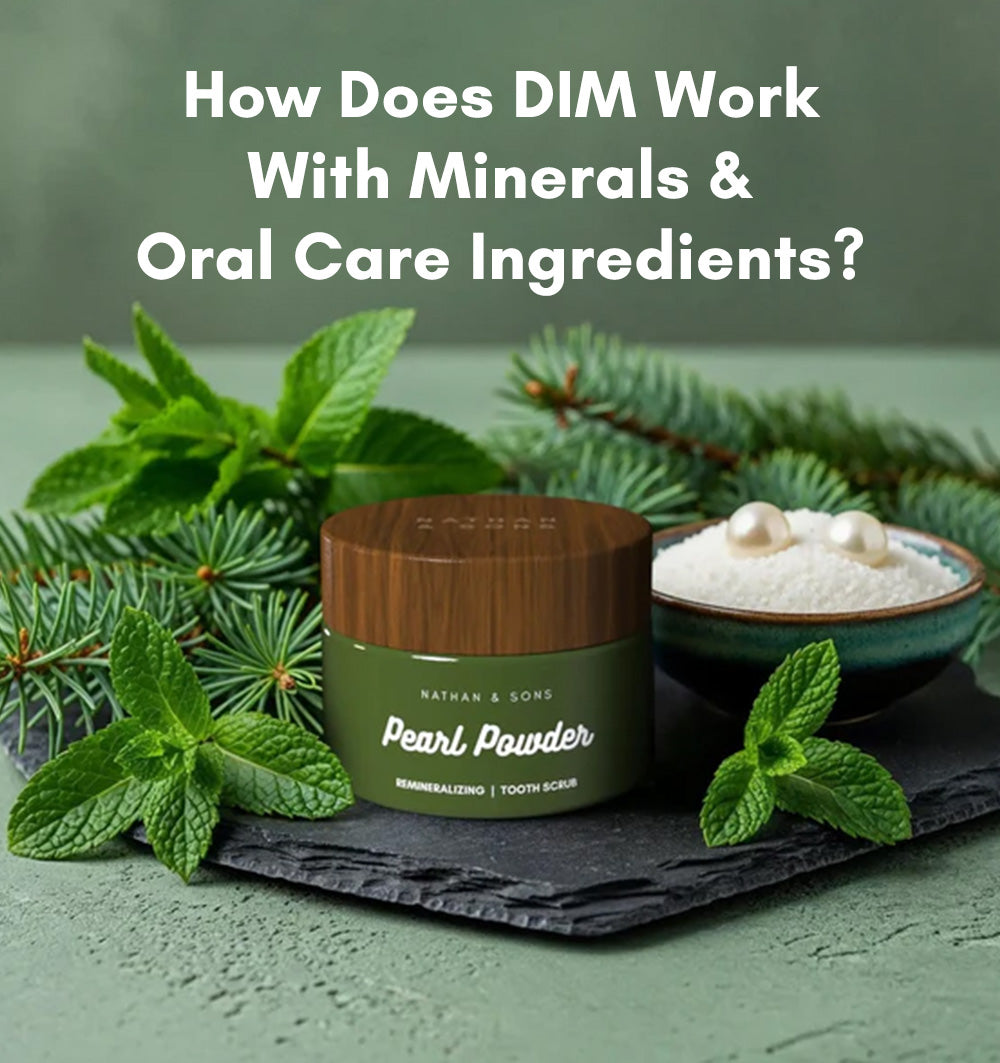

DIM — short for diindolylmethane — is a naturally occurring compound that forms in your body when you eat cruciferous vegetables.
It does not exist preformed in broccoli, kale, or cauliflower.
It forms during digestion.
And the research being done on it in oral science contexts is among the more genuinely interesting emerging areas in plant-derived compound research.
This article covers what DIM actually is, how it forms, why it has attracted scientific attention, and what the peer-reviewed research specifically says about its behavior in oral biology environments.
These statements have not been evaluated by the Food and Drug Administration.
This product is not intended to diagnose, treat, cure, or prevent any disease.
What Is DIM — Diindolylmethane?
Diindolylmethane — commonly written as DIM — is a naturally occurring phytochemical classified as an indole compound.
Its chemical name reflects its structure: it is formed from two molecules of indole-3-carbinol joined together — "di" meaning two, "indolyl" referring to the indole ring structure, and "methane" referring to the carbon bridge connecting them.
A 2024 comprehensive review published in PMC examining the pharmacological actions of indole-3-carbinol and diindolylmethane confirmed that DIM is formed by the condensation of two molecules of indole-3-carbinol — and that both compounds alter multiple signaling pathways controlling diverse cellular events including oxidation, inflammation, and immunity.
DIM is lipophilic — meaning it does not dissolve readily in water but blends more effectively with lipids.
This characteristic influences how it moves through the body and how formulators work with it in product development — typically combining it with carriers such as oils, emulsions, or microcapsule delivery systems to maintain stability and even distribution.
How Does DIM Form From Cruciferous Vegetables?
Here is something most articles about DIM skip entirely — and it is one of the most interesting things about it.
DIM does not come prepackaged inside vegetables waiting to be absorbed.
It forms through a multi-step process that begins when you start chewing.
Cruciferous vegetables — broccoli, cauliflower, kale, cabbage, Brussels sprouts, and related plants — contain compounds called glucosinolates.
Specifically, they contain glucobrassicin.
When you chew these vegetables, mechanical damage to the plant cells brings glucobrassicin into contact with an enzyme called myrosinase — which is also stored in the plant cells.
A 2022 clinical review published in the Nutritional Medicine Journal confirmed that glucosinolates are broken down by the enzyme myrosinase during chopping or chewing, yielding indole-3-carbinol as one of the key breakdown products — and that approximately 60 percent of indole-3-carbinol is subsequently converted to DIM.
A review published in Annual Reviews confirmed that indole-3-carbinol is a bioactive phytochemical abundant in cruciferous vegetables — and that one of its main in vivo metabolites is 3,3′-diindolylmethane, formed by the condensation of two molecules of indole-3-carbinol.
The conversion from indole-3-carbinol to DIM requires an acidic environment — the stomach provides this.
This means the amount of DIM formed depends on several factors: how well you chew the vegetables, the acidity of your stomach environment, and the composition of your gut microbiome — some gut bacteria produce their own myrosinase, which influences how much glucosinolate conversion occurs.
People using acid-lowering medications may experience reduced DIM conversion because of the higher gastric pH.
What Is DIM Used For? An Overview of Research Areas
DIM has attracted scientific attention across several research areas — and understanding the full landscape helps place the oral science research in context.
The PMC comprehensive review noted that DIM and its precursor indole-3-carbinol alter multiple signaling pathways and have been studied in research contexts involving oxidation, inflammation, proliferation, differentiation, immunity, and estrogen metabolism pathways.
Research areas where DIM has been examined include:
Estrogen metabolism — DIM has been studied for its potential to influence how certain estrogen compounds are processed in the body, making it a compound of interest in hormonal health research contexts.
For a deeper look at this research area, our article on how DIM supports estrogen metabolism covers the evidence in detail.
Anti-inflammatory pathways — DIM has been examined in laboratory models for its effects on inflammatory signaling molecules.
Antioxidant activity — DIM has been studied in research examining how it interacts with oxidative processes.
Detoxification pathways — DIM has been examined for its potential influence on xenobiotic metabolism pathways.
For more on this, our article on DIM detox pathways explained covers the research in detail.
Oral biology — which is the primary focus of this article and the area receiving growing research attention.
The PMC review specifically noted that most DIM research across all of these areas remains predominantly preclinical — meaning it has been conducted in cell cultures, laboratory models, and animal models rather than large-scale human clinical trials.
For a comprehensive overview of the full DIM research landscape, our ultimate guide to DIM benefits covers all of these areas in one place.
These statements have not been evaluated by the FDA.
DIM Safety Profile and Side Effects: What the Research Shows
Before examining the oral science research specifically, it is worth addressing the safety profile of DIM — a question many consumers search for.
Dietary DIM from cruciferous vegetables
When DIM is obtained through eating cruciferous vegetables — broccoli, kale, cauliflower, cabbage, Brussels sprouts — it is consumed in the context of whole foods with a well-established long-term safety record.
Cruciferous vegetables are among the most studied food groups in nutrition research and are widely recognized as part of a healthy diet by major health organizations globally.
DIM as a supplemental ingredient
DIM is also available in supplemental and topical forms at concentrations that may differ from dietary exposure levels.
A WebMD review of diindolylmethane notes that while DIM from cruciferous vegetables is generally well tolerated, supplemental DIM has been studied at varying doses and that individual responses can vary.
Some people using supplemental DIM have reported gastrointestinal effects, headache, and changes in urine color at higher doses.
The PMC comprehensive review noted that in addition to beneficial effects, possible toxicities of DIM have been reported in various preclinical investigations — and that further in-depth research is required.
It also emphasized that most protective effects of DIM are from preclinical studies, underscoring the need for large-scale human clinical trials.
DIM supplement vs dietary DIM
A question many consumers ask is whether taking a DIM supplement is equivalent to eating cruciferous vegetables.
The honest answer is: they are not the same.
When you eat broccoli, you consume glucosinolate precursors alongside fiber, vitamins, minerals, and dozens of other phytochemicals that interact as part of a whole food matrix.
The DIM that forms is produced through your own digestive process at concentrations determined by your individual biology.
Supplemental DIM delivers the compound directly — at concentrations that may be significantly higher than typical dietary exposure — and without the co-occurring nutrients present in the whole food.
Most research on DIM has been conducted using isolated DIM rather than whole vegetable consumption — which means the research context and the dietary context are different.
Consult a qualified healthcare provider before using supplemental DIM.
These statements have not been evaluated by the FDA.
Why Does DIM Have a Stable Chemical Structure Worth Studying?
Unlike its precursor indole-3-carbinol — which is chemically unstable in acidic conditions and rapidly converts into multiple compounds — DIM is relatively stable.
This stability is precisely what makes it valuable as a research subject.
When researchers study a compound in laboratory conditions, predictability matters.
A compound that behaves consistently across different testing environments, maintains its structure under controlled conditions, and produces reproducible results across experimental batches can be studied clearly and systematically.
DIM meets these criteria.
The PMC comprehensive review noted that experimental evidence suggests DIM offers relevant properties due to its antioxidant, anti-inflammatory, antiapoptotic, immunomodulatory, and xenobiotic characteristics — while also emphasizing that most protective effects are from preclinical studies and that large-scale clinical trials are still needed.
That last point is important and will be returned to throughout this article.
These statements have not been evaluated by the FDA.
What Researchers Are Studying About DIM in Oral Science
The mouth is a uniquely complex biological environment.
It contains soft tissue, hard tissue, a diverse microbial community, saliva with its own enzymatic and mineral properties, and constant mechanical activity.
This complexity makes it an important environment for studying how plant-derived compounds interact with biological systems.
Here is what peer-reviewed research has specifically examined about DIM in oral biology contexts.
DIM and Oral Biofilm: What the Laboratory Research Found
Oral biofilm — commonly known as dental plaque — is a complex three-dimensional structure that forms on tooth surfaces through the sequential attachment of microbial colonizers.
Streptococcus mutans is among the most studied of these colonizers — it is classified as a primary etiological agent in dental caries because of its acid production from fermentable carbohydrates.
A 2023 peer-reviewed study published in the journal Antibiotics by researchers at Ben Gurion University of the Negev examined the effect of DIM on Streptococcus mutans biofilm formation in laboratory conditions.
The researchers concluded that DIM was able to attenuate Streptococcus mutans biofilm formation by 92 percent in the experimental conditions studied.
Additionally, treatment with DIM lowered extracellular polymeric substance production — a key structural component of biofilm — and decreased biofilm durability under acidic conditions.
The researchers described the anti-biofilm and anti-virulence properties of DIM against Streptococcus mutans bacteria as providing laboratory evidence for its potential usefulness in reducing biofilm formation — a laboratory study conclusion rather than an established clinical outcome.
A 2022 peer-reviewed study published in PMC examined DIM's antibacterial and antibiofilm activity against multispecies microbial communities and found that DIM at 0.1 mM significantly inhibited biofilm formation — and that DIM prevented biofilm formation and disrupted existing biofilm without affecting microbial death rates in the study conditions.
It is important to frame these findings accurately.
Both studies were conducted in laboratory settings — in vitro, using cultured bacteria rather than in living human subjects.
Laboratory findings do not establish clinical outcomes in humans.
These are research observations that contribute to the scientific understanding of DIM's potential in oral biology contexts — not clinical claims about what DIM does in the human mouth.
These statements have not been evaluated by the FDA and should not be interpreted as disease-treatment claims.
DIM and Anti-Inflammatory Research in Oral Tissue Contexts
Oral tissues — including gum tissue, oral mucosa, and epithelial surfaces — are sensitive to inflammatory processes driven by bacterial activity, mechanical irritation, and oxidative stress.
A PubMed study examining DIM's effects on macrophage-mediated inflammation found that DIM significantly decreased the release of inflammatory signaling molecules including nitric oxide, prostaglandin E2, tumor necrosis factor alpha, interleukin-6, and interleukin-1 beta in laboratory conditions.
DIM inhibited increases in inducible nitric oxide synthase — a key mediator of inflammatory signaling — at both the protein and messenger RNA levels.
This research was conducted in laboratory models using murine macrophages rather than in human clinical trials.
The findings represent a meaningful area of scientific investigation rather than established clinical outcomes for any oral health condition.
These statements have not been evaluated by the FDA.
DIM and Oxidative Stress in Oral Science Research
Oxidative stress occurs naturally in oral environments and can intensify through daily habits including eating, drinking, and exposure to environmental factors.
Reactive oxygen species are produced continuously in living cells — and when their production exceeds the body's antioxidant capacity, oxidative stress results.
A 2023 peer-reviewed study published in PMC examining oxidative stress-induced oral epithelial toxicity confirmed that oxidative stress plays a critical role in the pathogenesis of several oral mucosal conditions — and that oral keratinocytes are remarkably sensitive to oxidative stress.
The PMC review examining DIM's multifaceted pharmacological actions confirmed that DIM has been examined in research for antioxidant properties alongside its anti-inflammatory characteristics — with experimental evidence suggesting it interacts with oxidative processes in ways researchers continue to study.
These statements have not been evaluated by the FDA.
What the DIM Research Does Not Yet Confirm
Honest disclosure is essential here — and it is something the article you are reading takes seriously.
The research on DIM in oral biology contexts is predominantly preclinical.
This means it has been conducted in cell cultures, laboratory bacterial models, and animal models — not in large-scale human clinical trials.
The PMC comprehensive review specifically noted: so far, most of the reports about DIM's protective effects against various diseases are only from preclinical studies — emphasizing the need for large-scale clinical trials on these phytochemicals against human diseases.
What the current research does and does not show:
It shows that DIM attenuated Streptococcus mutans biofilm formation by 92 percent in a 2023 laboratory study — a laboratory finding that researchers described as significant in the study context.
It does not establish that DIM prevents dental caries or any other oral disease in humans.
It shows that DIM decreased inflammatory signaling molecules in laboratory macrophage models.
It does not establish that DIM treats or prevents gum disease in humans.
It shows that DIM has been examined in antioxidant research contexts with properties that researchers continue to study.
It does not establish clinical outcomes for oxidative stress conditions in the human mouth.
The gap between laboratory findings and clinical validation is not a reason to dismiss the research.
It is a reason to present it accurately — which is what this article does.
These statements have not been evaluated by the FDA and are not intended to diagnose, treat, cure, or prevent any disease.
DIM in Product Formulations: What to Know

Because DIM does not dissolve easily in water, formulators working with it face a delivery challenge.
A compound that cannot disperse evenly in a water-based product will not contact tissues uniformly.
Solutions typically used include lipid-based carriers, emulsion systems, microcapsule encapsulation, and specialized delivery matrices that help DIM remain stable and evenly distributed within a formula.
The research cited above — including the 2023 Antibiotics study — examined DIM in controlled laboratory settings at specific concentrations.
Whether those concentrations and delivery conditions can be replicated effectively in consumer oral care products is an area where the science is still developing.
The research discussed above evaluates DIM as an ingredient in laboratory contexts.
The finished product has not been evaluated by the FDA for the prevention, treatment, or mitigation of any condition.
Nathan and Sons incorporates DIM into our pearl powder oral care formulation — combining it with mineral-rich ingredients examined in oral care research contexts.
For more on the mineral ingredients we use alongside DIM, our article on minerals that support DIM effectiveness covers the full research context.
For more on DIM's broader research profile, our article on what is diindolylmethane covers the comprehensive overview.
Browse our full oral care collection to see everything we make — with full ingredient transparency on every product.
To learn more about who we are and why ingredient transparency matters to us, visit our about page.
Key Takeaways: What Is DIM?
DIM — diindolylmethane — is a naturally occurring phytochemical that forms during the digestion of cruciferous vegetables through the conversion of indole-3-carbinol.
It does not exist preformed in vegetables — it is created in the body during the digestive process.
DIM is lipophilic and chemically stable — two properties that make it valuable for consistent laboratory research.
A 2023 peer-reviewed study published in the journal Antibiotics found that DIM attenuated Streptococcus mutans biofilm formation by 92 percent in laboratory conditions — a laboratory finding that researchers described as significant in the study context.
Laboratory research has also examined DIM for anti-inflammatory properties involving macrophage-mediated inflammatory signaling molecules and for antioxidant characteristics.
Most DIM research has been conducted in preclinical settings — cell cultures, bacterial models, and animal models — rather than in large-scale human clinical trials.
Supplemental DIM and dietary DIM from cruciferous vegetables are not the same — they differ in concentration, delivery context, and the co-occurring nutrients present.
The evidence is meaningful and continues to develop — but does not yet establish clinical outcomes for oral health conditions in humans.
These statements have not been evaluated by the FDA. Not intended to diagnose, treat, cure, or prevent any disease.
Frequently Asked Questions: What Is DIM?
What is DIM?
DIM — diindolylmethane — is a naturally occurring phytochemical formed in the body during the digestion of cruciferous vegetables.
It forms when indole-3-carbinol — a compound released when cruciferous vegetables are chewed — undergoes condensation reactions in the acidic environment of the stomach, producing DIM as its primary stable metabolite.
It is lipophilic, chemically stable, and has been examined in multiple areas of biological research including oral science.
These statements have not been evaluated by the FDA and are not intended to diagnose, treat, cure, or prevent any disease.
What does DIM do?
DIM has been examined in peer-reviewed research across several areas including estrogen metabolism pathways, anti-inflammatory signaling, antioxidant activity, detoxification pathways, and oral biofilm behavior.
In oral science specifically, laboratory research has examined its effects on Streptococcus mutans biofilm formation, inflammatory signaling molecules, and oxidative stress in oral tissue contexts.
Most findings are from preclinical laboratory settings rather than human clinical trials.
These are research observations and should not be interpreted as claims about what DIM does in the human body at normal consumption levels.
These statements have not been evaluated by the FDA and are not intended to diagnose, treat, cure, or prevent any disease.
What vegetables contain DIM?
DIM does not exist preformed inside vegetables — it forms during digestion.
The vegetables that contain the glucosinolate precursors needed to produce DIM during digestion include broccoli, cauliflower, kale, cabbage, Brussels sprouts, watercress, radishes, and mustard seeds.
These are all members of the cruciferous vegetable family.
How does DIM form in the body?
When cruciferous vegetables are chewed, the enzyme myrosinase — stored in the plant cells — comes into contact with glucobrassicin and breaks it down into indole-3-carbinol.
Indole-3-carbinol then undergoes condensation reactions in the acidic environment of the stomach — with approximately 60 percent converting to DIM.
The amount of DIM produced depends on how thoroughly the vegetables are chewed, stomach acidity, and gut microbiome composition.
Can you get DIM from food?
Yes — DIM is naturally produced when you eat cruciferous vegetables.
The vegetables that produce DIM through digestion include broccoli, cauliflower, kale, cabbage, Brussels sprouts, watercress, and related plants.
Eating cruciferous vegetables delivers DIM alongside fiber, vitamins, minerals, and other phytochemicals — a different context from supplemental DIM which delivers the compound directly at concentrations that may differ significantly from typical dietary exposure.
Consult a qualified healthcare provider for guidance specific to your situation.
These statements have not been evaluated by the FDA and are not intended to diagnose, treat, cure, or prevent any disease.
Is DIM safe?
DIM from cruciferous vegetables as part of a normal diet has a well-established safety record.
Supplemental DIM at concentrations above typical dietary exposure has been studied at varying doses.
Some people using supplemental DIM at higher doses have reported gastrointestinal effects, headache, and changes in urine color.
A comprehensive PMC review noted that possible toxicities of DIM have been reported in various preclinical investigations and that further research is required.
Consult a qualified healthcare provider before using supplemental DIM — particularly if you are pregnant, breastfeeding, or managing a health condition.
These statements have not been evaluated by the FDA and are not intended to diagnose, treat, cure, or prevent any disease.
What has research found about DIM and oral biofilm?
A 2023 peer-reviewed study published in the journal Antibiotics found that DIM attenuated Streptococcus mutans biofilm formation by 92 percent in laboratory conditions — and that DIM lowered extracellular polymeric substance production and decreased biofilm durability under acidic conditions.
This study was conducted in vitro — in laboratory bacterial cultures rather than in living human subjects.
These are research observations and should not be interpreted as clinical claims about dental caries prevention.
These statements have not been evaluated by the FDA and are not intended to diagnose, treat, cure, or prevent any disease.
Is DIM research in oral science based on human clinical trials?
Most DIM research in oral science contexts has been conducted in preclinical settings — cell cultures, bacterial models, and animal models.
A comprehensive PMC review specifically noted that most reports about DIM's protective effects are from preclinical studies and emphasized the need for large-scale clinical trials.
The current evidence base is meaningful and developing — but does not yet establish clinical outcomes for oral health conditions in humans.
These statements have not been evaluated by the FDA and are not intended to diagnose, treat, cure, or prevent any disease.
Why is DIM used in oral care formulations?
DIM is used in oral care research formulations because of its stable chemical structure, its lipophilic properties that allow it to be incorporated into carrier systems, and the growing preclinical research base examining its behavior in oral biology environments including biofilm and inflammatory contexts.
Because DIM does not dissolve in water, formulators typically combine it with lipid-based carriers or encapsulation systems to ensure even distribution.
The finished product has not been evaluated by the FDA for the prevention, treatment, or mitigation of any condition. These statements have not been evaluated by the FDA and are not intended to diagnose, treat, cure, or prevent any disease.
Legal & Compliance Disclaimer
These statements have not been evaluated by the Food and Drug Administration. This product is not intended to diagnose, treat, cure, or prevent any disease. The information in this article is for educational purposes only and is not a substitute for professional dental or medical advice. Consult a qualified dental or healthcare provider before making changes to your oral care routine. Content current as of 2026. Subject to revision.
References
Annual Reviews. (2024). Indole-3-carbinol: occurrence, health-beneficial properties, and cellular/molecular mechanisms. annualreviews.org/content/journals/10.1146/annurev-food-060721-025531.
PMC. (2025). Unveiling the multifaceted pharmacological actions of indole-3-carbinol and diindolylmethane: a comprehensive review. PMC11902694.
Baruch Y, Golberg K, Sun Q, Gin KYH, Marks RS, Kushmaro A. (2023). 3,3′-Diindolylmethane (DIM): a potential therapeutic agent against cariogenic Streptococcus mutans biofilm. Antibiotics, 12(6), 1017. DOI: 10.3390/antibiotics12061017. PMC10295630.
Kim J, et al. (2022). The anticancer agent 3,3′-diindolylmethane inhibits multispecies biofilm formation by acne-causing bacteria and Candida albicans. PMC8809333.
Elgar K. (2022). Sulforaphane, 3,3′-diindolylmethane and indole-3-carbinol: a review of clinical use and efficacy. Nutritional Medicine Journal, 1(2), 81–96. nmi.health.
Mohammed AI, et al. (2023). Assessment of oxidative stress-induced oral epithelial toxicity. Biomolecules, 13(8), 1239. PMC10452318.
Kim EK, et al. (2008). 3,3′-Diindolylmethane suppresses the inflammatory response to lipopolysaccharide in murine macrophages. PubMed. PMID: 18156398.
WebMD. Diindolylmethane: overview, uses, side effects, precautions. webmd.com/vitamins/ai/ingredientmono-1049/diindolylmethane.
Metagenics Institute. (2020). Science review: indole-3-carbinol and 3,3′-diindolylmethane. metagenicsinstitute.com.