
Aspartame is not definitively bad for you at normal consumption levels according to current regulatory assessments — but the research picture is nuanced, contested in some areas, and continuing to develop.
Here is a question that has been asked — and answered very differently depending on who you ask — for about forty years.
A chemist accidentally discovered aspartame in 1965 while working on an anti-ulcer drug.
It got approved by the FDA in 1981.
And it has been the subject of scientific debate, regulatory review, consumer anxiety, and industry defense ever since.
In 2023 the WHO made a classification that reignited the conversation.
So where does the research actually land?
Not in a press release or a marketing blog.
In the peer-reviewed literature, the regulatory agencies, and the independent research bodies that have been studying aspartame longer than most of us have been paying attention.
This article covers what aspartame is, what the research says about its effects — including the oral health research specifically — and what natural sweetener alternatives researchers have examined as comparisons.
These statements have not been evaluated by the Food and Drug Administration. This product is not intended to diagnose, treat, cure, or prevent any disease.
What Is Aspartame?
Aspartame is an artificial sweetener approximately 180 to 200 times sweeter than regular sugar.
That intensity means only a tiny amount is needed to match the sweetness of sugar — which is why it has been widely used since the 1980s in diet sodas, sugar-free chewing gums, sugar-free candies, yogurts, breakfast cereals, toothpaste, and medications including cough drops and chewable vitamins.
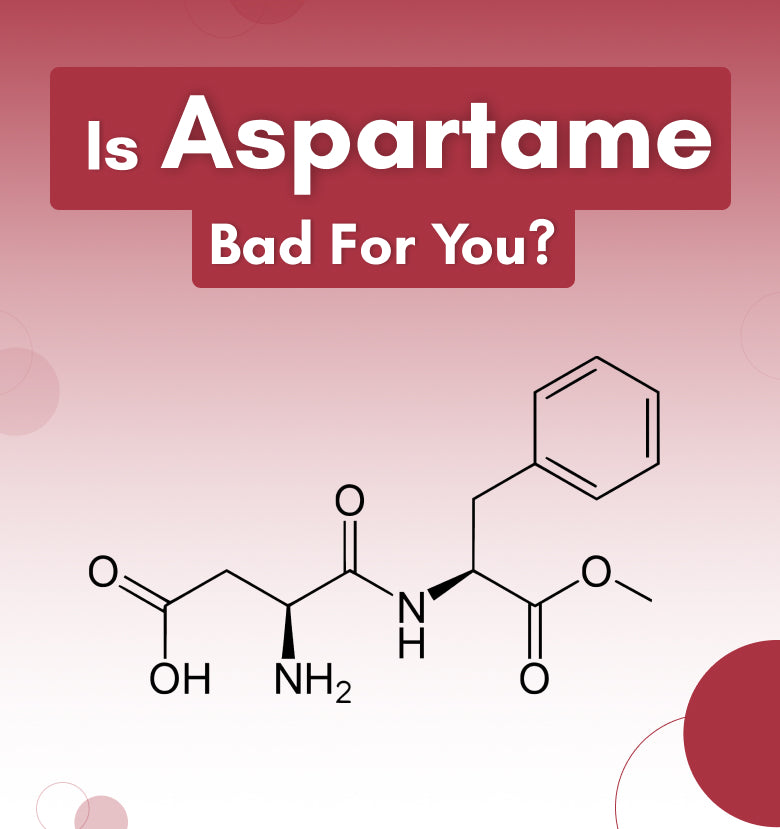
When consumed, aspartame breaks down in the digestive system into three components: phenylalanine, aspartic acid, and methanol.
A note on methanol specifically — because this is where a lot of misinformation circulates.
Methanol is produced when aspartame breaks down.
It is also produced when you eat fruits, vegetables, and many other common foods.
The methanol from aspartame at normal consumption levels is substantially lower than what the body receives from a glass of fruit juice.
The claim that methanol converts to formaldehyde which then causes chronic inflammation and oral ulcers significantly overstates what the current research supports at normal dietary exposure levels.
For individuals with phenylketonuria — a rare inherited metabolic disorder — aspartame is genuinely problematic because they cannot metabolize phenylalanine effectively.
This is why aspartame-containing products carry a phenylketonuria warning on their labels.
These statements have not been evaluated by the FDA.

Aspartame Side Effects: What the Research Shows
Fair question — and one worth answering directly before getting into the regulatory debate.
At normal consumption levels within established acceptable daily intake guidelines, the peer-reviewed research has not conclusively established serious adverse effects for the general population.
What has been documented or studied:
Phenylketonuria — people with this rare metabolic disorder cannot metabolize phenylalanine effectively and must avoid aspartame. This is the most clearly established contraindication and is why all aspartame-containing products carry a warning label.
Headaches and dizziness — some people report these symptoms after consuming aspartame. Clinical research examining this association has produced mixed results and has not established a clear causal link in the general population, though individual sensitivity may vary.
Gastrointestinal effects — some studies have examined aspartame's potential effects on gut bacteria and digestive function — covered in detail in the microbiome section below.
Cardiovascular and metabolic concerns — the WHO has noted that long-term use of non-sugar sweeteners including aspartame does not appear to aid weight loss and may be associated with increased risk of cardiovascular disease and type 2 diabetes — though these associations are observational rather than established causal relationships.
Potential carcinogenicity — the 2023 IARC classification is addressed in full in the next section.
The honest picture: side effect reports associated with aspartame are real as consumer experiences — but establishing causal links in clinical research has proved difficult, and most regulatory bodies continue to consider aspartame safe within acceptable daily intake limits for the general population.
Consult a qualified healthcare provider for guidance specific to your health situation.
These statements have not been evaluated by the FDA.
The 2023 WHO Classification: What It Actually Means
The IARC classified aspartame as possibly carcinogenic in 2023 — but this was Group 2B, the lowest tier of positive classifications, and the FDA and JECFA both disputed or qualified the finding.
In July 2023 something happened that generated a wave of alarming headlines.
The International Agency for Research on Cancer — the research arm of the World Health Organization — classified aspartame as "possibly carcinogenic to humans" — Group 2B.
That sounds alarming.
Here is what it actually means.
The IARC Group 2B classification indicates limited evidence of carcinogenicity — the lowest tier of the IARC's positive classifications.
The same Group 2B category includes aloe vera extract, pickled vegetables, and coffee — which was in Group 2B until 2016.
Crucially, on the same day the IARC issued its classification, the WHO and FAO Joint Expert Committee on Food Additives reaffirmed the acceptable daily intake of aspartame at 40 mg per kilogram of body weight — unchanged from its previous assessment.
At that intake level, a 70-kilogram adult would need to consume more than 9 to 14 cans of diet soda per day to exceed the acceptable daily intake.
The FDA directly responded to the IARC classification — stating that it disagreed with IARC's conclusion and identified significant shortcomings in the studies on which IARC relied.
The honest picture: the 2023 IARC classification raised a research question worth continuing to study.
It did not establish that aspartame causes cancer at normal consumption levels.
The evidence was described by IARC itself as "limited" — meaning it was insufficient to draw firm causal conclusions.
These statements have not been evaluated by the FDA.

Is Aspartame Bad For Your Teeth? What the Oral Health Research Found
Aspartame itself is not directly cariogenic — a 2025 systematic review found it similar to water in acidogenicity in clinical studies.
This is the area most directly relevant to oral care product consumers — and the research here is more nuanced than most articles on either side of the debate acknowledge.
Is aspartame directly cariogenic?
No — and a 2025 systematic review and meta-analysis makes this clear.
A 2025 systematic review and meta-analysis published and registered with PROSPERO examined the cariogenicity of aspartame across four studies in bovine dental blocks, seven preclinical trials, and two clinical studies.
The conclusion: in clinical studies, aspartame was less acidogenic than sucrose and similar to water — and preclinical studies indicated aspartame did not promote caries development.
This is an important finding that often gets buried in anti-aspartame content.
Aspartame itself does not feed the oral bacteria that produce the acid that drives tooth decay.
What does raise legitimate oral health concerns?
The issue is not aspartame in isolation — it is what aspartame typically comes packaged with.
A Journal of Global Oral Health review on non-sugar substitutes and oral health noted that while sugar-free sweeteners are a healthier option for preventing dental caries compared to sugar, sugar-free products with acid flavorings and preservatives can lower salivary pH below the critical threshold — which may lead to dental erosion.
The citric acid in diet sodas.
The acidic flavor additives in sugar-free candies.
The preservatives in some sugar-free gums.
These co-ingredients — not aspartame itself — are the source of the enamel erosion concern in many aspartame-containing products.
The distinction matters because it changes what the practical advice should be: choosing aspartame-containing products without acidic co-ingredients is a meaningfully different oral health choice from choosing aspartame-containing products that pair it with citric acid or phosphoric acid.
These statements have not been evaluated by the FDA.
Aspartame in Chewing Gum: What It Means for Your Oral Health
Aspartame appears in many conventional sugar-free chewing gums — often listed alongside acesulfame K and sorbitol as part of a multi-sweetener blend.
In the gum context, the oral health implications follow the same pattern described above.
Aspartame itself does not feed cariogenic bacteria.
The concern is what accompanies it — specifically acidic flavor additives that some gum formulations include alongside artificial sweeteners.
There is also a broader ingredient transparency issue worth noting.
Most conventional gum labels list "gum base" without disclosing the individual synthetic polymer compounds that make up that base — polyvinyl acetate, styrene-butadiene, and other petroleum-derived materials.
The sweetener choice is one layer of the formulation question.
The gum base is another.
A chewing gum formulated around xylitol as the primary sweetener — rather than aspartame or sorbitol — alongside a plant-based gum base has a meaningfully different ingredient profile and a different oral health research footprint.
For a direct comparison of how xylitol's oral health research profile compares to other sweeteners, our article on best xylitol gum for teeth covers the evidence in detail.
For more on what to look for in a natural chewing gum formulation, our article on natural chewing gum covers the full ingredient landscape.
These statements have not been evaluated by the FDA.
What the Research Says About Aspartame and the Microbiome
Research on artificial sweeteners and the oral microbiome specifically is an area where evidence is emerging and worth watching — but not yet conclusive for aspartame specifically.
A review published in Trends in Microbiology examining the impact of artificial sweeteners on bacterial physiology and the microbiome concluded that there is limited evidence of a negative impact of aspartame on the gut microbiota in humans — and that in healthy rodents the data skew toward aspartame having no significant effect when consumed at normal levels.
A 2024 observational study from Cedars-Sinai Medical Center found that people consuming aspartame showed differences in small bowel microbiome composition compared to controls — including altered metabolic pathways — though the researchers noted these findings require further investigation.
A PMC review examining non-nutritive sweeteners and gut microbiota from clinical trials found that in one controlled study, aspartame did not cause healthy participants to change their gut microbiota after two weeks of realistic daily intake — while acknowledging that contrasting results exist in the literature.
The honest summary: the microbiome research on aspartame is active, mixed, and continuing to develop.
The most cautious interpretation is that evidence of significant disruption in healthy humans at normal consumption levels is limited — but that this area warrants continued monitoring.
Consult a qualified healthcare provider for guidance specific to your situation.
These statements have not been evaluated by the FDA.

What Natural Sweetener Alternatives Have Researchers Studied?
The conversation about aspartame is incomplete without discussing what the research says about natural sweetener alternatives — particularly in oral health contexts.
Xylitol
Xylitol is a plant-derived sugar alcohol that oral bacteria cannot ferment — meaning they cannot use it to produce the acid that drives enamel demineralization.
A 2022 study published in Frontiers in Nutrition found that xylitol gum was associated with statistically significant reductions in dental plaque accumulation and meaningful decreases in cariogenic and periodontopathic bacteria over two weeks of consistent use.
For a detailed look at xylitol's oral health research profile, our article on everything you need to know about xylitol covers the full evidence base.
Erythritol
Erythritol is another sugar alcohol with a growing oral health research profile — examined specifically for its antimicrobial effects against Streptococcus mutans at concentrations where other sweeteners show limited activity.
For more on erythritol's research profile, our article on what is erythritol covers the evidence in detail.
Stevia and monk fruit
Stevia and monk fruit are plant-derived high-intensity sweeteners that are non-fermentable — meaning oral bacteria cannot use them to produce acid.
Research examining their oral health profiles has generally found them to be non-cariogenic — though their research base in oral health contexts is less extensive than xylitol's.
What makes natural sweeteners a relevant comparison?
The practical question for anyone evaluating their chewing gum ingredients is not just whether aspartame is harmful at normal levels — it is whether there are well-researched alternatives that bring additional oral health properties rather than simply avoiding the concerns associated with aspartame.
Xylitol is the clearest example: it does not feed cariogenic bacteria, it has been specifically studied for its oral health properties, and it is the primary sweetener in Nathan and Sons' remineralizing gum — chosen for its oral health research profile rather than simply as an aspartame-free alternative.
The research discussed above evaluates individual sweetener ingredients in laboratory and clinical research contexts.
The finished product has not been evaluated by the FDA for the prevention, treatment, or mitigation of any condition.
For more on how sweetener choices affect oral health research profiles across multiple ingredients, our article on does sucralose cause tooth decay covers the sucralose comparison in detail.
For more on sorbitol's oral health research context, our article on what is sorbitol covers that evidence.
Browse our full oral care collection to see everything we make.
To learn more about who we are and why ingredient transparency matters to us, visit our about page.

What the Research Does Not Confirm
Honest disclosure requires being clear about what the current evidence does and does not establish.
Aspartame at normal consumption levels has not been established as a direct cause of tooth decay — the 2025 systematic review found it non-cariogenic and similar to water in acidogenicity.
The 2023 IARC Group 2B classification raised a research question about potential carcinogenicity — based on limited evidence that both the WHO's own JECFA committee and the FDA assessed as insufficient to change acceptable daily intake recommendations.
Microbiome research on aspartame is mixed and continues to develop — with some studies showing differences in microbiome composition and others finding no significant effect at realistic intake levels in healthy humans.
The methanol-formaldehyde-inflammation narrative that circulates widely online significantly overstates what the research supports at normal dietary exposure.
None of this means aspartame is definitively safe forever at any level.
It means the current evidence picture is more nuanced than either "completely harmless" or "definitely harmful" — and that ongoing research will continue to refine the picture.
Consult a qualified healthcare provider for dietary guidance specific to your situation.
These statements have not been evaluated by the FDA and are not intended to diagnose, treat, cure, or prevent any disease.
Key Takeaways: Is Aspartame Bad For You?
Aspartame is not definitively bad for you at normal consumption levels according to current regulatory assessments — but the research is nuanced and continuing to develop.
Aspartame is an artificial sweetener approximately 200 times sweeter than sugar — approved by the FDA in 1981 and used widely in diet sodas, sugar-free gums, and many other products.
In July 2023 the IARC classified aspartame as "possibly carcinogenic to humans" — Group 2B — based on limited evidence, while the WHO's JECFA simultaneously reaffirmed the acceptable daily intake of 40 mg per kilogram of body weight.
The FDA disagreed with IARC's classification and identified significant shortcomings in the studies on which IARC relied.
A 2025 systematic review and meta-analysis found that aspartame is non-cariogenic — similar to water in acidogenicity in clinical studies — meaning aspartame itself does not directly drive tooth decay.
The oral health concerns associated with aspartame-containing products primarily relate to the acidic co-ingredients — citric acid, phosphoric acid — commonly added to the same products, not aspartame itself.
Microbiome research on aspartame is emerging and mixed — some studies show differences in microbiome composition while others find no significant effect at realistic intake levels in healthy humans.
People with phenylketonuria must avoid aspartame as they cannot metabolize phenylalanine effectively.
Natural sweetener alternatives including xylitol, erythritol, stevia, and monk fruit have each been examined in oral health research contexts — with xylitol having the most extensive oral health research profile.
These statements have not been evaluated by the FDA.
Not intended to diagnose, treat, cure, or prevent any disease.
Frequently Asked Questions: Is Aspartame Bad For You?
Is aspartame bad for you?
Aspartame is not definitively bad for you at normal consumption levels according to current regulatory assessments from the FDA, EFSA, and WHO's JECFA.
The 2023 IARC Group 2B classification raised a research question about potential carcinogenicity based on limited evidence — but the FDA, JECFA, and most major regulatory bodies continue to consider aspartame safe within established acceptable daily intake limits.
Individual considerations apply — particularly for people with phenylketonuria who must avoid aspartame entirely.
Consult a qualified healthcare provider for dietary guidance specific to your situation.
These statements have not been evaluated by the FDA and are not intended to diagnose, treat, cure, or prevent any disease.
Is aspartame bad for your teeth?
Aspartame itself is not directly cariogenic — a 2025 systematic review and meta-analysis found it was similar to water in acidogenicity and did not promote caries development in clinical and preclinical studies.
The oral health concerns associated with aspartame-containing products primarily relate to the acidic co-ingredients commonly added to those products — citric acid and phosphoric acid — which can lower salivary pH below the critical threshold for enamel.
These are research observations and should not be interpreted as claims about any specific product.
Consult a qualified dental professional for oral health guidance specific to your situation.
These statements have not been evaluated by the FDA and are not intended to diagnose, treat, cure, or prevent any disease.
Is aspartame safe?
Aspartame has been reviewed by regulatory agencies including the FDA, EFSA, and WHO's JECFA — all of which have established acceptable daily intake levels they consider safe for the general population.
In July 2023 the IARC classified aspartame as "possibly carcinogenic to humans" based on limited evidence — a classification the FDA stated it disagreed with after identifying significant shortcomings in the underlying studies.
The WHO's JECFA simultaneously reaffirmed the acceptable daily intake of 40 mg per kilogram of body weight — unchanged from previous assessments.
People with phenylketonuria should avoid aspartame as they cannot metabolize phenylalanine effectively.
Consult a qualified healthcare provider for dietary guidance specific to your situation.
These statements have not been evaluated by the FDA and are not intended to diagnose, treat, cure, or prevent any disease.
Is aspartame bad for you during pregnancy?
Current regulatory guidance does not specifically prohibit aspartame consumption during pregnancy at normal dietary levels — the acceptable daily intake applies to the general population including pregnant individuals.
However the WHO has noted that long-term consumption of non-sugar sweeteners may not provide the intended benefits and has raised questions about metabolic effects that researchers continue to study.
Given the WHO's 2023 classification raising questions about potential long-term effects and the general principle of dietary caution during pregnancy, pregnant individuals who are concerned should consult a qualified healthcare provider for personalized guidance before consuming aspartame-containing products.
These statements have not been evaluated by the FDA and are not intended to diagnose, treat, cure, or prevent any disease.
What did the WHO say about aspartame?
In July 2023 the International Agency for Research on Cancer — the research arm of the WHO — classified aspartame as "possibly carcinogenic to humans" based on limited evidence for hepatocellular carcinoma.
On the same day the WHO and FAO Joint Expert Committee on Food Additives reaffirmed the acceptable daily intake of 40 mg per kilogram of body weight — concluding the data did not provide sufficient reason to change the previously established acceptable intake.
The two assessments reflect different roles — IARC identifies potential hazards while JECFA assesses risk at actual exposure levels.
These statements have not been evaluated by the FDA and are not intended to diagnose, treat, cure, or prevent any disease.
What are the best natural alternatives to aspartame?
Xylitol, erythritol, stevia, and monk fruit are among the natural sweetener alternatives that have been examined in research contexts — including oral health research.
Xylitol has the most extensive oral health research profile — specifically in relation to cariogenic bacteria reduction and plaque accumulation.
Stevia and monk fruit are non-fermentable and have been found to be non-cariogenic in research settings.
Each has its own individual research profile and practical considerations.
Consult a qualified dental or healthcare provider for dietary guidance specific to your situation.
These statements have not been evaluated by the FDA and are not intended to diagnose, treat, cure, or prevent any disease.
Does aspartame affect the oral microbiome?
Research on aspartame and the microbiome is limited and continuing to develop.
A review in Trends in Microbiology concluded that there is limited evidence of a negative impact of aspartame on the gut microbiota in humans at normal consumption levels.
A 2024 observational study from Cedars-Sinai Medical Center found differences in small bowel microbiome composition in aspartame users compared to controls — though researchers noted further investigation is needed.
These are research observations and should not be interpreted as established clinical outcomes.
These statements have not been evaluated by the FDA and are not intended to diagnose, treat, cure, or prevent any disease.
Is aspartame in chewing gum bad for your teeth?
Aspartame appears in many conventional sugar-free chewing gums — often alongside acesulfame K and sorbitol.
Aspartame itself is non-cariogenic based on current research — meaning it does not feed the oral bacteria that produce acid and drive tooth decay.
The oral health concern in gum products is more often the acidic flavoring additives that sometimes accompany artificial sweeteners rather than the aspartame itself.
Choosing a gum with xylitol as the primary sweetener — which has been specifically studied for its oral health properties including cariogenic bacteria reduction — is an alternative that some consumers who prefer to avoid aspartame consider.
These statements have not been evaluated by the FDA and are not intended to diagnose, treat, cure, or prevent any disease.
Legal & Compliance Disclaimer
These statements have not been evaluated by the Food and Drug Administration. This product is not intended to diagnose, treat, cure, or prevent any disease. The information in this article is for educational purposes only and is not a substitute for professional dental or medical advice. Consult a qualified dental or healthcare provider before making changes to your diet or oral care routine. Content current as of 2026. Subject to revision.
References
WHO and IARC. (2023). Aspartame hazard and risk assessment results released. who.int/news/item/14-07-2023-aspartame-hazard-and-risk-assessment-results-released.
FDA. (2023). Aspartame and other sweeteners in food. fda.gov/food/food-additives-petitions/aspartame-and-other-sweeteners-food.
Jager R, et al. (2025). The non-cariogenic effects of aspartame: a systematic review and meta-analysis. ScienceDirect. DOI: 10.1016/j.jdent.2025.
Kohli S, Singh G, Mathur S. (2024). Non-sugar substitutes: effects on oral health. Journal of Global Oral Health. jglobaloralhealth.org.
Richardson IL, Frese SA. (2026). The impact of artificial sweeteners on bacterial physiology and the microbiome. Trends in Microbiology. cell.com/trends/microbiology.
Cedars-Sinai Medical Center. (2024). Artificial sweeteners significantly alter the small bowel microbiome. cedars-sinai.org.
Riboli G, et al. (2023). Effect of non-nutritive sweeteners on the gut microbiota. Nutrients, 15(8), 1869. mdpi.com.
Wu YF, Salamanca E, et al. (2022). Xylitol-containing chewing gum reduces cariogenic and periodontopathic bacteria in dental plaque. Frontiers in Nutrition, 9, 882636. PMC9131035.